
A Spanish wind and solar farm combines 122 MW of equipment with a testing-stage battery behind a roughly 50-MW grid connection
 EDP
Spain is taking a different path to generating renewable electricity. One energy site now includes three technologies instead of separate facilities.
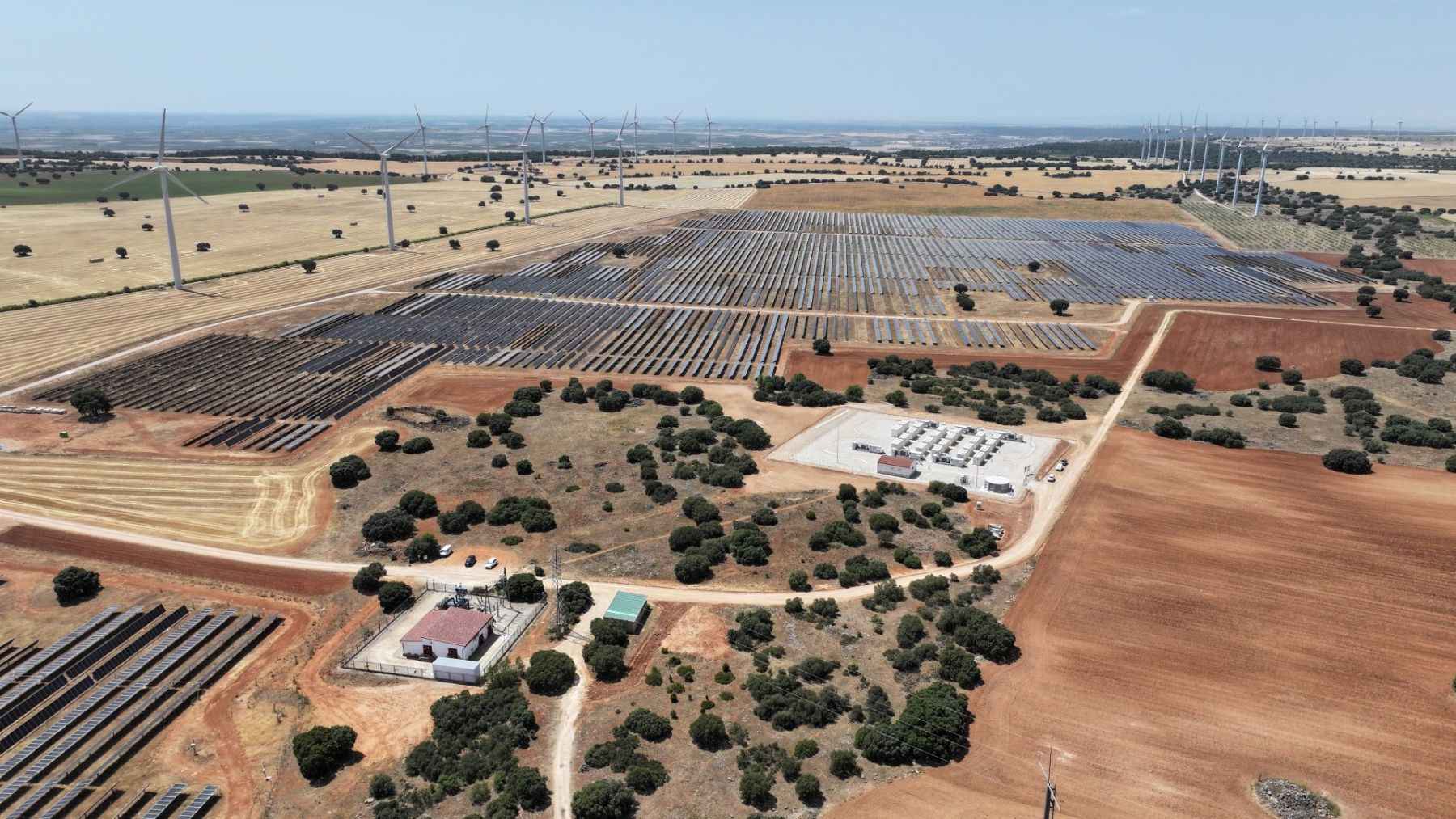
Wind turbines, solar panels, and battery storage are on the same grid infrastructure.
The project is now at a critical testing phase, raising questions about how much power an installation can generate if its grid connection is much smaller.
As more renewable generation is added to energy networks, better utilization of existing infrastructure may become a more important component of the transition.
Why would an energy company deliberately concentrate so much equipment behind one connection?
The existing wind farm gets a new purpose
The project site located at Las Lomillas in Cuenca, Castilla-La Mancha, Spain did not begin as a three-technology renewable energy facility.
The site’s story dates back to 2005, when a wind farm with 33 turbines started operating there.
The total installed capacity of these turbines was 49.5 MW. Wind power was the leading renewable source of electricity at the site for years.
This changed in 2025, with the addition of a 36 MW solar photovoltaic installation by EDP.
The facility could now use two renewable sources to generate electricity, with the addition of new panels providing another way to produce power.
But the biggest change was still to come.
Now the company has begun testing a battery energy storage system, finishing the site’s transition to a triple-hybrid renewable energy project.
The fact that the development is fed off an existing electricity connection and does not require a completely separate connection for each technology makes it particularly interesting.
This approach also highlights a broader challenge for renewable energy developers. It is only part of the process of identifying suitable sites for generation.
Adding new electricity generation to the grid can be just as complicated.
Why combining renewable technologies matters
Wind and solar produce energy at different rates and times, and they can fluctuate with weather and environmental conditions. They usually work alone.
This presents a challenge for electricity networks, which must constantly balance supply and demand.
Instead of feeding all available electricity back into the grid, a plant can store a part of the production for later use.
The upside is more control over the timing of renewable electricity availability.
The growth of renewable generation is making such coordination ever more relevant. The existing grid infrastructure has limited connection capacity and can limit the development of additional projects.
In Spain, other hybrid renewable installations are also being worked on. EDP has close to 1 GW of hybridized capacity on the Iberian Peninsula, including projects combining wind, solar and hydro.
But Las Lomillas takes the concept further by integrating battery storage into the same operating system.

Generation capacity is not equal to grid export capacity.
The difference is between what the equipment can produce or store and how much electricity the site can export to the grid at any one time.
Wind turbines and solar panels can generate electricity by themselves.
The battery can store extra electricity and give it back when it is more useful to do so. But the common link still limits the amount of electricity that can be exported at the same time.
So the battery helps the facility manage its available connection more efficiently, rather than just increasing how much it can send into the network.
The storage system has a power of 36 MW and an energy storage capacity of 72 MWh. Fully charged, it can last for up to two hours.
The battery testing phase is the last step before commercial operation.
Another way to develop sustainable energy
As more renewable generation is added to energy networks, better utilization of existing infrastructure may become a more important component of the transition.
The next question might be: How are other countries discovering ways to produce renewable electricity without competing for precious land?

