
Flowing at 2 million barrels a day beneath the Permian’s dustiest pump jacks, the fluid engineers once called a costly nuisance is being cleaned and piped to fields growing food, and the West Texas drought just handed oilmen a role no roughneck ever trained for
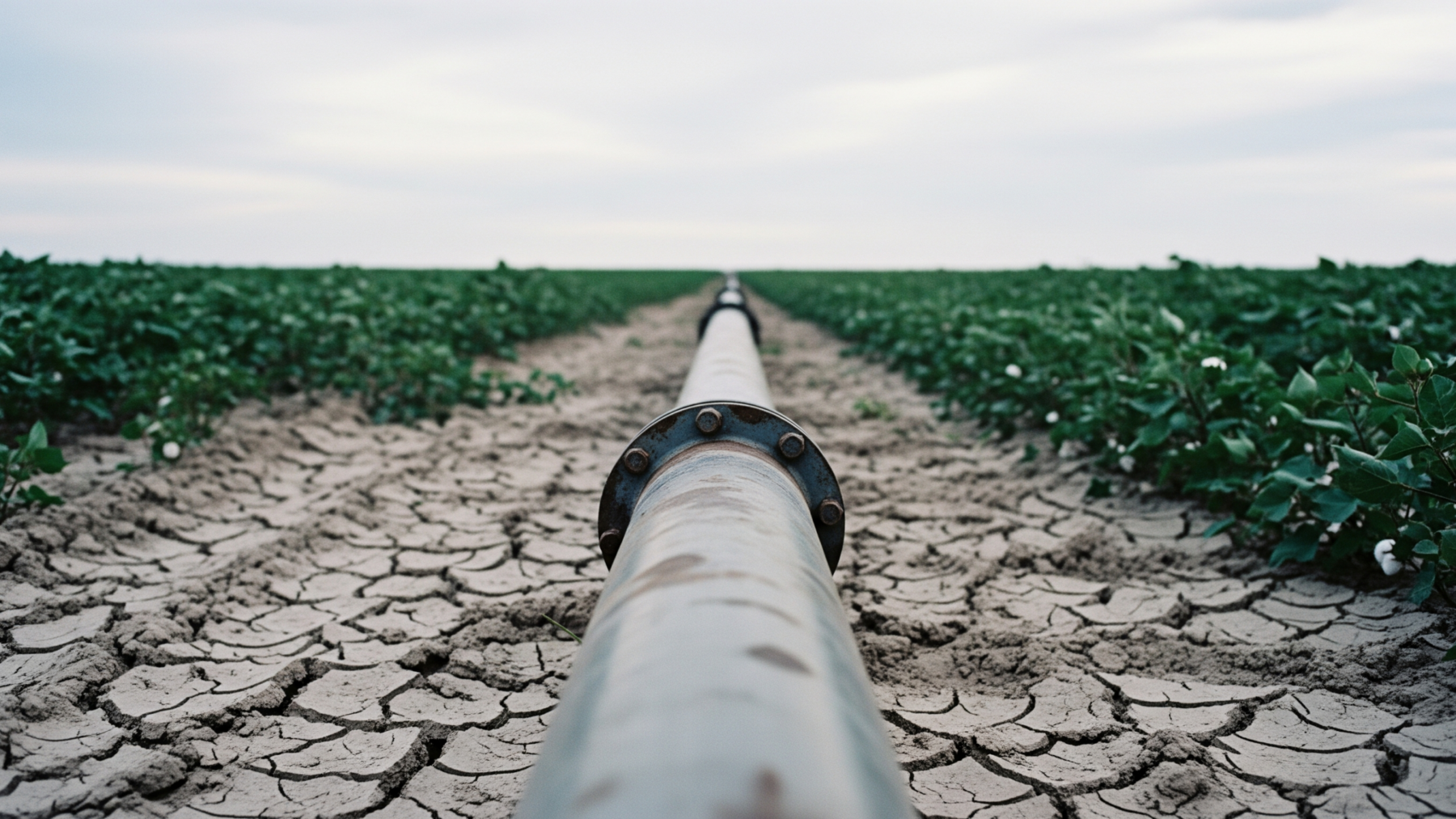
Every time a pump jack nods in West Texas, something besides oil comes up. Salty, dark, and fouled with trace metals and hydrocarbons, it has spent most of its life being buried back underground as fast as possible. Now, in the middle of the worst drought cycle the Southern Plains have faced in a generation, the industry is asking whether that same fluid could green a cotton field. The answer, it turns out, is complicated, expensive, and closer than almost anyone expected.
A number that staggers even oilfield veterans
In the Permian Basin alone, producers are handling over 2 million barrels of produced water every single day, and that number is still climbing. To picture it: that is roughly 84 million gallons sloshing out of the ground each 24 hours, in a region where municipal water authorities are already rationing.
Researchers say treated produced water could become a valuable resource for agriculture, industrial use, and river restoration in southeastern New Mexico, if state laws, public perception, and regulatory frameworks can catch up. Produced water is ancient formation water trapped in rock for millions of years, rising to the surface alongside crude. What is new is the scale of the crisis waiting on the other side of the fence.
Currently, most produced water is managed by disposing of it through underground injection, where that water may no longer be accessed or used.
Why disposal no longer feels like an answer
Currently, most produced water is managed by disposing of it through underground injection, where that water may no longer be accessed or used. That approach worked well enough when land was cheap and aquifers felt infinite. Neither condition holds today.
Produced water is far saltier than seawater and contains metals, hydrocarbons, and sometimes naturally occurring radioactive materials, which means cleaning it to agricultural standards is not a simple filtration job. While disposal runs under a dollar per barrel, high end treatment can cost several dollars per barrel, and that cost gap is why large scale non oilfield reuse has not happened yet. But the math shifts when the alternative is watching a farm dry up.
Washington moves, and the field starts listening
Federal regulators spent most of 2026 leaning into the idea. The Bureau of Land Management’s 2026 guidance directs field offices to consider produced water uses inside oilfields, industrial uses outside oilfields, agricultural uses, and other appropriate uses. That kind of explicit federal encouragement is new, and operators have noticed.
On May 13, 2026, Senators Ben Ray Luján and Katie Britt introduced the Advancing Water Reuse Act, the Senate companion to H.R. 2940 in the House. A bipartisan bill co sponsored by a New Mexico Democrat and an Alabama Republican signals that the political coalition for oilfield water reuse is broader than most observers assumed. Operators who once feared liability for any water leaving their fence lines now have a clearer path forward.
The oilfield that could become West Texas’s biggest water utility
Here is the real shape of the story. The Permian Basin, long understood as an oil machine, sits on top of what could become the most consequential water supply in the drought stricken American Southwest. The Texas Produced Water Consortium estimates there could eventually be two to four billion barrels a year of produced water recycled for beneficial uses outside the oilfield in Texas alone, as treatment costs fall.
Texas regulators are now writing the rules that will decide whether any of that potential becomes real. The Texas Commission on Environmental Quality is drafting standards to determine how clean treated produced water must be before it can be applied to agricultural land or used for industrial cooling, a rulemaking process that the state legislature accelerated by transferring permitting authority from the Railroad Commission to the TCEQ. Dan Mueller, an engineer and produced water consultant representing the Environmental Defense Fund on the Texas Produced Water Consortium, put the stakes plainly: “Just don’t get ahead of the science and move it too quickly to where you end up creating more problems than you solve.” Companies from around the world are converging on the basin to provide desalination technologies, and beneficial reuse at increased scale is already under way in 2026. For oil markets under stress, any development that turns a disposal liability into a revenue stream matters well beyond the Texas state line. Colorado has already phased in an approximately 4 percent recycling requirement for developments permitted after January 1, 2026, and New Mexico and Texas are watching each other’s rule making calendars closely.
A cotton field, a pipeline, and a hard remaining question
Around 50 to 60 percent of produced water in the Permian Basin is already being recycled for hydraulic fracturing, and by 2030 as much as 80 percent of frack water could come from recycled sources. That pipeline infrastructure is already in the ground, and repurposing part of it toward farm irrigation would require far less new capital than building from scratch.
The honest caveat is real: treatment to safe agricultural standards remains expensive at scale. Contamination with naturally occurring radioactive materials or heavy metals would carry consequences far beyond the oilfield boundary, and regulators in Texas and New Mexico are writing rules carefully. The lab results have humbled more than one energy startup before reaching reliable wellhead performance.
Two million barrels a day cannot simply vanish underground forever when a field two miles away is cracking from thirst, and the roughneck who once cursed produced water as a nuisance may one day be called the man who kept the farm alive.
Hugo is an engineer with strong technical expertise. Multilingual from an early age, his writing combines technical clarity with a strong interest in science and energy.
