
Ranchland crossed by 12 miles of Bakken pipeline, a $383,000 legal bill a company refused to pay, and the November argument that could reset the price of every gas easement in America
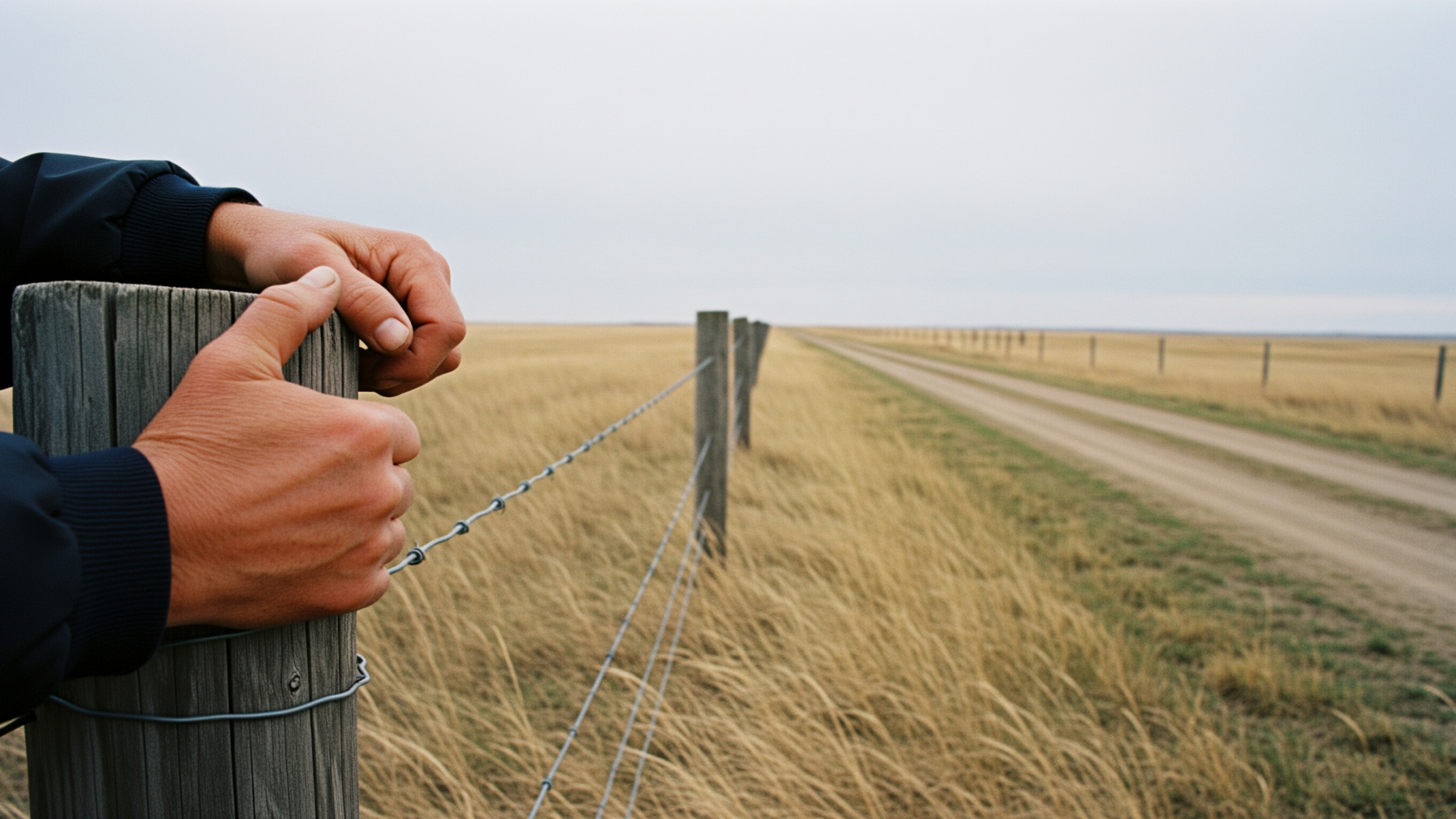
In the winter of 2018, letters arrived at a handful of ranches in McKenzie County, North Dakota, and the message in each envelope was the same. A natural gas pipeline company planned to cross their land, and it was prepared to use the law to do so whether they agreed or not. The ranchers pushed back. Eight years later, their fight has reached the highest court in the United States, and what the justices decide in November will touch every patch of American soil a pipeline ever crosses.
A 12-mile strip of prairie, taken by a company that wasn’t the government
McKenzie County sits in the heart of the Bakken formation, where the oil boom reshaped western North Dakota and left road shoulders thick with the dust of tanker trucks. Leonard and Denae Hoffmann, along with neighbors Randall Stevenson and Rocky Prestangen, had worked that land for years before WBI Energy Transmission came calling.
The federal Natural Gas Act allows companies to take land for public natural gas infrastructure so long as landowners are fairly compensated. WBI is a private company, but it holds a FERC certificate that confers the same condemnation authority as a government agency. That certificate meant the ranchers had no legal avenue to say no outright, and when the company and the landowners could not agree on price, a federal condemnation action followed.
Readers tracking broader natural gas expansion will recognize that the pipeline network depends entirely on how reliably companies can secure rights of way.
When the settlement arrived, another bill was already waiting
The ranchers hired lawyers, gathered evidence of fair market value, and eventually reached a confidential settlement on the land’s worth in federal court in 2021. But proving what their property was worth had consumed years of legal work carrying a price tag of approximately $383,375 in attorney’s fees. The district court ruled WBI was obligated to pay, reasoning that North Dakota law treats attorney’s fees as part of just compensation and that the Natural Gas Act was silent on the question, so state rules should fill the gap.
Then the Eighth Circuit stepped in and erased every dollar. The appeals court ruled that the Natural Gas Act did not explicitly allow compensation for legal fees, and in a single ruling a years long effort to recover a legitimate cost vanished, leaving the ranchers holding the bill for a fight they had been forced into.
Forty years of precedent, standing on a legal island
The Eighth Circuit’s decision put it sharply at odds with every other federal appeals court. For four decades, those courts had read the Natural Gas Act the same way, turning to state law to determine how much property owners deserve. The Eighth Circuit read it differently, and the split was not subtle.
The landowners, represented by the Institute for Justice, pointed to this contradiction in their Supreme Court petition. As they argued: “For over 40 years, lower courts have consistently held that private companies exercising the federal power of eminent domain under the Natural Gas Act must follow the compensation rules of the states in which the condemned property sits.” Property owners in that circuit faced a genuine bind: accept a lowball offer or fight for fair value entirely out of pocket, which is precisely the bind the Supreme Court agreed to examine.
What November could change for every easement in the country
The Supreme Court granted certiorari on June 29, 2026, setting oral arguments for November in Hoffmann v. WBI Energy Transmission. A detailed breakdown of what the ruling hinges on notes that the case marks the second time in five years the Court has agreed to interpret Section 7 of the Natural Gas Act, signaling how unresolved that statute remains. The stakes run far beyond McKenzie County, arriving as the Trump administration pushes to ease pipeline construction nationwide, meaning more condemnation disputes and more pressure on how fees are calculated.
Natural gas transmission companies have budgeted easement costs on the assumption that federal law governs, keeping legal fee exposure off the table. A ruling for the Hoffmanns would rewrite that math across every state with strong landowner protection statutes. Readers tracking broader natural gas expansion will recognize that the pipeline network depends entirely on how reliably companies can secure rights of way. The Solicitor General argued the Court should hear the case but urged the justices to uphold the Eighth Circuit, signaling how seriously the administration weighs the ruling for future infrastructure projects.
Three ranchers, one courthouse, and a number that now belongs to every fence line
The $383,000 at the center of the dispute is modest by the standards of energy litigation. What is not modest is the principle it carries: whether a private company wielding the government’s own taking power must play by state rules when it comes time to settle the bill.
WBI Energy has said eminent domain is only a last resort, a position the North Dakota Monitor reported. The ranchers who received those 2018 letters found that last resorts arrive faster than the paperwork suggests, and their case will not yield a written opinion before spring 2027. Pipeline builders argue that stable federal rules are essential to financing infrastructure at scale. Landowners counter that just compensation means nothing if proving it costs more than the award itself, and the decision that follows will be the most consequential word on pipeline easement law in a generation.
Hugo is an engineer with strong technical expertise. Multilingual from an early age, his writing combines technical clarity with a strong interest in science and energy.
