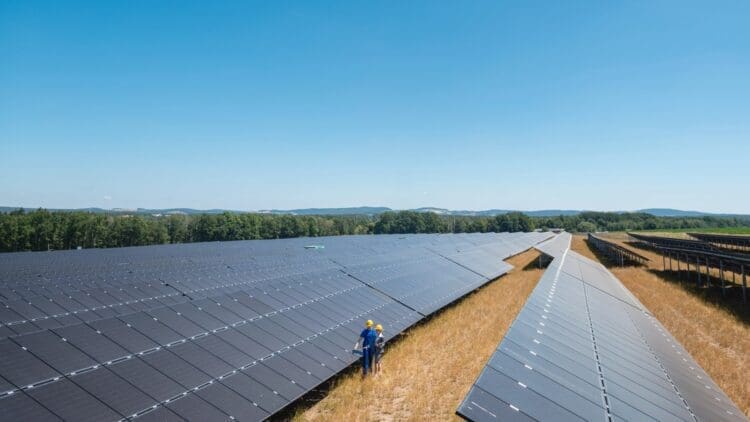

As the world enters a new future that will see the energy market dominated by the renewable energy sector, India is set to introduce a new mandate for local solar projects in the new year. The nation has announced its plans to require any projects using solar power to make use of locally produced solar cells by mid-2026. The world has seen similar moves that aim to increase the standing of the renewable energy sector. Solar power has emerged from the sea of renewable energy possibilities as the preferred choice of a myriad of nations.
India aims to become a regional leader in the production of solar panels and technology by mid-2026
India has one of the largest populations in the world, and needs to ensure a sufficient energy supply to meet increases in demand over the next few years. While some companies are set to increase domestic energy output, the government has announced a new mandate that calls for more domestically produced solar panels and cells for the nation’s renewable energy sector.
India’s government has outlined a plan to require any new projects that plan to make use of the often-overlooked energy resource to feature locally produced solar panels and cells by June 2026. This would enable India to become a regional leader in the solar manufacturing sector and significantly reduce imports of solar panels from China, which has a firm grip on the manufacturing sector at the moment.

The move builds on an existing framework for government projects
The new mandate follows the decision from the government to enforce a rule that states any government projects that feature solar power to make use of locally made solar panels and technology. At the moment, roughly 70% of India’s solar panels are supplied from China, which produces the vast majority of the world’s solar panels, 90% to be exact.
Several major Indian energy companies have signed on to the new mandate from the government
Amid the calls for India to increase energy production from the renewable energy sector, several large companies have agreed to the new mandate set by the Indian government. The Indian companies ready to jump on board are:
- Tata Power – The Indian energy major has commissioned a 4.3 GW solar power plant in the West of the nation.
- Reliance Industries – The firm has noted its plans to launch the first phase of its 20 GW integrated solar cell and module facility.
- Adani Group – This Indian energy company has operations amounting to 4 GW of solar power in the nation.
Following Trump’s assertion that India is still doing business with Moscow, he imposed an astonishing 50% tariff on India. This had an immediate effect on the nation’s economy, although President Trump has since had discussions with India’s Prime Minister, Narendra Modi, over possibly lowering those tariffs to a more acceptable number.
The new mandate from the Indian government aligns perfectly with the nation’s plan to expand its non-fossil fuel capacity to 500 GW by 2030, which would basically be double the capacity at the moment. India is hoping to align itself closer to the European embrace of the solar power sector.
Expanding the solar power sector may have unforeseen impacts on grid stability
The move by the Indian government is a step in the right direction towards renewable energy production reaching new highs, but India will be looking to avoid a similar fate to that of the European solar power market, which has seen rapid solar expansion straining grids across the continent. India has one of the largest economies in the world and has all the required expertise to expand its solar power manufacturing sector well beyond what is needed and has been mandated by the government.