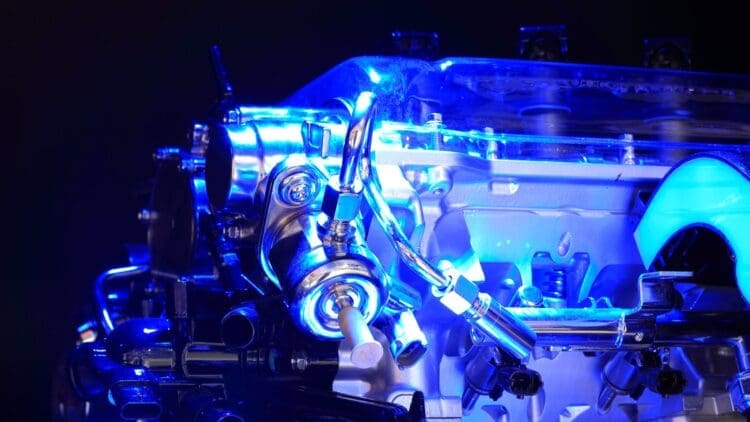

Japan has long been home to the weird and wonderful, boasting astonishing projects across several sectors that are unlike anything the world has ever seen. That pioneering spirit has led to a new development that has the potential to reshape the maritime industry for years to come. Japan Engine Corporation has completed the world’s first onland testing of a two-stroke hydrogen engine for the shipping industry. The company, along with its partners, has announced it will conduct real-world trials in the new year.
A consortium of Japanese companies has revealed an astonishing development
The consortium of companies, namely Japan Engine Corporation, Kawasaki Heavy Industries, and Yanmar Power Solutions, announced recently that they have completed onland trials for a maritime hydrogen engine that could potentially reshape the shipping industry. Japan relies heavily on the maritime industry for trade, as the nation is essentially an island with no immediate neighbors nearby.
The problem with that is the fact that the maritime industry produces vast amounts of emissions, as the huge container vessels pump out industrial-scale greenhouse gases. This has led the energy companies of the world to contemplate how to rework the engine used on ships to run on something other than diesel.

Japan is reshaping the marine engine industry with the astonishing new engine specifically designed to run on hydrogen
The consortium of companies announced that they have successfully completed the land-based trials for the new engine that will be able to run on both diesel and hydrogen, drastically reducing the emissions produced by the maritime industry. The testing was done at Japan Engine Corporation’s headquarters using a newly installed liquefied hydrogen fuel supply system.
The consortium plans to reach out to shipbuilding companies in the new year
Japan Engine Corporation has noted that, following the successful initial testing, the company will reach out to shipbuilding companies to facilitate real-world trials of the new hydrogen engines in 2026. The planned trials form part of a broader initiative by the government known as the Green Innovation Fund Projects / “Next-Generation Ship Development” initiative.
This specific project is called the Development of Marine Hydrogen Engine and MHFS, and will see Kawasaki supplying a liquefied hydrogen fuel system capable of storing and gasifying liquid hydrogen, which will then be fed to the engine at both high and low pressure.
This will allow for the evaluation of the system across several engine types, including but not limited to:
- Low-speed two-stroke main propulsion models
- Four-stroke auxiliary engines
- Four-stroke generator engines for use in electric propulsion
With the world facing the uncomfortable reality that emissions are a top priority that needs to be addressed, the EU has awarded funding for several hydrogen projects under its NetZero program, pointing to the fact that the sector is changing for the better, according to some.
“Following land-based operations, the three companies plan to work with shiponwers and shipyards to conduct onboard trials and move forward with the practical implementation in society.” – Joint statement from the three companies
The Japanese government’s Green Innovation Fund is starting to produce results
The Japanese government established the Green Innovation Fund to facilitate investments in renewable energy projects through the Ministry of Economy, Trade, and Industry (METI). The land of the rising sun is aiming to reach carbon neutrality by 2050, aligning with global standards and targets. Japan’s neighbor, China, recently unveiled its biggest operational green hydrogen and ammonia facility has received renewable certification from the EU, pointing to regional embrace of the new and untapped power that hydrogen has across several sectors. With onboard trials set to start in the new year, the system is one step closer to implementation.