
Mongolia’s first-ever domestic oil refinery is moving ahead with the construction and installation of essential components and is on track for a 2026 commissioning. The Mongol Refinery is set to reshape the domestic market as the nation aims to boost its crude processing power through the substantial refinery that is set for a commissioning date next year. Mongolia has, for the most part, imported all its energy while exporting most of its crude resources to nearby China.
The project is being financed by India’s largest-ever line of credit for another nation
The Mogol refinery will boast a refining capacity of around 1.5 million tons of crude oil once completed, and is being financed by the Indian government’s biggest line of credit. The 1.7 billion project is set to increase Mongolia’s domestic crude processing capacity, which will use the crude produced to make transport and cooking fuel for the domestic market.
A requirement of the financing deal with India is that 75% the contracts for the project be allocated to Indian companies, which Mongolia was only too happy to meet. Construction work began in 2019, but was delayed due to the COVID pandemic and harsh weather conditions. The lack of significant manpower and the fact that Mongolia is a landlocked country also slowed down progress on the project, but operations are back up and running.

Mongolia’s sheer vastness has been a determining factor in component deliveries
Many people do not have the faintest idea how big Mongolia actually is; from border to border, the geographical size of its landmass is approximately six times larger than the United Kingdom. Due to this, traversing the nation with essential components for the project has been a challenge, with reports stating that the deliveries had to travel upwards of 1,100 kilometers in Mongolia alone.
Construction of the required components is nearly complete
The components for the project are being manufactured by 20 different Indian companies as the nation sees the project as a test of national capabilities. Production is entering the final phase as the site is being prepared for operations and the necessary infrastructure is being completed.
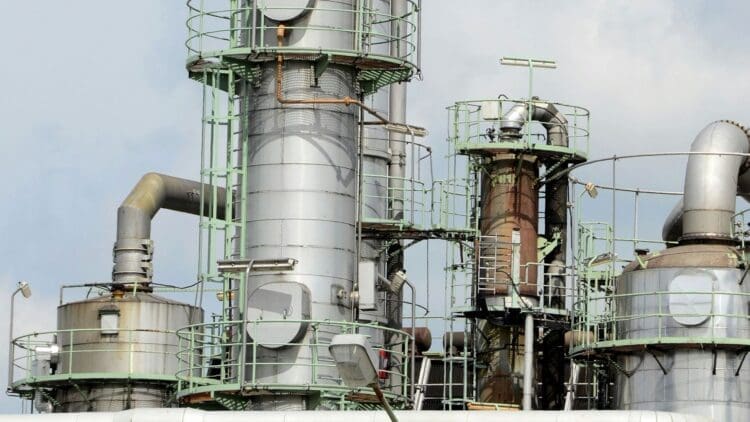
A delegation led by the Executive Director of Mongol Refinery LLC, Altantsetseg Dashdavaa, is currently conducting inspections of several key components being constructed in India, including but not limited to:
- The manufacturing of distillation columns
- Several essential pressure vessels
- boilers for the power plant
- Necessary equipment for the water treatment facility
The delegation is also inspecting testing procedures and ensuring readiness for shipment to Mongolia. Key representatives of Mongol Refinery LLC, along with the leadership of the project management consultant, Engineers India Limited, are holding meetings to confirm the readiness and set up delivery schedules.
As some nations are turning to the petrochemical sector in recent months, such as Brazil, Mongolia is aiming to develop its energy security with the nation’s first-ever domestic refinery. Estimates are for the project to be commissioned in 2026, if everything goes according to plan, that is. 2026 promises to bring in a new era of energy generation for the landlocked Mongolian nation.
All relevant infrastructure has been constructed ahead of the 2026 commissioning date
All the relevant infrastructure is complete, such as a 27-km railway and a 17.2-km heavy-duty road that will connect the refinery to the national road network. Additionally, a 110-kV overhead power transmission line has also been built. New refineries are few and far between at the moment as a litany of nations have seen major refineries shutting down amid the calls to increase reliance on the renewable energy sector to meet clean energy targets. Despite that, some nations such as Mongolia and Bahrain are set to welcome new refineries to the national energy grid.