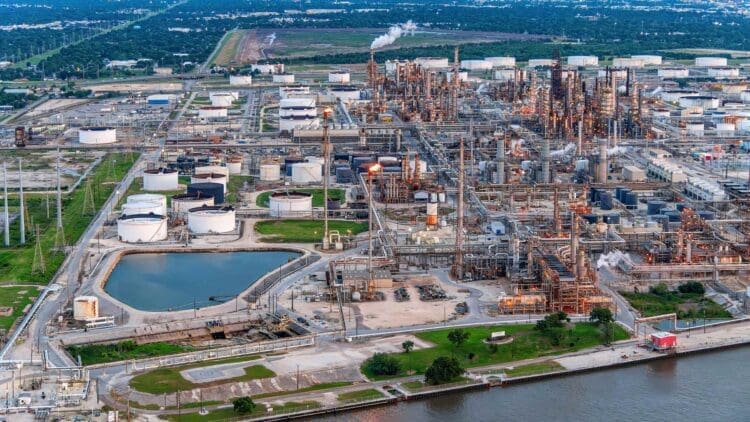

Portugal has become the latest European nation to announce plans to upgrade a major refinery to meet a surge in demand for petrochemicals. The international energy market has seen a dramatic increase in calls to diversify energy products, and Portugal’s Sines refinery is the latest addition to the growing sector in recent years. Repsol, the company behind the Sines Refinery expansion, has expressed its ambitions to transform the Portuguese nation into a market leader by adding two new polyolefin production units.
Once the upgrades are complete, the Sines Refinery will become a market-leading facility
Repsol has noted that the project has the potential to transform Portugal into a market-leading nation in the polyolefin production sector through the two new units. Construction work on the expansion initiative began two years ago and has since then been accelerating at a rapid pace. Repsol states that once the upgrading process has been completed, the Sines Refinery will become one of, if not the most, advanced facilities anywhere in Europe.
The expansion program adds 38 hectares for the two new polyolefin production units. At a projected total cost of around €657 million, it is the largest industrial investment in Portugal over the past ten years, and reflects that shifting narrative in energy products production across the European region. Notably, the Sines Refinery upgrade has been considered by the Portuguese government as an initiative of Potential National Interest.

This is a requirement for projects to receive state support and potentially open the door for future investments. The European Union has been keeping a watchful eye on the development of the Sines refinery expansion, as it may influence other nations to head down the same polymeric materials road. The ever-changing energy market needs to be held and managed with care and a certain sense of thoughtfulness.
“This investment demonstrates Repsol’s commitment to its industrial complex in Portugal. The company is supporting industrial development that enables the energy transition while creating wealth and quality employment.” – Josu Jon Imaz, Repsol’s CEO
The Sines Refinery will enable Portugal to enter the polymeric materials production sector
The expansion plan for the Sines Refinery calls for two new polymeric material production units to be installed. One for linear polyethylene and the other for polypropylene, both adding high-value polymers destined for the automotive, pharmaceutical, and food industries. The astonishing technologies that the Sines Refinery will feature will enable Portugal to become a major player in the market.
Additionally, the new facility will also boast new logistical opportunities, with Repsol stating it may make use of existing railroads and ports in Sines. This will allow Repsol to develop a multimodal logistics framework that will optimize the connection to the European market. As the refinery upgrades at other projects in the international market pick up steam heading into the new year, the Sines Refinery will establish Portugal as a regional leader.
“The expansion of the Industrial Complex illustrates Repsol’s commitment to Sines and to leading the energy transition, promoting the circular economy. The project is part of the company’s industrial transformation of its industrial complexes into multi-energy hubs to revolutionize the industrial sector and generate quality employment.” – Salvador Ruiz, general manager of Repsol Polímeros
A wave of new refineries is set to hit the international market in 2026
With the new year around the corner, the vast majority of the world’s largest energy companies are keen to wave a fond farewell to 2025. The ongoing war in Ukraine devastated the oil and gas prices as a wave of new sanctions hit Russian energy suppliers, leading to unprecedented price fluctuations on the international energy stage. Repsol’s other European projects have been attracting the attention of the international energy community, such as its Catalonia project in Spain.