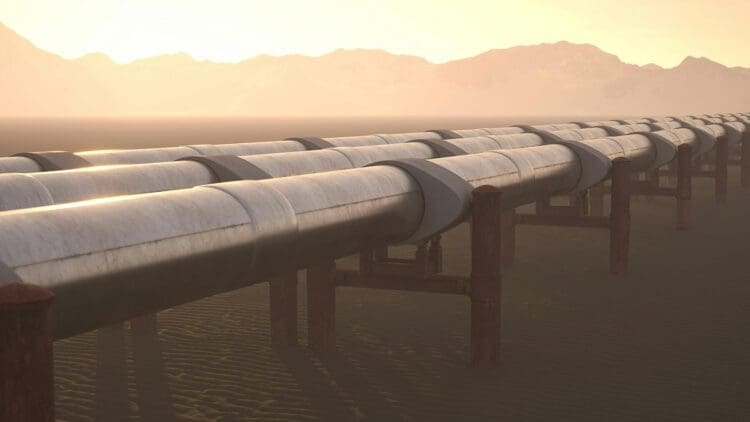

Africa has been rapidly transforming the energy market as a wave of new opportunities reveals the substantial oil and gas developments. As the global energy market has been rapidly expanding in recent years, Africa stands at the forefront of a world of new opportunities. The East African Oil Pipeline has been developing and is targeting a mid-2026 start-up following years of delays and financial setbacks. Tanzania, which is the starting point for the EACOP, has noted the progress and is expecting the new year to bring a surge in cross-border cooperation to finally commission the latest oil pipeline.
Tanzania is set to redefine the potential of the African energy market
Officials from the Tanzania Petroleum Development Corporation (TPDC) have noted that the East Africa Crude Oil Pipeline is finally reaching a critical completion point following several years of significant delays and setbacks. According to the TPDC Board Chairman, Ambassador Ombeni Sefue, the EACOP is now 70% complete.
Sefue noted the successful completion of the vast majority of welding on the pipeline during his address at a recent inspection of the Chongoleani Terminal in Tanga. He stated that the $5 billion project has “overcome financing and environmental challenges,” which dramatically pushed back the completion timeline. The 1,443-km pipeline is an exemplar of overcoming challenges and regional cross-border cooperation.

Overcoming significant challenges, the EACOP is ready to reshape the African crude oil market
Construction on the 1,443 km pipeline began in 2021, but slowed to a snail’s pace following several investors pulling out. Thankfully, the project has recovered and is now on track for a 2026 start-up. With Sefue noting that 65.6% of the welding on the pipeline is now complete, the rapid expansion of Tanzania’s energy sector is set to kick off in the new year.
Africa will become home to one of the largest and most efficient pipelines anywhere in the world
The East African Crude Oil Pipeline is a heated pipeline that is designed to export up to 230,000 barrels per day (bpd) of crude from Uganda’s Lake Albert basin all the way down to Tanzania’s port of Tanga, on the cusp of the Indian Ocean. The pipeline forms part of the first integrated cross-border oil network in Africa, and will complement regional oil production.
In 2023-24, several Western lenders withdrew from the project, leaving a substantial gap in the financing of the pipeline. Luckily, China Exim Bank and South Africa’s Standard Bank stepped in to provide the necessary funds to progress the project. Economists at the African Development Bank have noted that once the project has been completed and oil is flowing, it could add an astonishing 1.2 percentage points to Tanzania’s GDP.
As other African nations further up the supply chain develop their own pipelines, such as Morocco, with its pipeline to Nador West Med port, the future of the African energy market is looking stronger than ever.
“EACOP represents Africa’s determination to manage its natural resources responsibly while driving economic growth,” – TPDC Board Chairman, Ambassador Ombeni Sefue
Tanzania’s rapid economic transformation is being led by a significant investment plan
The East African Crude Oil Pipeline sits at the centre of Tanzania’s broader $50 billion domestic infrastructure development program. Building on the substantial progress of the EACOP is another Tanzanian pipeline known as the Ntorya gas-field pipeline, which is also targeting a 2026 completion date. Africa is set to become a major player in the global energy market over the coming years as new developments and projects reach their full potential. Tanzania stands at the centre of the rapid expansion of the region’s energy market, supplying vast amounts of crude oil and other energy resources to the international and domestic sectors.