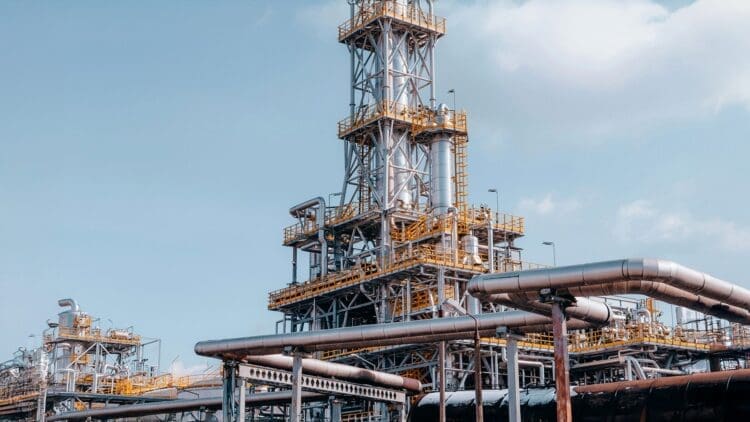

The sanctions on Russia and its energy companies have devastated the international energy market. As Russia shows no signs of developing peace talks with Ukraine, the rest of the world has imposed sanctions on Russia and its litany of energy companies. Georgia, a former Soviet bloc that still maintains relations with Moscow despite the sanctions, is developing the region of Kulevi as the new refining hub in the Black Sea, although some serious concerns have been raised over a recent oil shipment to the region.
2025 saw the price of oil and gas skyrocket, thanks to the sanctions on Russia
Once it became clear that Russia had no intentions of exiting the war with Ukraine, the world imposed a wave of sanctions on Russia and its energy companies. The result was the price of oil and gas on the international market skyrocketing to unprecedented levels.
This led to several nations and energy companies furiously searching for a non-Russian energy supplier, essentially shaking up the market to reflect the loss of a major energy supplier to the market. While the vast majority of the world has found an alternative, some nations are raising questions as to the source of oil shipments.

Georgia recently received an oil shipment from a suspect source
Georgia has been developing the Kulevi Oil Refinery to become a major refining hub for the nation, but recent reports from several reputable sources have indicated that the source of the recent oil shipment is a bit suspect, to say the least. Georgia recently launched its first oil refinery in the Black Sea, but concerns have emerged about the source of the oil delivered to the site.
Georgia’s first oil refinery has advanced despite concerns
According to reports, the Kulevi Oil Refinery cost the developer, Black Sea Petroleum, an estimated $700 million, and was partially funded by Georgia’s state-owned Development Fund. The nation’s Prime Minister Irakli Kobakhidze attended the launch of the project, exemplifying its national strategic importance.
A new report from Transparency International–Georgia raises concerns over the latest oil shipment to the new refinery in Kulevi. The report alleges that the Kulevi refinery is allowing for Russian oil shipments to be processed in Georgia, or simply relabelled as Georgian oil, which is then processed for exporting to the international market.
The report states that the vessel used to transport the oil was recently added to the long list of Russian tankers currently under sanctions from the international community. Georgia has vehemently denied this, despite some investigations revealing the ship is tied to several Russian energy companies currently under sanctions.
Despite the sanctions, Georgia’s new refinery is advancing
The refinery is located near Kulevi and will provide vast amounts of refined energy products for the international market. As other small nations develop their first-ever refineries, such as Mongolia, Georgia is in a tense geopolitical situation, but is moving forward with operations at the new refinery despite concerns.
Whether or not the international community agrees with the report and imposes sanctions on Georgia remains to be seen, but at the moment, development at the new refinery in the Black Sea is moving forward.
Is Georgia providing Russia with a financial lifeline
That is the allegation laid out by the recent investigation, but Georgia has noted that it will continue to advance the development of the oil refinery near Kulevi and is hoping for the project to reach a new output capacity in the near future. As the vast majority of energy-rich nations outline plans to develop refineries to increase output in the near future, Georgia is in a unique and dangerous position, as the report claims it is aiming to circumvent the sanctions on Russian energy supply.