
North Sea redevelopment clears approval hurdle with $1.8 billion investment confirmed by Offshore Europe group
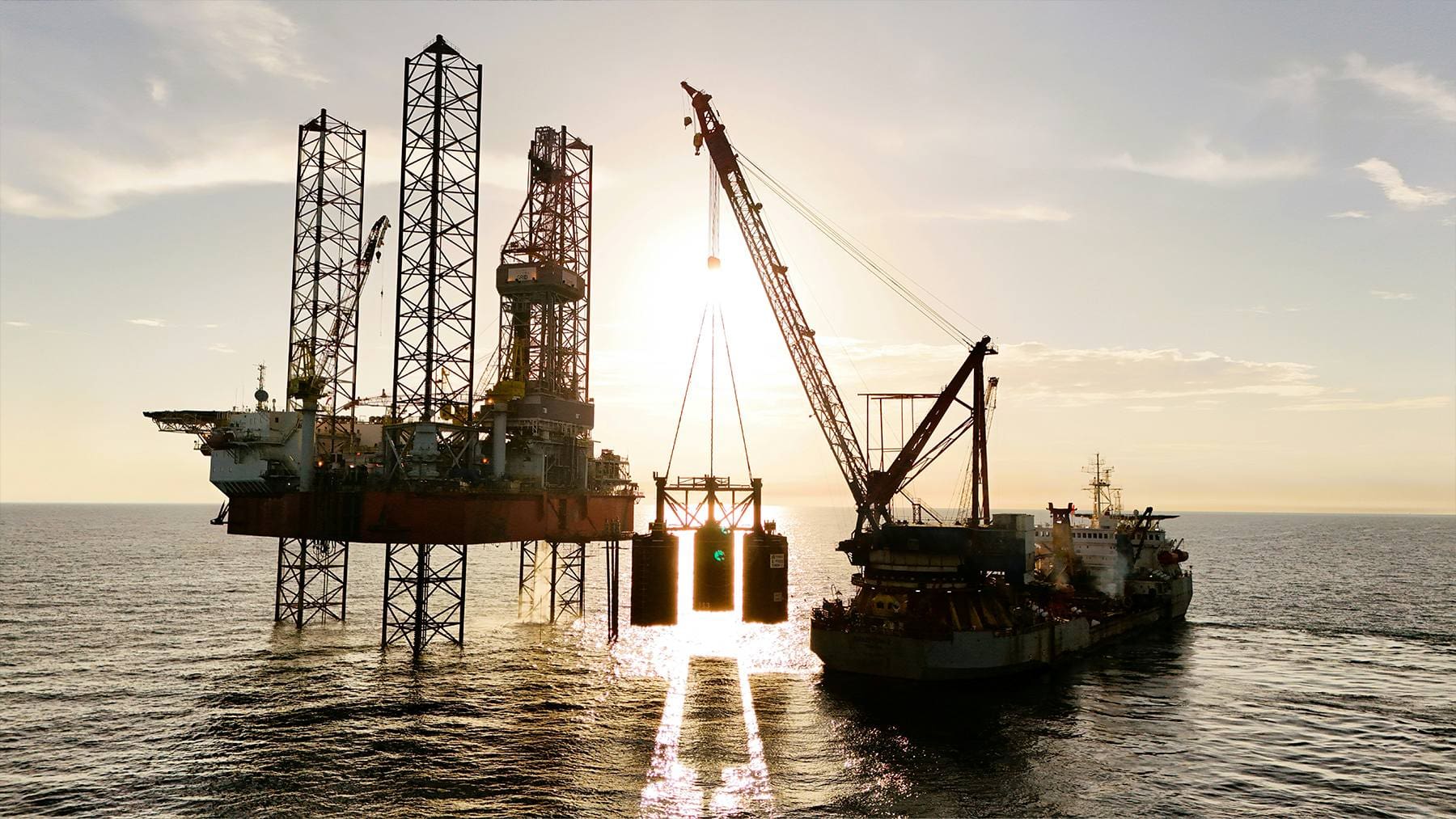 Credits: J F Manzanero
In the ever-changing world of the energy industry, old projects and aging infrastructure are often left to fade away into dust as energy companies decommission developments in favor of more profitable prospects. However, on the odd occasion that projects are provided a lifeline, new potential can be found in old developments and infrastructure. This has become evident in the North Sea in Norway, as a new investment promises to revive a region that previously produced vast amounts of natural resources.
Norway’s North Sea to receive substantial investment in upstream production
Norway’s North Sea has long been at the center of the region’s upstream market; however, the only constant in life is change. After a few decades of languishing, the Greater Ekofisk Area (GEA) has been given a lifeline from a consortium of energy companies. ConocoPhillips Skandinavia, a subsidiary of the US-based energy giant, along with its partners, Vår Energi, Orlen Upstream Norway, and Petoro, recently sanctioned a new redevelopment program for the region.
The plan, according to the consortium, is to redevelop previously produced fields (PPF) on the Norwegian Continental Shelf to provide Norway with a boost in upstream production and ensure long-term value creation from the previously developed region.
The joint venture partners recently took a final investment decision on the revival program
The partners took a final investment decision on the Previously Produced Fields redevelopment program that is set to invest upwards of $1.8 billion in three previously developed wells that were decommissioned in 1998. The fields in question are Vest Ekofisk, Albuskjell, and Tommeliten Gamma.
The redevelopment of these three wells has become a reality thanks to some significant changes in operations, such as the use of horizontal well technology and better well placement to bring the region back to life following decades of waiting in the dust like a grim reaper waiting for his next soul to transport to the afterlife.
“Our focus is on projects with low cost of supply and increased gas delivery to Europe. We are advancing our near-field resource strategy with subsea developments in the GEA, and we value our license partners’ support for the PPF project.” – Steinar Våge, President of Europe, Middle East and Africa for ConocoPhillips
Next up is to submit the relevant documented plan to Norwegian authorities
The partners will now need to submit the plans for development and operation to the relevant Norwegian authorities, which they state will take place in Q1 of next year.
The development plan calls for 11 wells and four new subsea templates that will all be tied back to the Ekofisk Complex through a shared pipeline, with first gas expected in 2028. As legacy fields begin their revival and start production, it has become clear that the world still needs the upstream market.
“The PPF project is an important development that supports Vår Energi’s plan to sustain production of 350 to 400 thousand barrel of oil equivalent per day (kboepd) towards 2030 and beyond. This reinforces our focused strategy by consolidating our position in the Greater Ekofisk Area and securing low-cost reserves with strong upside potential, enhancing long-term value creation.” – Torger Rød, Vår Energi’s COO
The world is not quite done with the upstream oil and gas market
Despite the overwhelming calls to end the global reliance on oil and gas, the reality is that the world has not yet developed a viable, scalable alternative that could completely replace the upstream market for good, thus the redevelopment plan in the North Sea. The period between this year and the end of the decade is set to see global offshore production surge as a wave of new and redeveloped projects comes online.
