
UK leadership change prompts calls to reverse North Sea oil and gas production decline amid energy security concerns
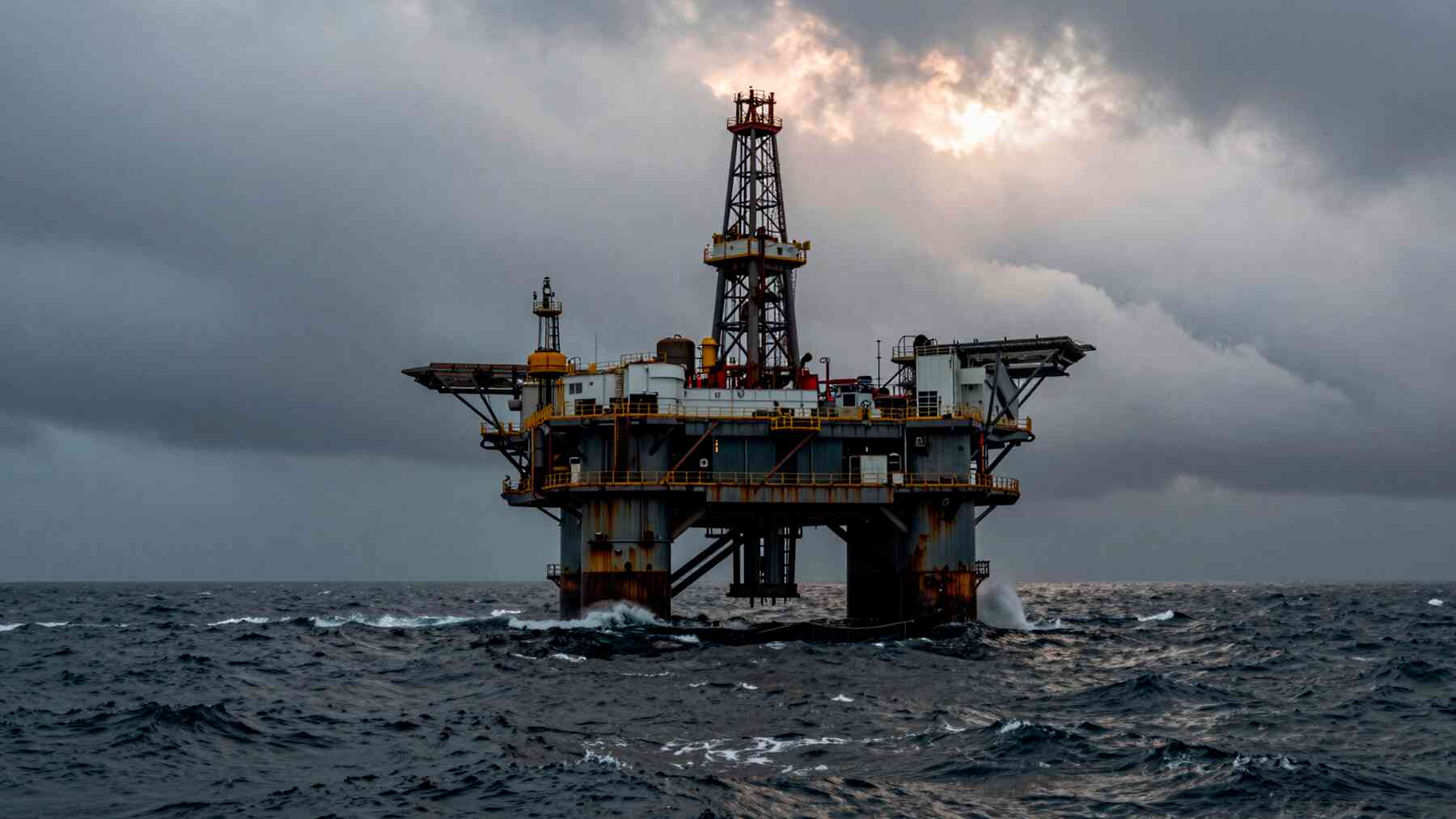 AI-made
UK Prime Minister Keir Starmer resigned earlier this week, leaving the front-runner to succeed him, Andy Burnham, to potentially inherit one of British energy policy’s most contested questions: what to do about the North Sea.
The timing carries weight. With household energy bills still elevated and geopolitical tensions running high following the Iran war, pressure is mounting on the incoming leadership to reconsider restrictions that critics say have accelerated the decline of domestic oil and gas production.
Starmer’s resignation opens North Sea policy debate
Starmer’s departure leaves a policy vacuum at a critical moment. Energy security has moved to the front of UK politics in the wake of the Iran war, and the North Sea sits squarely at the center of that debate. Burnham, who has described his economic vision as “business-friendly socialism,” has offered little detail on how he would approach the sector—and that ambiguity has sharpened calls from analysts and industry figures for a clear, early signal on direction.
The incoming leadership will need to weigh long-term climate commitments against the more immediate pressure to secure affordable, reliable domestic energy.
The stakes are concrete. High energy bills continue to burden households and businesses alike, and critics of the outgoing government argue its restrictions on North Sea production made that situation worse. The incoming leadership will need to weigh long-term climate commitments against the more immediate pressure to secure affordable, reliable domestic energy.
Labour government tightened North Sea restrictions since 2024
Since taking office two years ago, Starmer’s government raised taxes on oil and gas producers to among the highest levels globally and curbed new exploration—moves that analysts say effectively accelerated the North Sea basin’s long-anticipated decline.
The stated rationale was coherent enough. Prolonging North Sea production sits uneasily with UK climate targets, and reducing reliance on volatile fossil fuels was presented as a path to greater economic resilience over time. Climate change, driven largely by greenhouse gas emissions from fossil fuels, remains a serious long-term concern. Those arguments have not gone away.
Still, the policy drew sustained criticism. U.S. President Donald Trump repeatedly targeted Starmer’s energy approach, and domestic opposition argued that the restrictions damaged investment and jobs without meaningfully reducing the UK’s overall consumption of hydrocarbons.
North Sea output has fallen sharply and is projected to keep declining
The numbers tell a clear story. North Sea production peaked at more than 4 million barrels of oil equivalent per day in the late 1990s. By 2024, output had fallen to approximately 1.1 million boepd. The North Sea Transition Authority projects that figure will decline further to roughly 650,000 boepd by 2030.
That trajectory reflects both natural depletion and a prolonged period of underinvestment. The basin is not exhausted, though. Estimates suggest it still holds as much as 11.2 billion barrels of oil equivalent in prospective and undeveloped resources — roughly 28 years of production at 2024 rates. North Sea gas continues to supply approximately half of the UK’s domestic needs, with remaining demand met primarily through imports from Norway, which accounts for around 75% of those imports, and LNG making up the rest.
Importing energy carries economic and environmental costs, analysts say
The case for domestic production is not only about energy security. It has an environmental dimension that tends to get lost in the policy debate.
According to the International Energy Agency, imported LNG can generate 60 to 70 percent more emissions than domestic pipeline gas—a premium that reflects the energy-intensive processes of liquefaction, long-distance transport, and regasification. Replacing North Sea output with LNG imports does not eliminate emissions. It may increase them.
The economic argument points the same way. The domestic oil and gas sector supports thousands of UK jobs and billions of pounds in investment. Phasing out North Sea production while the country continues to consume hydrocarbons does not reduce demand; it redirects capital and employment to overseas producers, many operating in geopolitically sensitive regions. Russia’s 2022 invasion of Ukraine and the subsequent Iran war reinforced that point, exposing the risks of overreliance on foreign energy supplies and renewing interest in the strategic value of domestic production.
Gas remains central to UK energy system despite renewable growth
The UK has made genuine progress on renewables. Wind was the largest single source of electricity generation for the second consecutive year in 2025, accounting for 30% of output, according to the National Energy System Operator. Coal fell to zero for the first time since the industrial revolution.
Gas still accounted for 27% of electricity generation in 2025, and its role is unlikely to shrink quickly. Renewable generation is intermittent by nature—when wind speeds drop or demand spikes, natural gas power plants remain the primary stabilizing force. That dependency will persist until battery storage can be deployed at scale, a transition analysts suggest could take 20 years or more.
Policy changes needed to attract investment back to the basin
Norway offers an instructive contrast. Its North Sea sector has sustained and even grown output in recent years through continued exploration and development, and that resilience proved critical after 2022, when Europe needed to offset the collapse in Russian gas supplies.
Analysts argue the UK could follow a similar path with targeted policy adjustments. Loosening restrictions on exploration and clarifying the tax framework — without necessarily lowering the overall tax burden — could restore enough certainty to attract investment back to the basin. North Sea production is declining rapidly, but significant untapped resources remain. Domestic gas still meets roughly half of UK needs, and replacing it with imports carries both higher emissions and greater geopolitical risk. Whether Burnham’s government moves to recalibrate will be one of the defining early tests of his leadership.
Kelly is an experienced writer with 15 years of experience exploring the big stories that shape our world, from tech breakthroughs and space exploration to climate, energy, and the fascinating quirks of science. She has a talent for turning complex ideas into sharp, memorable insights that stay with readers long after they’ve finished reading.
