
A concentrating solar cell baked above 158°F in Riyadh and lost the summer power race to the same technology under Copenhagen’s cooler sky
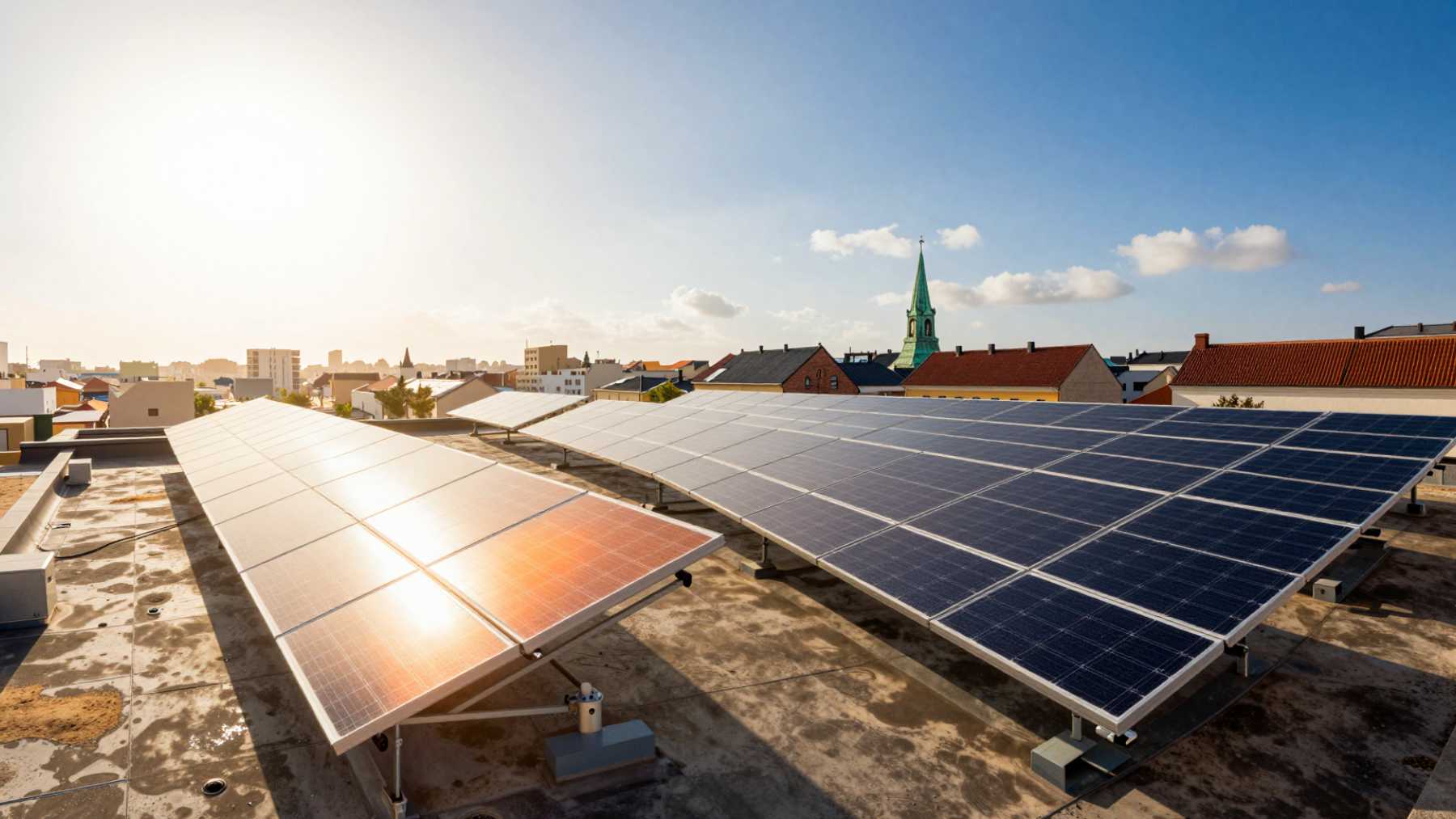
Most people assume solar panels thrive where the sun is most brutal — the Saudi desert, the scorching Sahara, anywhere the heat is relentless and the sky is cloudless. More sun, more power. The logic seems airtight.
But a study comparing three cities across very different climates found something that cuts against that intuition. On a typical summer day, a concentrating photovoltaic system installed in Copenhagen — closer to the Arctic Circle than to the tropics — delivers more electrical power than the same system baking under the Riyadh sun. The desert, it turns out, has a problem.
What Makes Concentrating Photovoltaics Different
Standard solar panels absorb all incoming sunlight across their surface. CPV systems work differently. They use lenses or mirrors to focus sunlight onto tiny, highly efficient triple-junction (TJ) solar cells — concentrating radiation onto a much smaller area to squeeze out more electrical power per unit of cell material.
The team built an experimental model connecting TJ cell electrical output to two key variables — cell temperature and the concentrated solar radiation hitting it.
TJ cells are exceptionally efficient, but they carry a specific requirement: they respond to Direct Normal Irradiance, the beam of sunlight arriving straight from the sun’s disk. Scattered or diffuse light doesn’t count. That makes CPV systems far more location-sensitive than conventional panels, which can still generate power on a cloudy day.
Because DNI must hit the cell at the right angle, CPV systems also need tracking mechanisms that follow the sun’s movement. The study examined residential-scale configurations using modules of 90 cells — a practical size for household deployment.
Three Cities, Three Very Different Solar Stories
To explore how location shapes CPV performance, researchers selected three cities with sharply contrasting climates: Riyadh, a hot desert environment; Palermo, a Mediterranean city with mild winters and warm summers; and Copenhagen, a northern European city with cold winters and limited sunlight hours.
The team built an experimental model connecting TJ cell electrical output to two key variables — cell temperature and the concentrated solar radiation hitting it. They then compared performance on typical sunny winter and summer days across all three locations. The results weren’t what most would expect.
In winter, Riyadh leads clearly. A TJ cell there delivers roughly 20% more electrical power than the same cell operating in Palermo or Copenhagen. More sunlight, lower ambient temperatures, and strong DNI all work in the desert’s favor during the cooler months.
When Desert Heat Becomes a Liability
Summer changes the picture entirely. In Riyadh, TJ cell temperatures exceed 70°C on a typical summer day. Heat is the enemy of solar cell efficiency — as temperature rises, electrical output drops. The desert’s greatest asset becomes its biggest liability.
Copenhagen stays cool. Its lower ambient temperatures keep TJ cells operating more efficiently, and on a peak summer day, it actually delivers the highest maximum power of the three cities studied. That’s a counterintuitive result worth sitting with.
Peak power on a single day isn’t the whole story, though. Total annual electricity producibility also depends on how many sunlight hours each city gets across the year. Copenhagen’s long summer days help, but its dark winters limit overall annual output. The researchers factored in both DNI distribution and ambient temperature across all seasons — that combined picture determines how much electricity a CPV system actually produces over a full year.
Sizing the System to Maximize Profit, Not Just Power
Knowing how much electricity a system can produce is one thing. Knowing how many modules to install to make the investment worthwhile is another question entirely.
Researchers sized CPV systems for a residential user at each location using real annual DNI and temperature data, then evaluated economic performance through three standard metrics: Net Present Value (NPV), Profit Index (PI), and Discounted Payback Period (DPBP). The optimal number of modules — the configuration that maximizes investment profitability — differs by location. Cost savings come from reduced electricity purchases and revenue from selling excess generation, both of which shift significantly depending on where the system sits.
What This Means for Deploying CPV Technology Globally
The core finding is straightforward: CPV isn’t a one-size-fits-all technology. A system optimized for Riyadh isn’t the right system for Copenhagen, and vice versa. Climate-specific analysis is essential before any deployment decision.
High-DNI desert regions remain strong candidates for CPV overall. But thermal management is a genuine engineering challenge in hot climates — one that can’t be dismissed by pointing to annual sunshine totals. Economic feasibility studies must account for seasonal variation, not just annual averages. A location that looks attractive on paper may underperform in summer precisely when energy demand peaks.
Looking ahead, CPV/T hybrid systems — which combine photovoltaic generation with thermal energy recovery — could help recover heat losses that currently reduce output in hot climates. That technology may prove critical to making CPV economically viable across a wider range of locations, including the sun-drenched deserts where intuition said it should already be thriving.
You can check the full study here: Renno, C., Perone, A. Energy and economic analysis of a point-focus concentrating photovoltaic system when its installation site varies. Front. Energy 15, 384–395 (2021). https://doi.org/10.1007/s11708-020-0717-9

Carlos is an engineer with strong expertise in technical and industrial topics. He previously worked at international companies such as Siemens and is multilingual.
