
Adriatic LNG terminal covered 14% of Italy’s gas demand in first half of 2026, offsetting Qatari supply disruptions with US cargoes
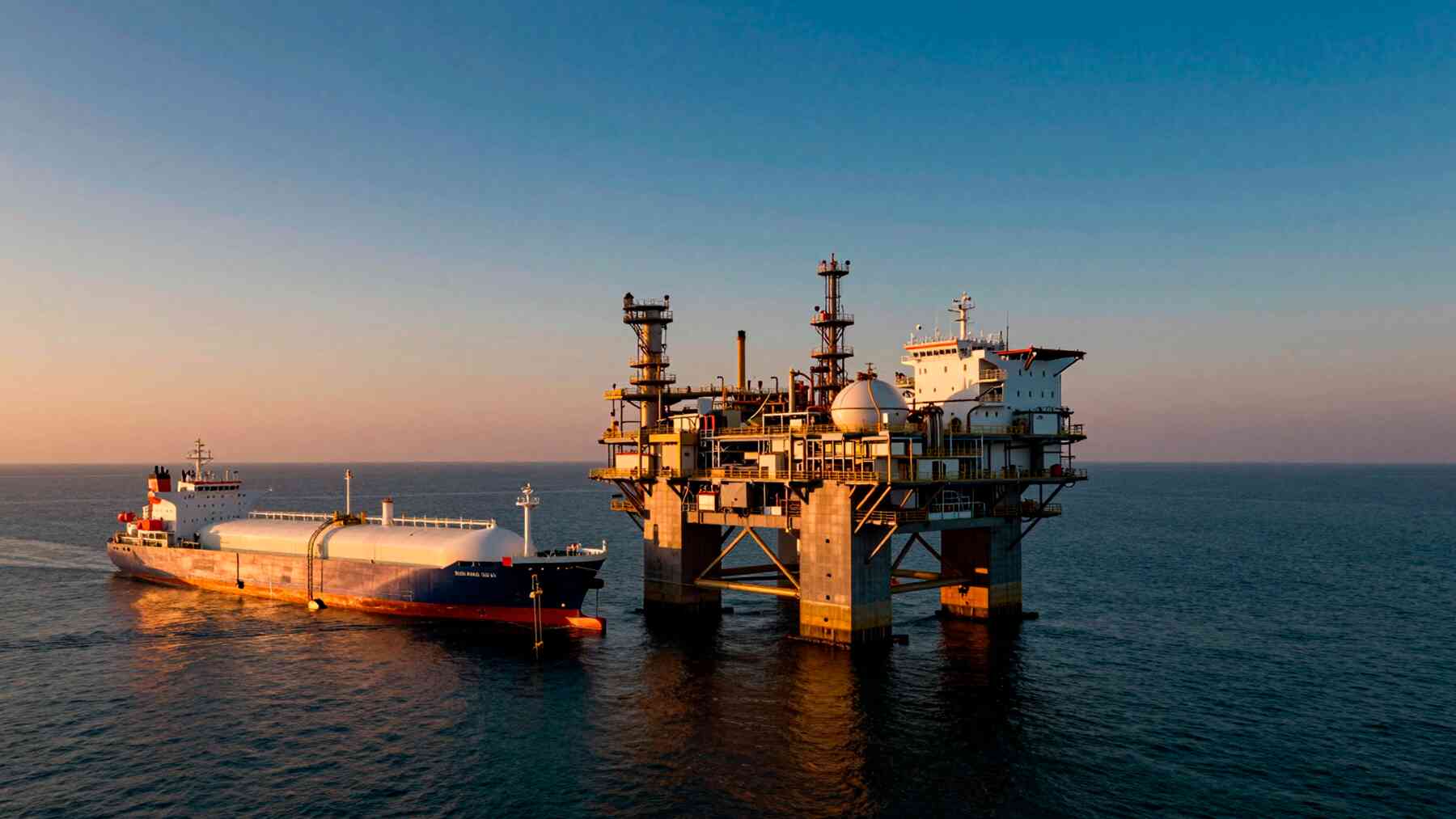 AI-made
In the first half of 2026, Adriatic LNG delivered 4.4 billion cubic meters of natural gas into Italy’s national grid — enough to cover 14% of the country’s total gas demand and more than 40% of all national LNG imports. The figures, released alongside the terminal’s latest operational results, confirm its position as Italy’s third-largest source of natural gas imports, trailing only the pipeline corridors from Algeria and Azerbaijan.
Adriatic LNG delivers 4.4 billion m³ in first half of 2026
That 4.4 billion m³ didn’t come from a demand surge or some exceptional operational push. It landed almost exactly where the terminal performed in the first half of 2025 — steady, consistent, structurally significant. Italy’s total gas consumption in the period ran to roughly 32.6 billion m³, meaning Adriatic LNG alone covered about one in every seven cubic meters consumed nationally.
The terminal’s share of Italy’s LNG imports tells an even sharper story. More than 40% of all national LNG imports flowed through a single offshore regasification facility. That makes Adriatic LNG function less like a supplementary option and more like a load-bearing pillar of the country’s gas supply architecture.
“For us, sustainability means building value over time, with continuity, responsibility and attention to what we do every day,” he said.
Persian Gulf crisis temporarily disrupted Qatari LNG flows
The first half of 2026 wasn’t a routine operating period. Tensions in the Persian Gulf triggered a temporary interruption of LNG shipments from Qatar through the Strait of Hormuz — one of the world’s most critical energy chokepoints — and that disruption rippled outward fast, reshaping the geographic mix of supply reaching terminals across Europe.
For Adriatic LNG’s customers, reduced Qatari volumes created an immediate sourcing challenge. Alternative supply routes had to be found quickly. The terminal’s operational flexibility meant it could absorb those shifting requirements without compromising delivery continuity, and rather than exposing a vulnerability, the episode showed how a well-positioned regasification asset can act as a buffer when upstream supply chains fracture.
US cargoes replaced Qatari volumes, reshaping LNG source mix
The numbers behind that pivot are striking. In the first half of 2026, 28 LNG carriers arrived at Adriatic LNG from the United States; Qatar, by comparison, sent 13. In a typical period, Qatari volumes would’ve been far more prominent in the mix. The reversal reflects both the scale of the Gulf disruption and the speed with which US exporters redirected supply toward European buyers.
Crucially, the substitution held overall delivery volumes steady. The terminal matched its prior-year performance despite the supply chain disruption — a result that underscores its role as a diversification asset rather than a single-origin import facility.
CEO Alexandra Thomas framed it directly. “In an international scenario marked by increasing uncertainty and volatility, the value of solid, reliable and resilient infrastructure such as Adriatic LNG is even more evident,” she said. “Our contribution to the country’s energy security is based on our ability to ensure operational continuity, supply diversification and high safety standards.”
Safety record and sustainability report published alongside operational results
Alongside the operational figures, Adriatic LNG released its 2025 Sustainability Report, prepared in line with the European VSME standards developed by EFRAG — the voluntary sustainability reporting framework designed for non-listed small and medium-sized enterprises.
The safety data stands out. The company closed 2025 with zero employee injuries and no environmental incidents or events affecting plant integrity. That record becomes more meaningful when you factor in operational intensity: more than 37,000 hours of maintenance and capacity upgrade work were completed — involving technicians, engineers, and contractor personnel — without a single recorded injury.
Investment in people extended beyond safety protocols. Over 1,600 hours of staff training were delivered during the year, and the employee wellbeing program expanded with new initiatives. On the environmental side, Adriatic LNG continued its voluntary participation in UNEP’s Oil & Gas Methane Partnership 2.0, focused on methane emissions reporting and reduction. The company also launched “Custodi del Mare,” an environmental education project developed in partnership with Plastic Free, aimed at raising awareness around marine protection.
External Relations Director Alfredo Balena described the approach as integrated rather than add-on. “For us, sustainability means building value over time, with continuity, responsibility and attention to what we do every day,” he said.
Terminal’s cumulative output exceeds 113 billion m³ since 2009 launch
The 1H26 results don’t exist in isolation — they add to a long operational track record. Since Adriatic LNG began operations in the second half of 2009, the terminal has delivered more than 113 billion m³ of natural gas into Italy’s national grid, with approximately 1,250 LNG carriers from multiple geographic origins having docked at the facility over that span.
That history matters. It positions Adriatic LNG not as an emergency backstop or a recent addition to Italy’s energy mix, but as a structurally embedded component of national gas infrastructure — one that’s operated through multiple cycles of market volatility, geopolitical disruption, and shifting supply patterns.
The first half of 2026 reinforced that role. A 14% share of national gas demand, stable delivery volumes, and a demonstrated ability to pivot supply origins under pressure: taken together, these figures confirm that the terminal keeps functioning as a meaningful stabilizer within Italy’s gas system, particularly at a moment when global LNG markets are far from predictable.
Kelly is an experienced writer with 15 years of experience exploring the big stories that shape our world, from tech breakthroughs and space exploration to climate, energy, and the fascinating quirks of science. She has a talent for turning complex ideas into sharp, memorable insights that stay with readers long after they’ve finished reading.
