
Florida installed 13,000 solar streetlights that run on their own, and they stay on when hurricanes knock the rest of the grid dark
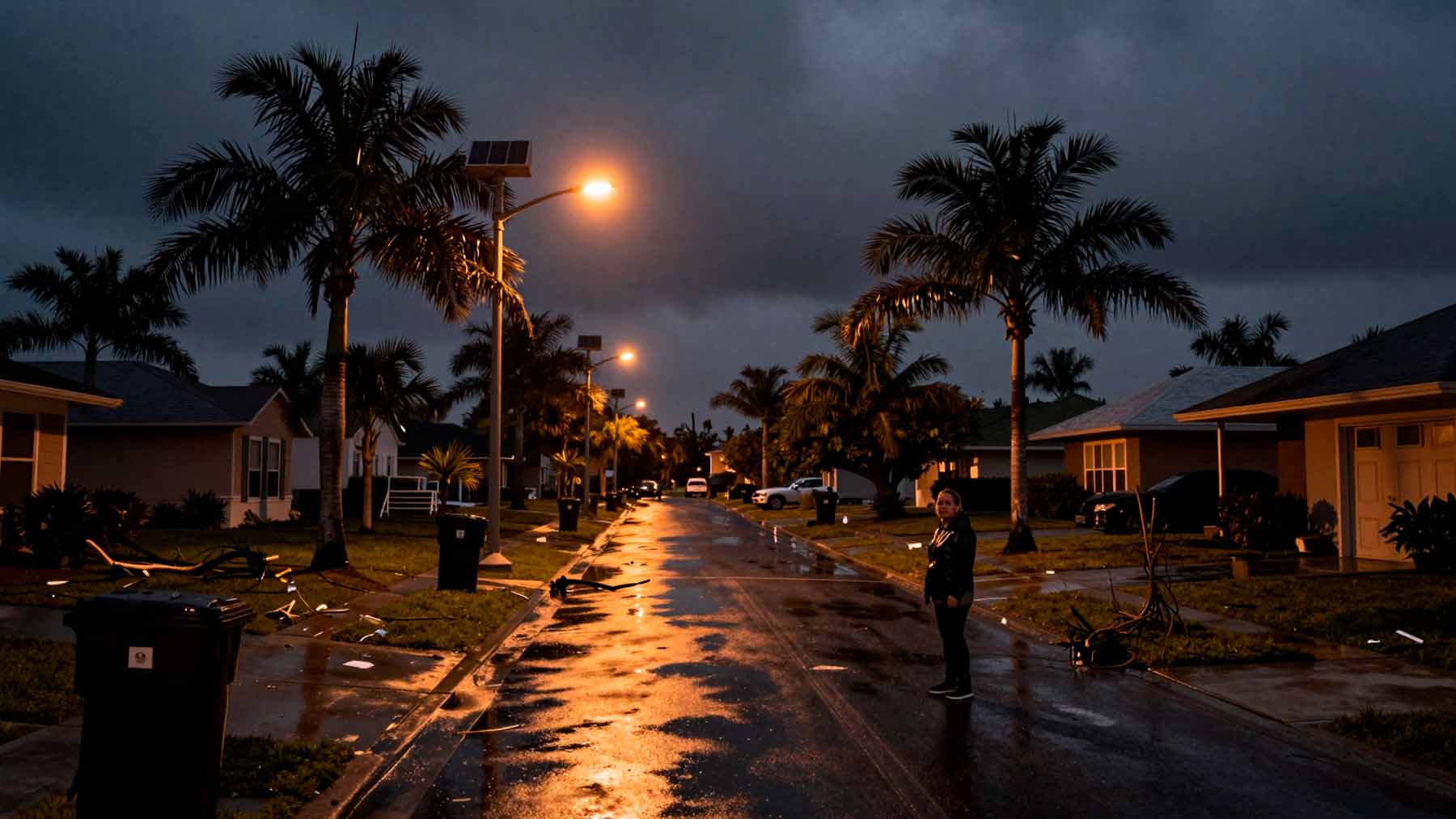
When a hurricane makes landfall in Florida, the grid often goes with it — and neighborhoods that were bustling hours earlier go completely dark. Emergency responders navigate by headlamp. Residents search for safe ground they can barely see.
It’s a pattern Florida communities have lived through for decades. But across the state, something has quietly changed: thousands of streetlights that stayed on through the last storm, and the one before that — running entirely on their own.
When the grid fails, darkness becomes a safety crisis
Power outages after a hurricane aren’t just inconvenient — they’re dangerous. Without streetlights, drivers struggle to spot debris, pedestrians become invisible, and emergency responders lose the visual cues they rely on to work quickly and safely. In a state that absorbs more named storms than almost anywhere else in the country, that darkness is a recurring threat.
Because these lights don’t connect to the grid, installers can skip the trenching and underground wiring that traditional streetlight projects require.
Florida’s overhead power infrastructure is particularly exposed. Lines strung between poles are vulnerable to wind, falling trees, and storm surge — and when they go down, entire neighborhoods lose light at exactly the moment they need it most.
Zahra Tayarani, a resident of the Angeline community, put the human stakes plainly. “It is really important for a community that knows that we are living in a safe area,” she told Bay News 9, “and that we know that if something happens during a hurricane, at least we have somewhere to kind of get shelter. That somebody can see us.”
That phrase — somebody can see us — captures something essential. Streetlighting is a small piece of the resilience puzzle, but it’s the piece that makes every other piece workable.
How off-grid solar streetlights work — and why they stay on
The technology is straightforward. Each unit operates independently, collecting solar energy during the day and storing it in an onboard battery. When the sun goes down — or when a storm rolls through — the battery takes over. No grid connection required.
That independence is the key distinction. Conventional streetlights draw power from centralized infrastructure, so when overhead lines fail, the lights fail with them. Off-grid solar units carry no such dependency. A grid outage simply doesn’t trigger a shutdown.
There’s a practical construction advantage worth noting. Because these lights don’t connect to the grid, installers can skip the trenching and underground wiring that traditional streetlight projects require. That cuts both installation time and upfront cost — a meaningful difference when deploying lights at scale across a large municipality.
From Tampa to Pasco County: a deployment already at scale
What started as a local story out of Tampa has grown into something worth watching statewide. A Bay News 9 segment featuring a Tampa-area solar streetlight company drew significant attention after a Reddit thread amplified the report — a sign that people are actively searching for practical, working solutions to storm-related outages.
The numbers are notable. According to the report, 13,000 solar streetlights are currently in use across Florida, with 5,000 of them concentrated in Pasco County alone. Another 100 units are on the way, and the expansion shows no sign of slowing.
The Reddit response matters beyond the clicks. It reflects genuine public appetite for infrastructure that works when conventional systems don’t — and when people share a story about streetlights, they’re really sharing a story about feeling less helpless during a crisis.
Beyond resilience: the financial case for solar street lighting
Storm resilience gets most of the attention, but the economics hold up even when the skies are clear. Avoiding trenching, underground wiring, and ongoing grid-tied electricity costs can make these systems competitive across a typical infrastructure lifespan. Lower operating costs mean municipalities don’t have to choose between resilience and budget discipline.
The parallel to residential solar is worth drawing out. Homeowners who pair solar panels with battery storage gain the same kind of independence — daytime energy stored for use at night or during outages. Battery storage is what transforms solar from a daytime-only resource into a round-the-clock power source, and that logic applies whether you’re lighting a living room or a county road.
A model for storm-resilient communities across the US
Florida’s deployment illustrates something larger than one state’s infrastructure upgrade. It shows that clean energy technology can function as backup infrastructure — not just as an emissions-reduction strategy. That reframing matters considerably.
Other storm-prone regions face similar vulnerabilities. Coastal communities along the Gulf, the Carolinas, and coastal Texas all deal with hurricane seasons that stress aging grid infrastructure, and the Florida model is directly transferable to any of them.
There’s also a coordination benefit that goes beyond simple visibility. When public spaces stay lit during outages, residents can find each other, locate resources, and communicate with first responders far more effectively. Panic is harder to sustain under a working streetlight.
As extreme weather grows more frequent and more intense, pressure on grid infrastructure will only increase. Solar streetlights with battery storage won’t solve every problem a major storm brings. But they represent an early, already-deployed example of what community resilience can look like when the design starts from the assumption that the grid will sometimes fail — and plans accordingly. More communities are likely to take notice.


Carlos is an engineer with strong expertise in technical and industrial topics. He previously worked at international companies such as Siemens and is multilingual.
