
America hides its emergency oil in 60 giant salt caverns under the Gulf Coast, and each hollow chamber is carved so deep it could swallow the Empire State Building whole
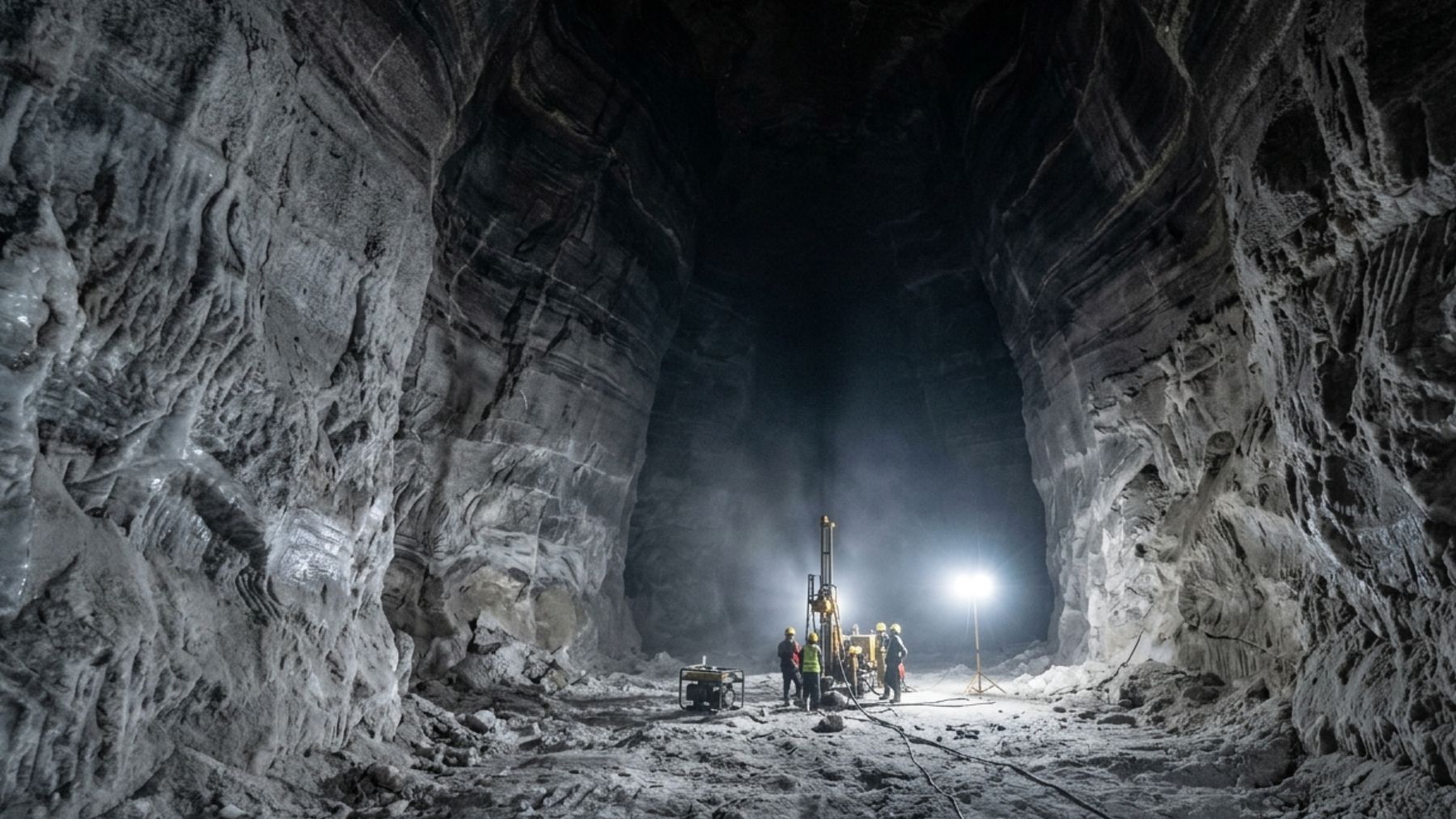
Somewhere under the flat coast of Texas and Louisiana, a vast emergency is hidden in the dark.
It is not a bunker or a vault, and almost no one ever sees it.
Hundreds of millions of barrels of crude oil sit deep below the surface.
The same drive to engineer the hidden earth shows up elsewhere, from an ice core to the seabed under an offshore wind farm.
They wait there in silence for the day the country might need them.
The tanks holding all of it are not made of steel.
They were carved out of solid salt.
Why a country hoards oil
The idea was born out of a crisis in the 1970s.
An oil embargo sent prices soaring and left drivers stranded in long lines.
The shock revealed how helpless a modern economy is without steady fuel.
The nation was importing much of its oil at the time.
A hostile decision half a world away could freeze the whole economy.
Leaders wanted a buffer no foreign power could switch off.
So the United States decided to build a giant national cushion of oil.
It is called the Strategic Petroleum Reserve.
The plan was simple, store enough crude to ride out a serious disruption.
If imports were ever cut off, the country could tap its own hidden supply.
It became one of the largest emergency stockpiles on Earth.
But where do you put that much oil safely?
Why the answer was salt
The answer lay in a quirk of geology along the Gulf Coast.
Deep underground there are enormous domes of natural salt.
These salt domes formed over hundreds of millions of years.
Ancient seas dried up and left thick beds of salt behind.
Later rock pushed that salt upward into towering underground pillars.
These formations are stable, thick, and remarkably good at holding liquid.
Salt does not let oil seep through it the way ordinary rock might.
Under pressure, salt even heals its own small cracks over time.
That makes a salt dome a nearly perfect natural tank.
Building steel tanks this big would cost a staggering amount.
Carving space inside the salt is far cheaper and far more secure.
Nature had already built the hardest part.
How you hollow out a mountain of salt
Making one of these caverns is a strange kind of engineering.
Crews drill a well straight down into the heart of a salt dome.
Then they pump enormous volumes of fresh water down the hole.
The water slowly dissolves the salt, carving out a hollow space.
The leftover brine is pumped away, often piped miles out into the Gulf.
Bit by bit, a huge empty chamber opens up underground.
Carving a single cavern can take a year or more.
It swallows staggering amounts of water to hollow out the space.
Fresh water keeps flowing until the cavern reaches its planned size.
Only then is the crude oil pumped in to fill the void.
The whole process shapes a tank without digging a mine.
It is done with water alone.
Caverns that could swallow a skyscraper
Here is the scale that is hard to picture.
According to one report, the reserve holds 60 of these salt caverns across four sites.
Together they can store about 714 million barrels of crude oil.
A single typical cavern is around 200 feet wide and 2,500 feet tall.
That is deeper than the Empire State Building is high.
You could lower that entire skyscraper into one cavern and still have room above it.
The sites sit in Texas and Louisiana, near the coast and its refineries.
Add all sixty caverns together and the numbers turn almost unreal.
The reserve can hold more oil than many entire countries use in a year.
It is a hoard measured not in tanks but in whole underground rooms.
All of it stays hidden half a mile beneath the surface.
When the country opens the taps
For most of its life, the reserve simply sits and waits.
It is opened only when supply is truly threatened.
Hurricanes, wars, and sudden shortages have all triggered releases.
In recent years the country drew the reserve down sharply to calm high prices.
That left the stockpile lower than it had been in decades.
When a release is ordered, oil can start flowing within days.
That speed is the whole reason the reserve is kept ready.
According to one account, refilling those caverns is a slow and costly job.
The same drive to engineer the hidden earth shows up elsewhere, from an ice core to the seabed under an offshore wind farm.
For decades it has served as the country’s insurance policy against chaos.
Most Americans will never know the caverns are there at all.
Yet far below the coast, a salted vault of oil waits in the dark, ready for the next crisis.
Hugo is an engineer with strong technical expertise. Multilingual from an early age, his writing combines technical clarity with a strong interest in science and energy.
