
Dubai is building a “back door” to the ocean so the world’s most dangerous shipping bottleneck can never hold its trade hostage
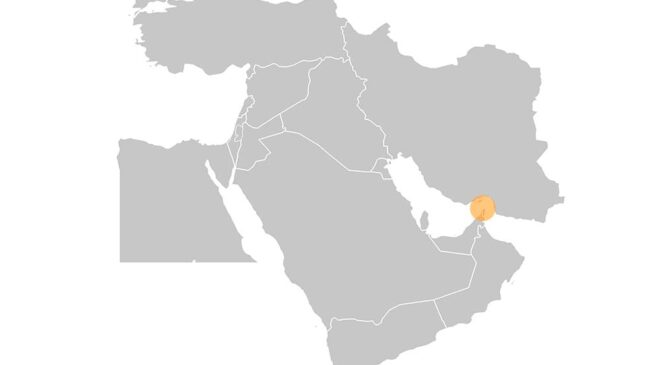
Every day, roughly a third of the world’s seaborne oil and a significant share of its container cargo passes through the Strait of Hormuz — a waterway barely 21 miles wide at its narrowest point. Geopolitical flare-ups in the region have repeatedly raised the prospect of that corridor being closed, even briefly, with consequences that would ripple through global supply chains almost immediately.
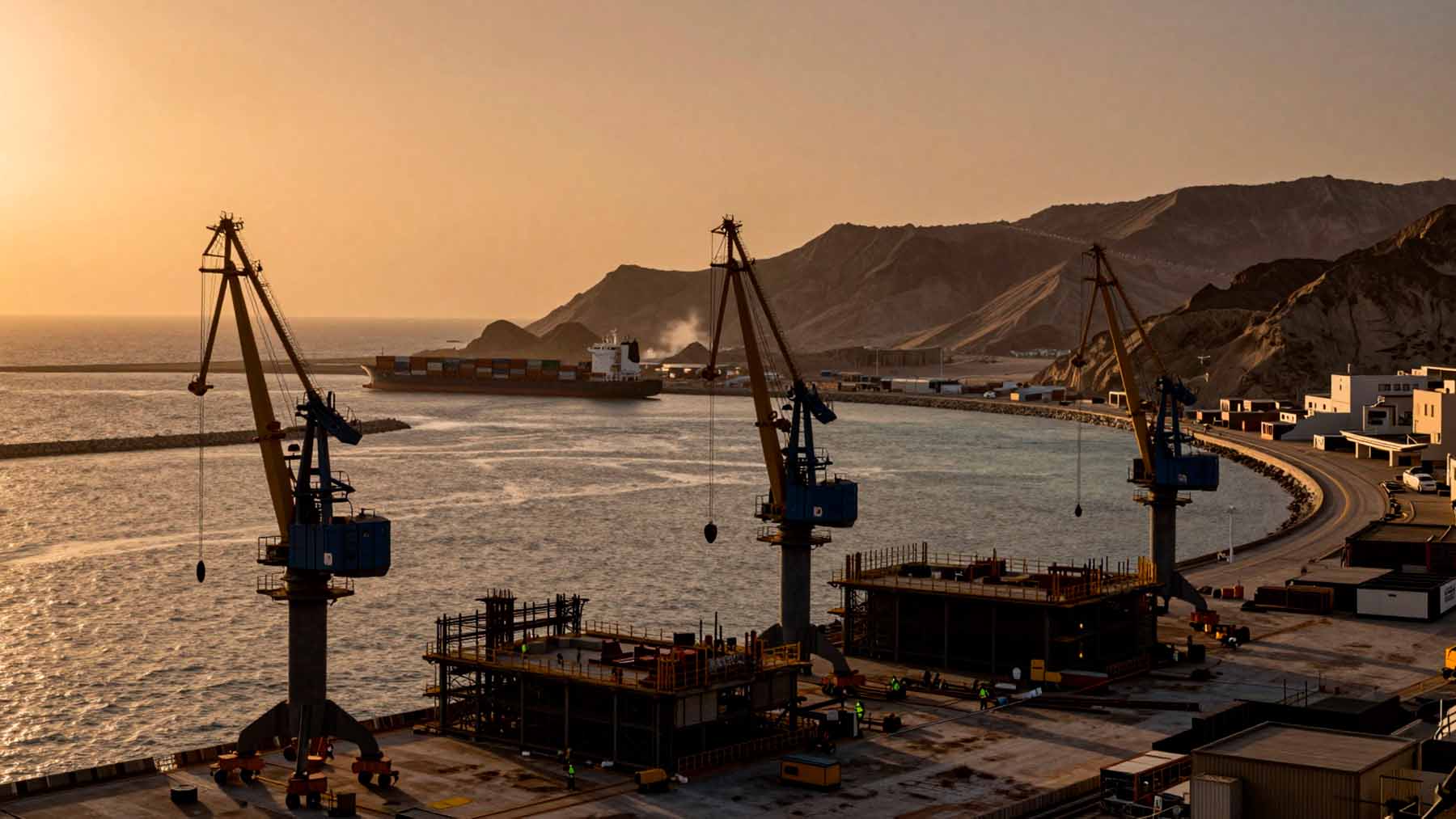
For Dubai, the exposure is direct. Its flagship port, Jebel Ali, sits deep inside the Gulf — meaning every container it moves must pass through Hormuz. Now, DP World has confirmed it will build an entirely new deep-water port complex at Fujairah, on the UAE’s east coast, placing Dubai’s next major trade gateway completely outside the Gulf for the first time.
A chokepoint too important to ignore
The Strait of Hormuz is the single most consequential shipping lane on earth. It connects the Persian Gulf to the Gulf of Oman, and roughly a third of the world’s seaborne oil flows through it. Any disruption — even a brief one — would send shockwaves through energy markets and global supply chains within days.
DP World and the Fujairah Ports Authority have reached an agreement in principle on a 50-year concession to develop two new terminals on the UAE’s east coast.
The geopolitical risks aren’t theoretical. Tensions involving Iran, regional conflicts, and military posturing have repeatedly raised the prospect of the strait being closed or contested. For any port sitting inside the Gulf, that’s not a distant risk — it’s a structural vulnerability built into every single shipment.
Those concerns have already pushed pipeline projects toward the Gulf of Oman coast, creating overland alternatives for oil exports. Container shipping, though, has had no comparable escape route. Until now.
Dubai’s Jebel Ali has the most to lose from any Hormuz disruption. It’s the largest port in the region, handling tens of millions of containers annually, and every one of those boxes must transit the strait. The new Fujairah development is a direct answer to that dependency.
What DP World is actually building
DP World and the Fujairah Ports Authority have reached an agreement in principle on a 50-year concession to develop two new terminals on the UAE’s east coast. The scale is significant.
The first, Al Rugaylat, is a container-focused terminal designed to handle up to 2.5 million TEUs per year. It will also accommodate 1.7 million tonnes of general cargo annually and carry Ro-Ro capacity of 190,000 Car Equivalent Units — meaning vehicle shipments are part of the picture from day one.
The second terminal, Dibba General Cargo, adds up to 3.6 million tonnes of annual general cargo capacity. Together they form a deep-water complex capable of handling Ultra Large Container Vessels — the mega-ships rapidly becoming the industry standard. Construction will happen in two phases, and once work begins, DP World expects the full build-out to take approximately 24 to 30 months. The financial investment figure hasn’t been disclosed publicly.
Fujairah’s transformation from oil hub to trade gateway
Fujairah isn’t a newcomer to maritime activity — but its current role is narrow. It functions primarily as an oil terminal, and its container throughput sits at just over 720,000 TEUs annually. That’s a fraction of what Jebel Ali moves. The new development would transform its profile entirely.
DP World has stated its ambition plainly: it wants to position Fujairah as “a leading center for maritime services.” That’s a significant step up from a bunkering and oil storage hub. The new terminals won’t operate in isolation either — DP World plans to connect Fujairah to Jebel Ali through its existing inland logistics network, turning the two facilities into a coordinated system rather than simply an alternative port.
In practice, cargo can move fluidly between Gulf and non-Gulf routes. A shipment arriving at Fujairah from Asia could be routed inland and onward through Jebel Ali into Gulf markets — or the reverse. That flexibility is exactly the kind of redundancy shippers and logistics operators have been asking for.
How this reshapes UAE’s position in global shipping
The numbers tell a clear story. DP World currently handles 19.4 million TEUs annually across its UAE operations. Once the Fujairah terminals are fully operational, that figure rises to nearly 22 million TEUs — a meaningful capacity jump that comes with geographic diversification that simply didn’t exist before.
Jebel Ali remains the flagship. Its 67 berths and capacity to handle over 22 million TEUs annually make it one of the most capable ports anywhere in the world. Fujairah, even at full build-out, won’t match that scale — but it doesn’t need to. Its value is strategic as much as operational.
The broader signal is about how trade infrastructure gets designed in an era of persistent geopolitical uncertainty. Building redundancy into a port network — creating parallel routes that can absorb disruption — is a form of risk management other major trading nations have pursued for years. The UAE is now doing the same.
What to watch as the project moves forward
The 24-to-30-month construction window means the first phase of Fujairah’s new terminals could be operational within three years of breaking ground. The timeline for starting construction hasn’t been specified, so that clock hasn’t started yet.
Watch for the formal concession agreement to be finalized and for DP World to announce a construction start date. The inland logistics link connecting Fujairah to Jebel Ali will also be worth tracking — that connection is what determines whether this becomes a true dual-port system or simply a standalone facility sitting on the wrong side of the peninsula.
For global shippers, the question is how quickly they begin routing cargo through Fujairah once capacity comes online. If demand materializes fast, pressure may build to accelerate or expand the project’s second phase. Either way, the UAE’s east coast just became a lot more important to watch.

Carlos is an engineer with strong expertise in technical and industrial topics. He previously worked at international companies such as Siemens and is multilingual.
