Venezuela’s Trove of Treasures
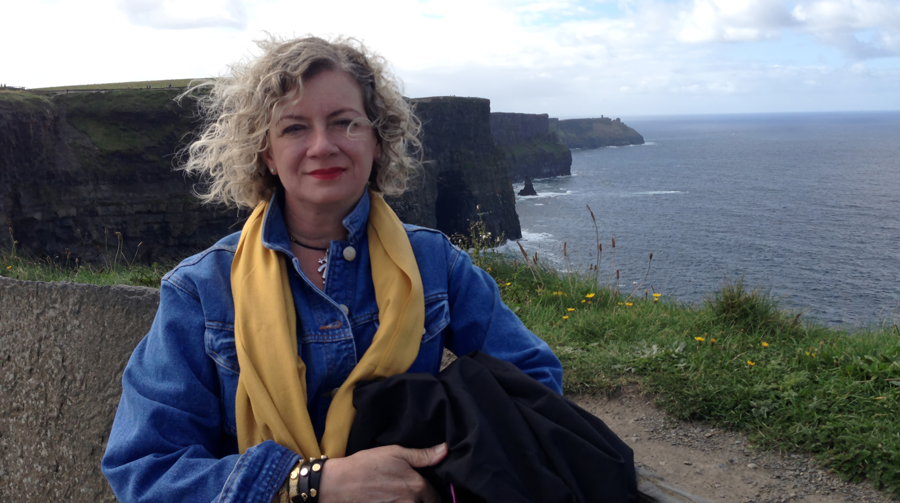
Former PDVSA leader offers insight on the fallen petrostate’s turbulent past and potential return to prosperity
Life – and history – has come full circle from the days when Maria Angela Capello, Ph.D., was general manager of three oil fields of state-owned Petróleos de Venezuela S.A. (commonly known as PDVSA) to the events of January 3, 2026, when former President Nicolás Maduro was removed from office after 13 years of dictatorial rule that saw Venezuela’s oil and gas sector plummet from being among the world’s top producers to a mere shadow of what it once was. Capello, president of Red Tree Consulting in Houston, is now a sought-after subject matter expert on the situation in Venezuela, particularly as it pertains to the country’s hydrocarbon industry.
Born into Democracy
This is not the Venezuela Capello remembers from her childhood well into adult life. In what she calls “one of the most beautiful parts of this story,” her parents were Italian immigrants who met in Venezuela. Despite being under the dictatorship of General Marcos Evangelista Pérez Jiménez, Venezuela was opening its borders in the 1950s and encouraged immigration from Spain, Portugal, and Italy – “people with the capacities to come and help expand what was a buoyant economy,” Capello says.
I was fascinated. It was a change of perspective for me. An exciting discovery,
However, when the price of oil dropped in 1957 and led to a recession, adding to the general discontent, the Venezuelan populace began to rise up. Perez Jiménez was ousted from office the following year and fled to the Dominican Republic, an event that ushered in a 40-year period of democracy. Former President Rómulo Betancourt, known as the “Father of Venezuelan Democracy,” was elected to serve a second term in office, starting in 1959. Along with Iran, Iraq, Kuwait, and Saudi Arabia, Venezuela was one of the founding members of OPEC on September 14, 1960, and remains a member to this day.
“I was born into democracy,” Capello says.
Despite coming from what she described as “a very humble, lower middle class segment of society,” she attended an all-girls Catholic school. “I have come to understand that my courage comes, in part, from those years because there was no question or doubt that women could be good in math, physics, chemistry, biology or STEM careers,” she says.
Capello credits that environment with sparking her love of science, which led her to study physics at the prestigious Simón Bolívar University.
No Coming Back
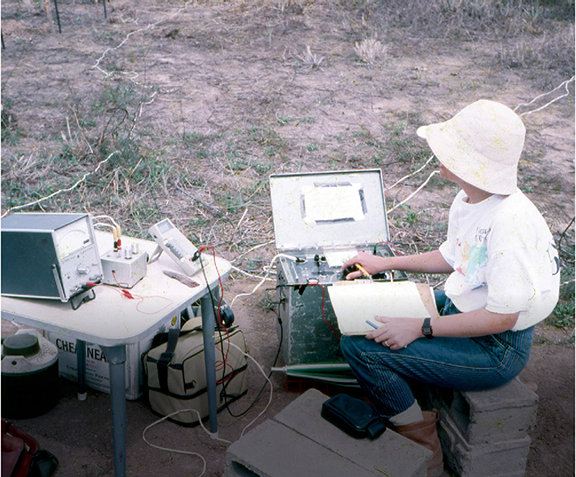
Among her eye-opening university experiences was an Introduction to Geophysics elective. In addition to a briefing of all geophysical methods, it included a field trip to acquire data about refraction, seismic, gravity and magnetic data, and paleomagnetism.
“I was fascinated. It was a change of perspective for me. An exciting discovery,” she says. “There was no coming back for me.”
Geophysics opened her eyes to the realization that she could apply mathematics and physics to understand the subsurface.
“This discovery of how oil and water are trapped in the rocks was an application of what I studied and it demonstrated how to produce prosperity in a country like Venezuela, where there was water and oil, not only in the subsurface, but an abundance of water in a country that was run on electricity derived from water, dams, and turbines.”
Exciting Times in Venezuela
Though internships were traditionally offered only to those students pursuing engineering careers, Capello navigated the red tape and eventually landed an internship with Corpoven S.A., a major subsidiary of PDVSA, the Venezuelan national oil company.
Upon graduating as a physicist, she immediately secured a job with Lagoven, another PDVSA affiliate, inherited from the tradition of the Creole Petroleum Corp., a subsidiary of Standard Oil. (Venezuela has a long oil industry history, and companies were merged, nationalized, and incorporated into the PDVSA holding after 1975.)
She began working in the exploration department of Lagoven and, in less than a year, was transferred to the city of Maturín, in Monagas State, to the field, where she was the first female supervisor of the seismic crews.
“Those were exciting times in Venezuela,” Capello says. “We had three seismic surveys being recorded at the same time. I was responsible for the field supervision of all three – one in the jungle, another in the flat lands, and a third in a very muddy area near the delta of the Orinoco area, all running at the same time.”
The first wildcat well (FUL-1) in the massive El Furrial oil field – still considered a cornerstone of Venezuelan production – was drilled in 1986 and Capello was there to witness the discovery. Initial reserves were estimated at over one billion barrels, capturing regional and global attention for the new giant oil field. An extensive drilling campaign took place, and production soon peaked at ~453,000 bbls/d in 1998.
The Mines Road to Leadership
After marrying her husband, a researcher at INTEVEP, the Venezuelan Institute of Oil Technology, affiliated with PDVSA, Capello requested and received a transfer from Lagoven to INTEVEP, but felt some hesitation because she only had a bachelor’s degree, while most of the others at the research center held master’s and doctorates. Despite her skills and experience being in exploration, she was placed in production.
Capello rose to the challenge and, for three years in a row, was recognized as the top employee in her department, which propelled the company to offer her a scholarship to the Colorado School of Mines to pursue a master’s degree. She studied geophysics but also learned leadership.
“That gave me the self-confidence I needed to move forward. When I went back, I was appointed project manager for the first 4D seismic feasibility project in Venezuela. We also acquired the first well-to-well seismic tomography survey for heavy oil in the world, the second survey of such scale after the tests in the United States. It was fantastic.”
Peak of Prosperity
This resulted in a variety of opportunities for Capello, including international speaking engagements and presentations. “I was, in many ways, advancing research with these practical results and illustrating how to tie research and technology – testing to practical results.”
She was appointed project manager for the integrated laboratory study that was done for the traditional areas of gas production in Venezuela’s Santa Rosa field in the late ‘90s.
“That was the first time I was able to really lead what was already a multidisciplinary approach connecting research and applications. I had drillers using underbalanced drilling for the first time in Venezuela. I was testing both Schlumberger’s new VIP simulator for reservoir simulation and the Earth model from Halliburton Landmark for reservoir simulation. Through the integrated analysis of the history matching of those reservoirs, pressure test analysis, and paleontology studies, we were able to demonstrate that the reservoirs were connected in several ways. By studying the decay in pressure of what were supposedly different reservoirs, we illustrated that they were all in the same trend,” she says.
“Most beautifully, we showed everyone that the shales were lenticular and the sands had roots in several portions, demonstrating this was a continental environment – not marine – so the shales could not be considered a tight, extended seal of the scale needed to compartmentalize reservoirs. Everything was connected. It was very fluid and changing, surrounded by small rivers, so the reservoirs enabled us to open the production several intervals at the same time for commingling production, with specificities for back-allocation, an element required by the regulatory ministerial offices,” she continues.
Closure was planned for several of the fields, which were in the process of abandonment, and Capello estimated hundreds, if not thousands, of jobs were saved because “our study enabled this new revamping of the production.”
She then transferred to PDVSA’s main headquarters to be reservoir manager – and was later promoted to general manager – of three oil fields of PetroUCV, a joint venture between PDVSA and the Universidad Central de Venezuela.The aims of this JV were unique at a global scale: Provide funds for the university from the production of oil and enable faculty and student access to direct data and field training.
The Rule of Chávez
This was during the peak of prosperity, when Venezuela’s production reached 3.3 million barrels per day around the time President Hugo Chávez took office in 1999.
“It was a period where other industries were also flourishing and the economy enabled many families to have a good quality of life. Even though there was always a poverty level among a segment of the population, social systems were in place and education enabled vertical movement in society. I was a demonstration of that, as the first university graduate in my family, daughter of immigrants,” Capello says.
“We were able to enjoy these moments in Venezuela,” she adds – until the change in government. Once Chávez took office, they witnessed the dismantling of the meritocracy at PDVSA, with people outside the company and employees from lower ranks being appointed to the board of directors, a move that triggered protests, with leaders from various segments of the nation and unions calling for a strike.
“That changed this story forever,” she says.
In 2003, Chávez began firing the board of directors by using a whistle and public humiliation, as the dismissals of PDVSA leaders were broadcast on television. Other officers resigned or took retirement and left the company. In the end, the newspapers announced the firing of close to 20,000 employees, which was almost an overnight decision. In what should have been a confidential process, signatures were collected for a constitutional recall, but the government objected and the names of the signatories were revealed in the infamous Tascón list.
Everyone whose name appeared on the list was dismissed, including those employed by the oil industry. “The rationale was, if you do not support the government, you shouldn’t work for the national oil company,” Capello says.
She and her husband were among the thousands dismissed and barred from entering government offices, which prevented American and other operating or service companies from hiring them.
“It was a shock for everyone with oil and gas being the industry responsible for more than 90 percent of the income of the nation. This created transformative change in Venezuela,” she says.
Capello eventually was hired by Halliburton for “back-office” work. Because of her role as general manager for subsurface in Latin America, she didn’t have to face the client directly, but she did have to ensure that the technical component of the work was done properly. “At that time, we were doing Venezuelan business with Mexican engineers, and the Venezuelan engineers worked in Mexico, Colombia, Argentina, and other countries because they were not accepted in our own Venezuelan oil fields. It was a logistical nightmare.”
Life is Forever Changed
After the mass firings in January 2003, Capello says it became clear that, as professionals, she and her husband were not going to be able to make the same income, nor would they be able to sponsor their daughters’ high school and university education. In light of this, her husband accepted a job in Kuwait in 2006, thinking it would be for one or two years at a better salary, until the political situation in Venezuela recovered and democracy was reinstated. “With the hindsight and knowledge we have today,” Capello says, “that was wishful thinking.”
The weekend after her husband left for his new assignment in Kuwait, the unimaginable happened – Capello and her daughters were kidnapped at gunpoint. “This was a shocking experience; it was horrible,” she says.
They were driven around Caracas for three hours until her parents paid the ransom, and then they were left in an unsafe area of the city.
“It was life-changing.”
Kuwait and the Star of Italy
Adamant that the family should be together, Capello was determined to leave Venezuela, believing “when life is hard with you, God sends you an ambulance.” About three weeks after the kidnapping, Halliburton had an opening for an operations manager based in Kuwait. After Capello applied and was hired for the role, she and her daughters were reunited with her husband in Kuwait. They would end up spending a total of 15 years in the Middle East with Capello working for Kuwait Oil Co. for the last 12 of those years, culminating in her role as adviser to the deputy CEO.
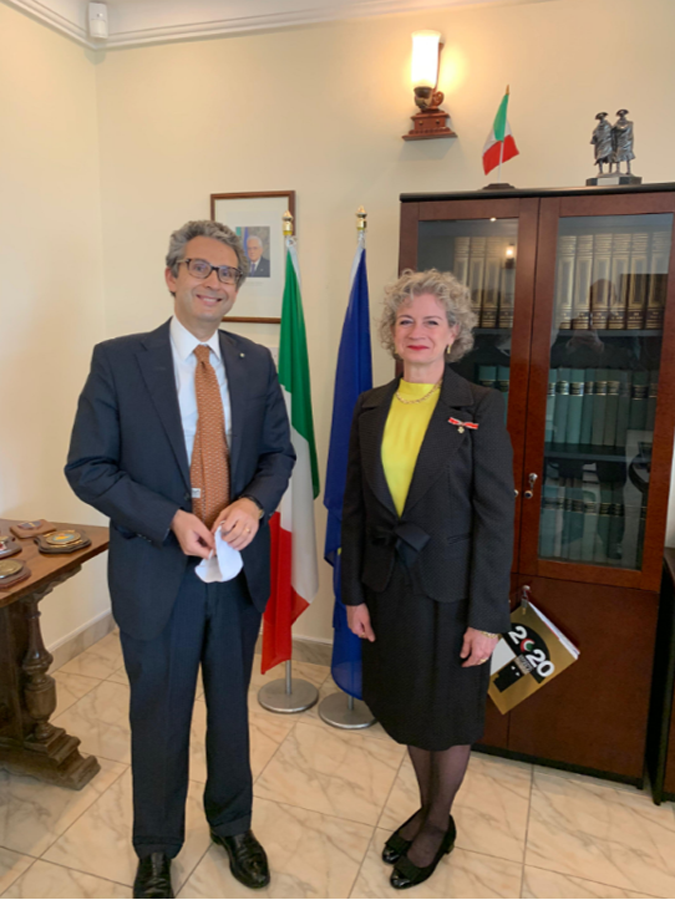
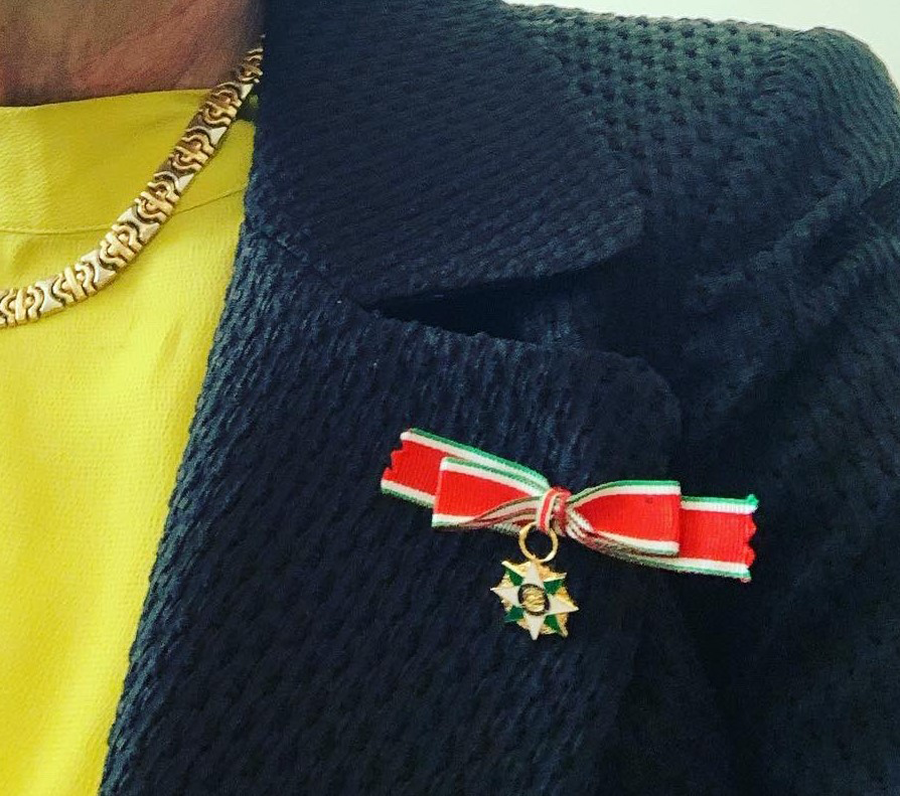
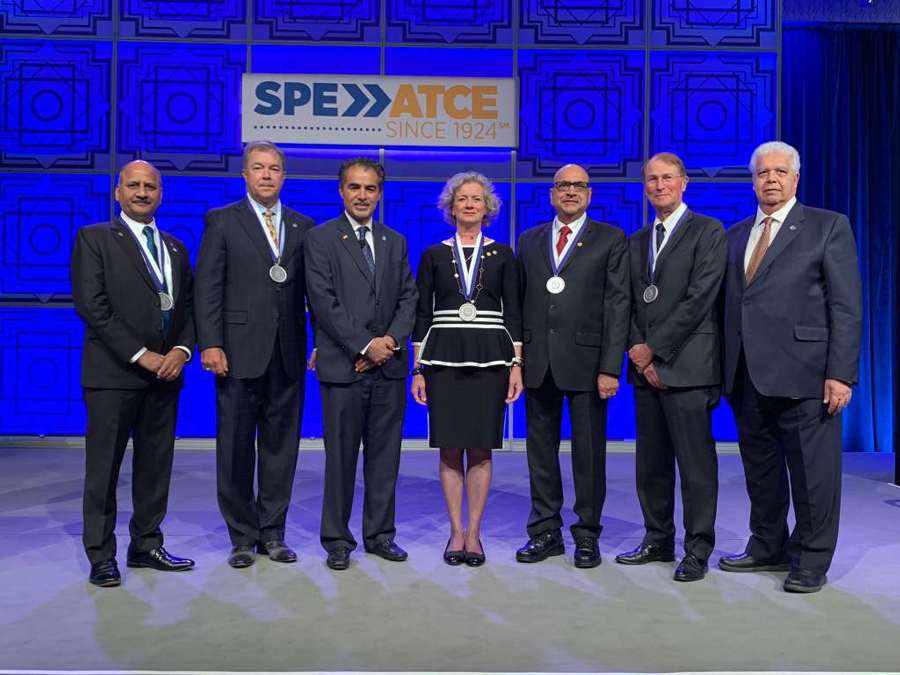
One of the high points of her time in Kuwait was being knighted in January 2020 as a Cavaliere of the Republic of Italy, and, on behalf of Italian President Sergio Mattarella, the Italian ambassador to Kuwait presented her with the Order of the Star of Italy.
“It defines my love for Italy that is part of who I am,” Capello says. “My culture, my perspective on life and work, and my family values were further strengthened, as the Ambassador said – and this is very beautiful – by the recognition of something that was already there.”
Venezuela’s Trove of Treasures
After their time in Kuwait, Capello and her husband decided to settle in the U.S. and entered on a green card by merit (also known as merit-based employment immigration). With family, including her parents and her sisters, still living in Venezuela, she returned often. The most recent visit was in 2024 for her mother’s funeral. It was also the year she obtained her U.S. citizenship – “something I am particularly proud about” – giving her dual American-Italian citizenship while continuing to hold a Venezuelan passport.
This gives her a unique perspective on the events of January 3rd. “The changes that were triggered that day are not complete. Full democracy must be reinstated in the country and, after 27 years of rule by Chávez and Maduro, it is clear that the solution was not going to come from the inside of the country, as the opposition had tried everything,” Capello says.
“Now that all the cards are on the table – and some discoveries have been eye-opening – what we need in Venezuela is a true reinstatement of democracy for Venezuelans to rule Venezuela. The change was a very important one, but it’s not complete. Venezuelans need to take part in the new laws and regulations enabling investment in the oil sector. Venezuelans are the ones who know their industry best in order to take decisions about what should be in the new contracts and how the industry can be handled in the best way. The need, for example, of a regulatory and administrative agency to handle this new phase in the oil industry revamping of Venezuela is more than necessary; it’s indispensable.”
Venezuela is an enormous brownfield with major infrastructure already in place, much of which needs to be revamped, Capello says, but it offers options for the small wildcatter from Texas to major international oil companies that require a safe, reliable, long-term legal framework to invest billions of dollars in producing the core business: the Orinoco Belt.
“Beyond this vast extra heavy oil province, Venezuela also holds immense reserves of still untapped tight reservoirs, giant light and medium oil brownfields, and massive offshore gas opportunities,” she says.
“If Venezuela was this menu of options resembling a Christmas tree, the tree would be the Orinoco Belt and the decorations would be all the other oil fields in Venezuela,” she explains. “The country is a trove of treasures, but we need political stability and a legal framework that is reliable and does not depend on another country’s long tenure because if you don’t change the Venezuela composition of law and government, what will happen if the force and enforcement are not there anymore?”
Unexplored Potential
Capello believes it’s shortsighted to focus on what is being called Venezuela’s “dirty” crude, the ultra-heavy, high sulfur oil, found primarily in the Orinoco Belt, which requires refining.
“That’s wrong. Venezuela offers a variety of APIs from the belt, from very light and sweet oil to huge reserves of gas that have immediate buyers in the Caribbean,” she says, pointing out that Venezuela’s shale oil and gas have not been explored, nor has its offshore potential been realized despite exploratory wells showing it to be a relevant option. “We need to go back to the international markets; we will then be in a region that is buoyant and vibrant. What Brazil, Colombia, Ecuador, and Argentina are doing in terms of production is having an impact on wealth in the Latin American region.”
Despite being a pragmatist, Capello, a concert-level pianist specializing in baroque music, can’t help but see her homeland through the universal language of music.
“Venezuela needs to be not only a player, but the leading player in this orchestra of voices, playing a harmonious melody. Not a dissonant note where poverty is at the helm. No, we want to be firmly on the prosperity side of the equation.”
Reprinted with permission. This article originally appeared in the Winter 2026 issue of NAPE Magazine. It has been lightly edited for this publication.
“Venezuela’s subsurface wealth is not questionable.”
UPDATE: Since this article was first published, Venezuela has faced back-to-back challenges: On June 24, 2026, two earthquakes killed nearly 5,400 people and injured over 16,700. This catastrophic event hit close to home, as two of my brothers-in-law lost their homes in Playa Grande. The inefficiency of rescue operations exposed [the reality] that Venezuelan institutions were far more fragile than originally thought, lacking resources, training, and organizational capacity – gaps that may well exist in the oil sector, too.
In the oil sector, new regulations implementing the Law Amending the Organic Hydrocarbons Law took effect in July 2026, clarifying January’s reform that opened the sector to private investment.
Venezuela’s subsurface wealth is not questionable. The challenge to overcome is building trust in governance and institutions, and that is not something any one person rebuilds alone. What I can contribute is technical expertise in sustainability for the energy sector, to help ensure that as the sector rebuilds, it rebuilds responsibly. That is where I’m putting my energy.
– Maria Angela Capello, July 23, 2026

Rebecca Ponton is the magazine editor at Energies Media and author of Breaking the Gas Ceiling: Women in the Offshore Oil and Gas Industry. She is the publisher of Books & Recovery digital magazine.