
Sprawling across 3,200 acres of Utah coal country, a desert machine with nearly one million panels just switched on, and the smokestacks visible on its horizon are the real reason it matters
The high desert of Emery County, Utah, does not give up easily.
The terrain is pale and unforgiving, cracked alkali flats giving way to sage scrub and red sandstone ridges that bake through summer and freeze overnight in winter.
For most of the last century, the county’s identity was coal.
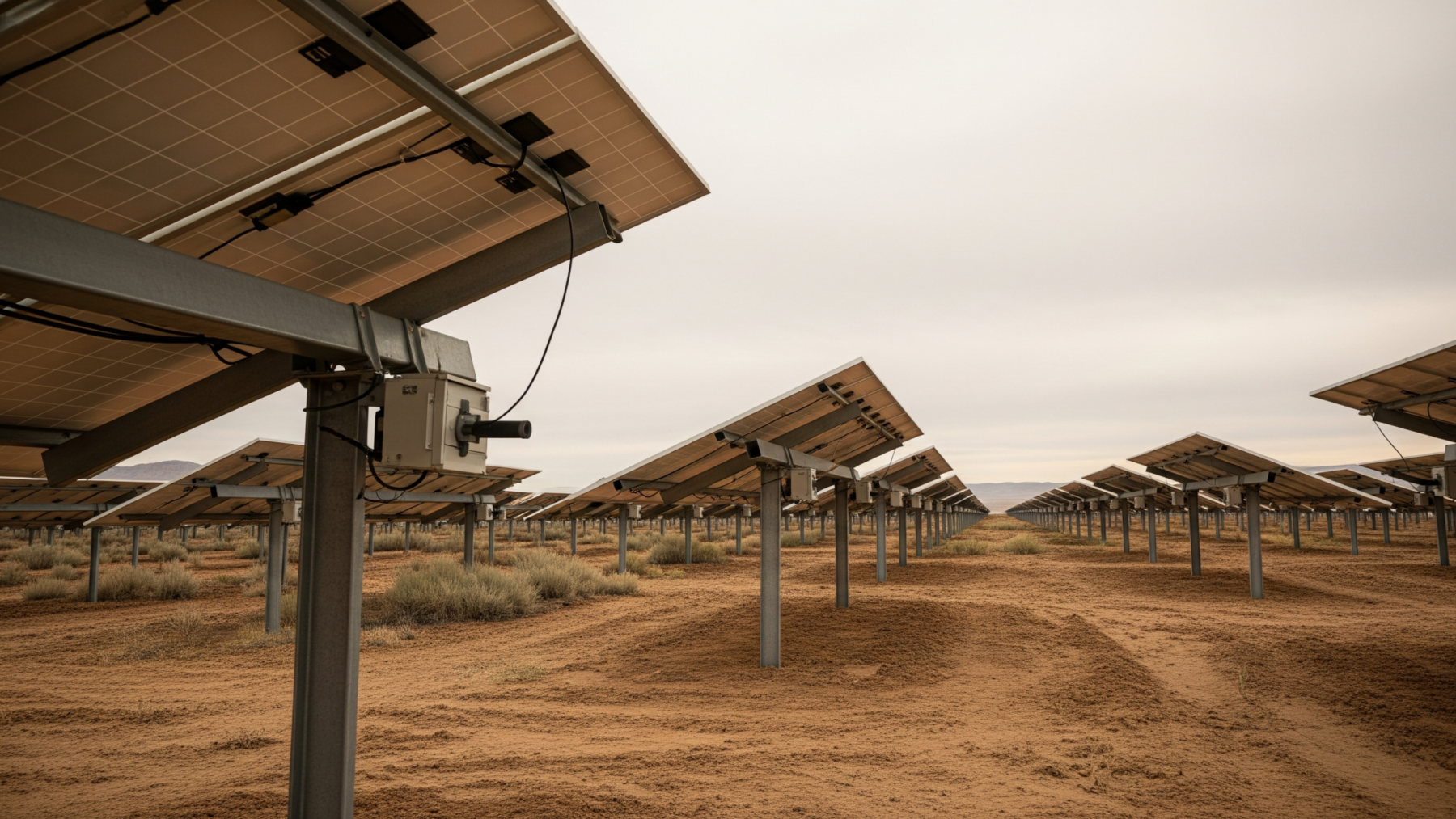
The facility includes 993,492 solar panels installed on almost 130,000 piles and mounted on trackers that follow the sun’s arc throughout the day.
The Hunter and Huntington power plants burned it, transmission lines carried the electricity to cities, and the county built its schools and fire stations on the revenue.
Something new arrived here in June 2026, and its scale is almost impossible to hold in the mind at once.
It covers ground that stretches roughly four miles across, and from the air it looks less like a building project than a geological feature.
Most people driving Utah’s backroads have never heard of it.
A desert that nobody thought was ready
Emery County sits at high elevation, which means the sunlight reaching the ground carries an intensity that flatland solar sites simply cannot match.
The county has plenty of sunny days and powerful solar radiation, making it some of the most productive solar real estate in the American West.
Yet for decades, no project of serious scale arrived.
The land was too remote, the economics too uncertain, and the county’s identity was wrapped around coal in a way that made solar feel like an outsider’s idea.
After nearly a decade of planning, Utah’s largest solar and battery storage facility has now begun operating in Emery County.
The planning alone took longer than some projects take to build and decommission.
But the desert waited.
The machine that took two years to assemble
Once groundbreaking came in September 2024, the pace was relentless.
The facility includes 993,492 solar panels installed on almost 130,000 piles and mounted on trackers that follow the sun’s arc throughout the day.
Every tracker tilts slowly east at dawn and follows the arc west through afternoon, squeezing maximum output from each hour of sunlight.
The project’s contractor installed 385 miles of underground cables.
That cable run is longer than the distance from Salt Lake City to St. George, roughly the full length of Utah from north to south.
Nothing about the numbers here lands gently.
Turning barren desert into a working power station in under two years is fast for any electricity source of this size.
Why sunlight alone was never going to be enough
A solar farm that only works when the sun is up is only half a power station.
Grid operators need electricity in the early evening, when demand spikes and panels go dark.
The storage element of the project comprises 484 Tesla Megapack battery units with integrated software.
Together those batteries hold 1,600 megawatt hours of energy, enough to absorb the full afternoon surge and release it steadily into the night.
They are what allows a desert machine to behave like a conventional dispatchable power plant, delivering power when people actually need it.
Because the project pairs solar with storage, it is not solely dependent on daytime sunlight.
And yet, the most important detail about this place has nothing to do with panels or batteries at all.
The smokestacks on the horizon
This is the Green River Energy Center, and its location is not accidental.
The project connects directly to transmission lines originally built for the county’s Hunter and Huntington coal fired plants.
Standing among the panel rows, a worker can look north and see the smokestacks of Hunter Power Plant still rising above the desert floor.
The same wires that carried coal’s electricity for decades now carry solar and stored power to the same cities.
As the largest solar and storage facility within PacifiCorp’s six state service territory, the Green River Energy Center highlights the growing role Utah plays in meeting the West’s energy needs.
For a county that built its identity on fossil fuel, the grid dependency has simply shifted, not disappeared.
The project received Project Finance International’s “Renewables Deal of the Year, Americas” award in recognition of its investment and regional impact.
What Emery County gets to keep
The project is expected to generate more than $55 million in property tax revenues over its lifetime, supporting local schools and public services.
For a rural county of fewer than 10,000 people, that number reshapes what a school budget can look like for an entire generation.
Beyond energy production, the project contributed $375,000 in scholarships for local students and a $45,000 donation to the Ferron Fire Department.
That donation is a small number against the billion dollar investment, but in a county town it is the kind of gesture people remember.
The plant has an operational life of 40 years.
A child starting school in Emery County today could graduate, build a career, and retire with this project still turning sunlight into electricity on the same desert land.
For readers curious how solar farms reshape the land around them over time, Emery County’s story is only just beginning.
The desert, it turns out, was ready all along.

Hugo is an engineer with strong technical expertise. Multilingual from an early age, his writing combines technical clarity with a strong interest in science and energy.
