
Buried under 437 kilometers of Patagonian scrub, a $3 billion artery is racing toward Argentina’s Atlantic shore, and the two word name geologists gave the rock beneath it is the most improbable label in global oil
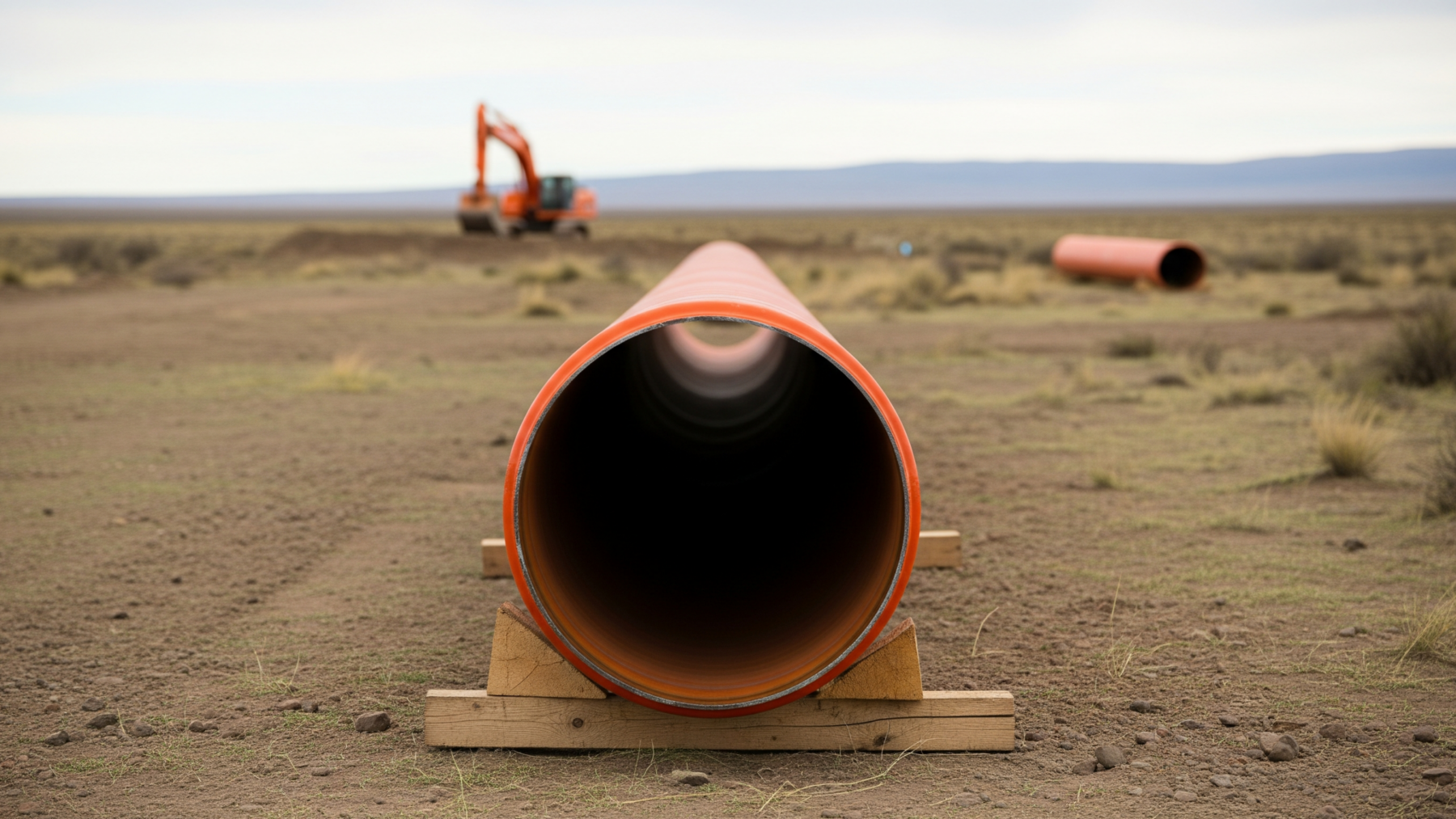
Something enormous is moving through Argentine Patagonia right now, just below ground level, one weld at a time.
It is not a river, not a road, and not a railroad.
It is a steel pipe, roughly a meter across, threading through scrub desert toward the Atlantic Ocean at a pace that will reshape how the world buys South American crude.
Almost no one pictures what comes next: the infrastructure that must exist before a barrel drilled in landlocked Patagonia can ever reach Asia or Europe.
Most people who have heard of Argentina’s shale country picture derricks and flares.
Almost no one pictures what comes next: the infrastructure that must exist before a barrel drilled in landlocked Patagonia can ever reach Asia or Europe.
That infrastructure is now being built, at a scale Argentina has not attempted in a generation, and the clock is running.
A formation so productive it broke every forecast
The shale rock beneath northern Patagonia has been surprising geologists since the first horizontal wells went in.
Production surpassed 447,000 barrels per day as of March 2025, up 26 percent year on year, underlining the formation’s growing importance to Argentina’s energy sector.
By late 2025, unconventional output had risen further to account for roughly two thirds of Argentina’s total oil production.
The basin has drawn every major operator in global oil: Chevron, Shell, Pluspetrol, and Pan American Energy all hold acreage there.
Yet the fields kept running into the same wall: not geology, not engineering, but plain geography.
Barrels piled up, wellhead prices suffered, and Argentina’s export ambitions stalled at the fence line of its own infrastructure.
The longest oil pipeline Argentina has built in decades
The answer is a project called Vaca Muerta Sur, and its sheer length is the first thing that stops a reader cold.
The project runs 437 kilometers from the town of Allen to the Punta Colorada port in Río Negro province on the Argentine Atlantic coast.
A special purpose company called VMOS was formed to build and operate it, at an estimated cost of $3 billion.
Initial Phase I capacity is approximately 180,000 barrels per day, with Phase II designed to reach up to 550,000 barrels per day.
Construction splits into two sections: a shorter northern leg of roughly 100 kilometers already moving crude from Allen to the Chelforó pumping station, and a longer leg of approximately 327 kilometers threading south toward the sea.
That second section connects Chelforó to Punta Colorada, with export operations planned for the second half of 2026.
Steel through the desert, one kilometer at a time
Building across 437 kilometers of Patagonian steppe is not like building anywhere else.
The terrain alternates between mesa plateau, river valley, and loose volcanic rock, and winter winds arrive without warning.
Construction on the second segment began in February 2025 after securing the necessary environmental and legal permits.
By mid-2025, the northern Vaca Muerta Centro segment had begun commercial operations.
At the Atlantic terminus, engineers are simultaneously building a loading and unloading terminal with interconnected monobuoys: the offshore floating connectors that let supertankers fill their holds without ever touching a dock.
The new export facilities at Punta Colorada feature deep water capabilities to accommodate Very Large Crude Carriers, enabling direct access to Asian markets and cutting transportation costs significantly.
Every kilometer of pipe, every weld, every valve station points toward a single number that only comes into focus at the end.
Half a million barrels a day, and a name that means “dead cow”
Now the payoff of both the pipeline and its strangely poetic name.
Vaca Muerta translates from Spanish as “dead cow.”
The official geological account holds it was formalized in 1931 by American geologist Charles Weaver after the Sierra de la Vaca Muerta mountain range, where the formation’s rocks outcrop.
A folk account held by local inhabitants attributes the name to a cow carcass found in the area, and the label stuck through every subsequent survey.
Commercial operations are expected by end of 2026, with full capacity of 550,000 barrels per day targeted for 2027.
For context on where OPEC+ output fits into this supply picture, Argentina’s eventual 550,000 barrels per day would represent a meaningful addition to Atlantic Basin supply.
The scale is difficult to hold in mind until you trace the pipe on a map and watch it cross mountain foothills, river crossings, and open desert before it finally meets the sea.
What “dead cow” rock could mean for global supply
The honest caveat is timing.
Argentina has a long history of ambitious infrastructure projects whose schedules have slipped, and Vaca Muerta Sur is not immune to that pattern.
Currency risk, contractor availability, and Patagonian weather all remain real variables.
For those watching from Houston or Riyadh, the project’s progress carries weight beyond Argentina’s borders, with implications for midstream debates playing out from Texas to the Río Negro.
If Phase II completes on schedule, the formation named for a long dead animal will have become one of the most consequential oil corridors on earth.
The bones in the desert turned out to be someone else’s future.

Hugo is an engineer with strong technical expertise. Multilingual from an early age, his writing combines technical clarity with a strong interest in science and energy.
