
Surviving a contractor’s bankruptcy at $10 billion in, a steel terminal on the Texas waterway kept its workers building through a brutal Gulf summer, and the ship that finally sailed from Sabine Pass in April carried a cargo no one had delivered from this address before
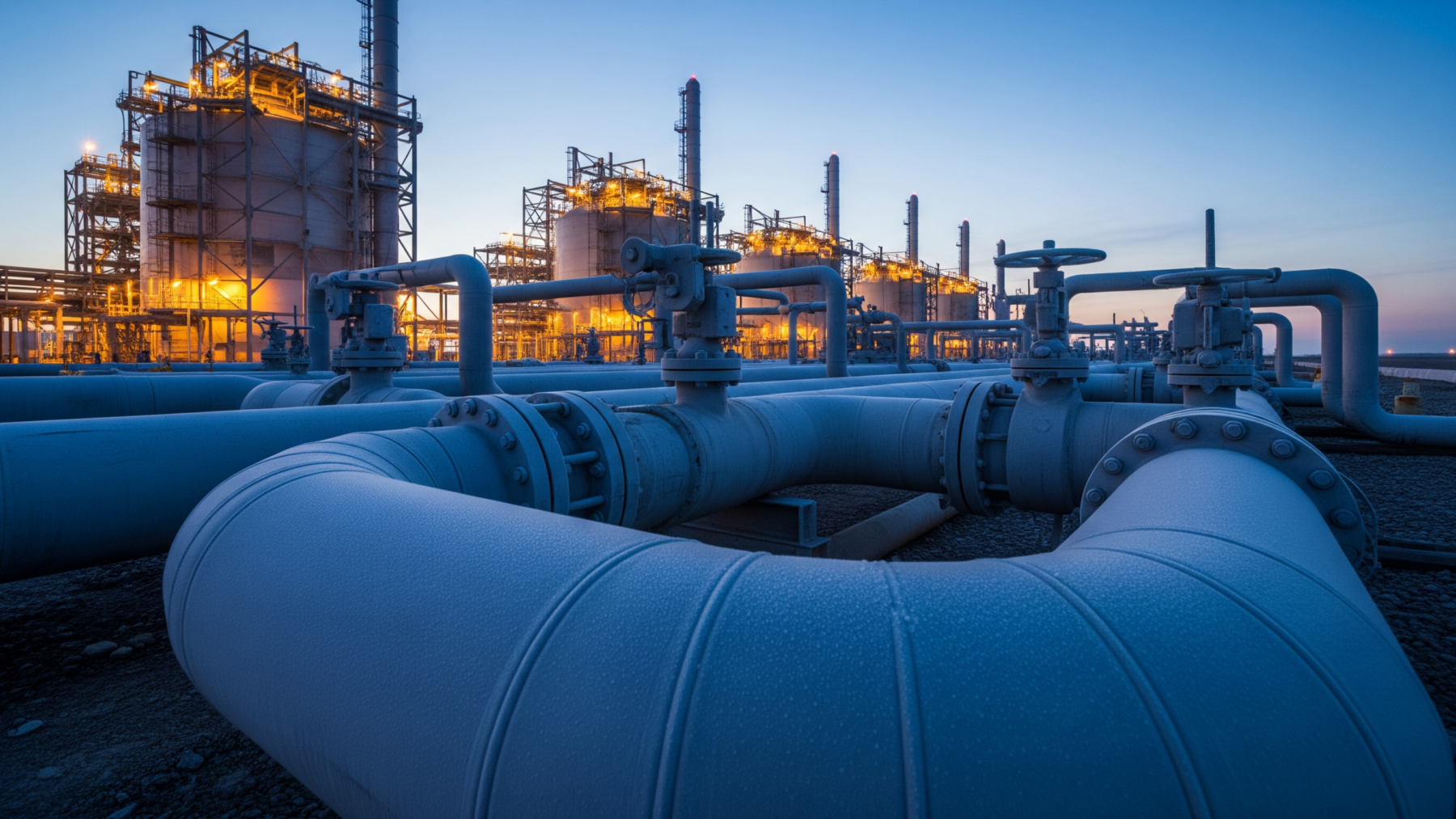
A wide, flat waterway runs along the Texas-Louisiana border where the Sabine River drains into the Gulf of Mexico, and for most of the past decade this stretch of water has been home to a half-finished riddle. Steel modules and cryogenic pipes, along with enough concrete to fill a stadium, sat on 625 acres of marsh edge in every stage of completion. Work crews kept arriving even after the company paying them ran out of money. The project refused to die. And on a Tuesday evening in April 2026, a ship named Al Qa’iyyah eased away from a new berth and headed east across the Gulf.
A waterway already famous, and a site that changed everything
Sabine Pass already had a reputation before a single weld was struck on this project. Cheniere Energy’s original terminal there was the facility that made the United States an LNG exporter a decade ago, turning a sleepy Louisiana border channel into one of the most strategically significant waterways in the world. When a second, separate terminal began rising on the Texas side of that same channel, the ambition was unmistakable.
Eighteen million tons of liquefied natural gas per year, split across three liquefaction trains, each chilling Permian Basin gas to minus 260 degrees Fahrenheit until it shrinks to one six hundredth of its original volume. The site connects directly to the Gulf Coast pipeline grid, and deep water marine access made the location almost obvious. What nobody planned for was what would happen in the middle of building it.
The spread between domestic Henry Hub prices and European import prices remained wide, placing extraordinary pressure on every export terminal still in operation.
The bankruptcy that nearly froze everything in place
In mid-2024, Zachry Holdings, the lead construction contractor, filed for Chapter 11 bankruptcy protection. Cost overruns had grown beyond what the company could absorb, and the filing pointed directly at the project as a primary cause. Hundreds of millions of dollars in disputes followed, the workforce was thrown into limbo, and a schedule already slipping by months now faced a genuinely uncertain future.
What followed was a methodical, unglamorous rescue. The joint venture leaned on McDermott International and Chiyoda to absorb and redistribute the remaining work packages. Months were added to the timeline, total costs climbed well beyond the original commitment, and the original first-cargo target of late 2024 quietly became 2025, then early 2026. The modules kept arriving by barge and the cryogenic systems kept being tested in the coastal humidity.
Then Qatar’s own plant went dark at the worst moment
While Sabine Pass was still commissioning, the global LNG market was being reshaped by events 7,000 miles away. Missile and drone strikes on Qatar’s Ras Laffan Industrial City in March 2026 damaged critical infrastructure at one of the world’s biggest LNG hubs, forcing major production outages. Spot prices in Europe and Asia spiked, and buyers who had relied on Qatari supply scrambled for alternatives.
The spread between domestic Henry Hub prices and European import prices remained wide, placing extraordinary pressure on every export terminal still in operation. Train 1 at Sabine Pass achieved sustained liquefaction on March 30. The new terminal had arrived at exactly the right moment, though it had taken a path nobody would have designed by choice.
Golden Pass LNG: the ninth American terminal sends its first ship
On April 22, 2026, Golden Pass LNG became the ninth liquefied natural gas terminal in the United States to ship a cargo, loading its first export just 23 days after achieving first LNG production. The carrier Al Qa’iyyah, a 174,000 cubic meter ship built in South Korea and owned by QatarEnergy, took on the inaugural cargo and sailed for Zeebrugge in Belgium, according to vessel tracking data.
The milestone made Golden Pass the first U.S. LNG facility in which a national oil company holds majority equity, with QatarEnergy holding a 70 percent stake representing its largest single investment in the United States. Golden Pass CEO Alex Savva said: “Today’s first LNG export cargo is a defining moment for Golden Pass, our workforce, the community, and the nation.” Train 2 is targeted for the second half of 2026, with Train 3 expected in the first half of 2027.
What a $10 billion bet on Texas gas means from here
When all three trains are running, the EIA projects Golden Pass will add roughly 2.0 billion cubic feet per day of nominal export capacity to the national total, making it the third largest U.S. LNG facility behind Sabine Pass and Plaquemines. Seventy percent of offtake flows to QatarEnergy Trading, with the remaining 30 percent belonging to ExxonMobil. For Rio Grande LNG and other Gulf Coast terminals still commissioning, the Golden Pass experience doubles as a cautionary tale and a proof of concept: a project can absorb a contractor’s collapse, two extra years, and a global crisis and still reach its first cargo.
The United States is now the world’s largest LNG exporter, with exports rising from 0.5 billion cubic feet per day in 2016 to 15.0 billion cubic feet per day in 2025. The EIA forecasts full year 2026 exports of 17.0 billion cubic feet per day, and Golden Pass will be a meaningful piece of that number. Producers across the supply chain are watching whether volatile prices hold long enough to justify the next round of final investment decisions.
On a warm April evening on the Sabine Pass waterway, a ship loaded with Texas gas pointed its bow toward the North Sea. Seven years of planning, a bankruptcy, and a damaged rival’s shutdown had all, in their own way, brought it to exactly this berth.

Hugo is an engineer with strong technical expertise. Multilingual from an early age, his writing combines technical clarity with a strong interest in science and energy.
