
Azio AI Holdings names Atlas One as first phase of its 500-MW South Texas data center campus
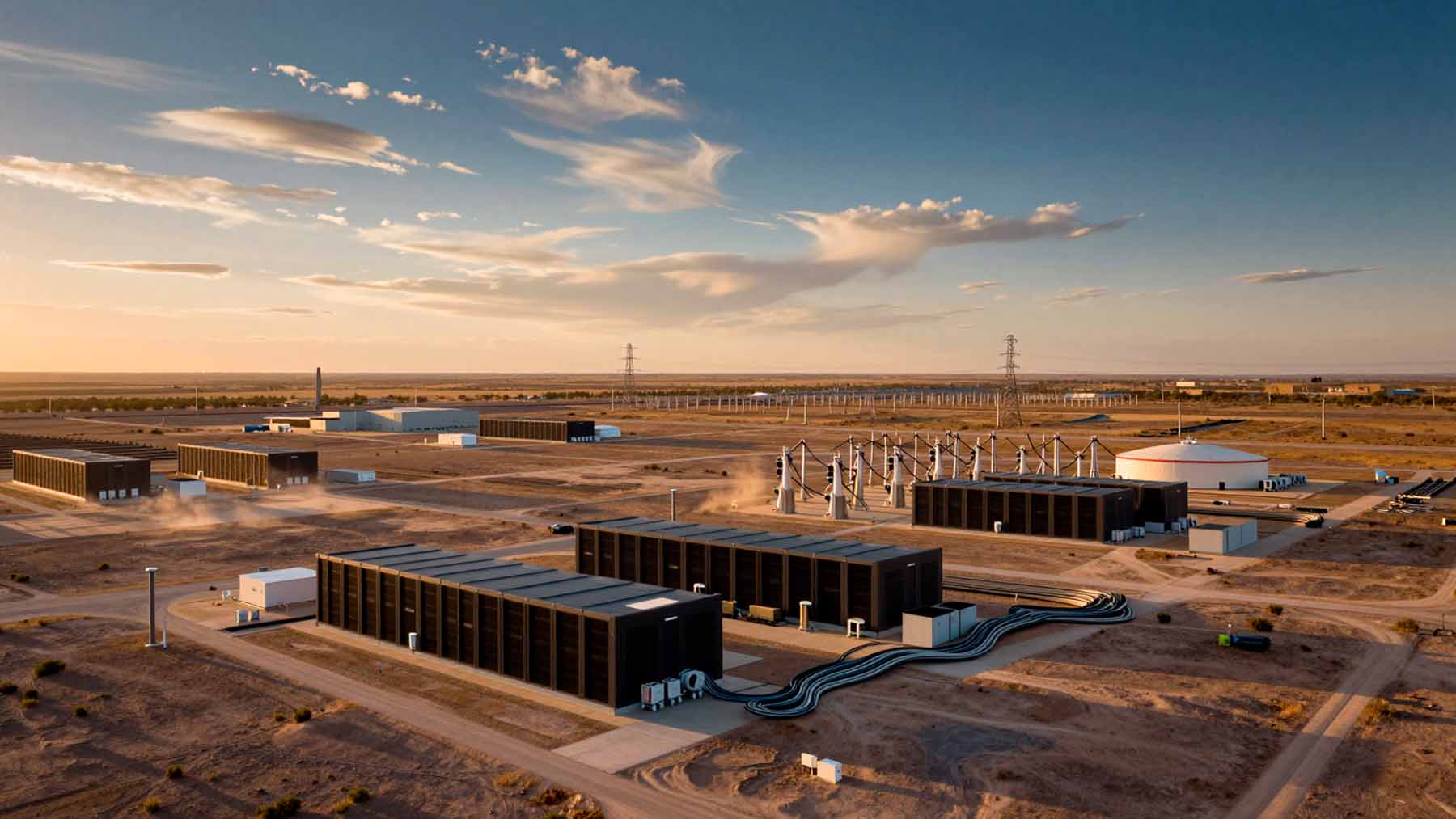
Azio AI Holdings just gave a name to something that’s already running. Atlas One—the first phase of Project Atlas—is a 548-acre AI compute infrastructure campus in South Texas built around up to 500 MW of behind-the-meter power capacity. About 6 MW of compute infrastructure is already live at the site. Roughly 11 MW of natural gas power is secured. And the initial deployment has logged a 97.8% uptime rate.
Azio formally names Atlas One and consolidates prior announcements
Atlas One isn’t a new project. It’s a new label for work already in progress. Since May 2026, Azio AI Holdings has been releasing separate disclosures—land control, power infrastructure, connectivity, compute deployment—and the Atlas One name pulls all of that under one identity for the first time.
CEO Chris Young was direct about the reasoning. “Naming it is how we make clear to the market that the land, the power, the fiber and the compute are one project on one site, not a collection of separate announcements,” he said. The point is simple: these aren’t isolated milestones scattered across different press releases. They’re parts of one integrated campus, and the name is meant to make that legible to the market.
markets—and current trends suggest it will—on-site generation gives Azio a timeline advantage that leased or grid-dependent facilities can’t easily replicate.
The campus covers more than 548 acres in South Texas. The planned 500 MW of behind-the-meter power capacity is additional to the 11 MW already secured—not a figure that includes it. The 6 MW of activated compute infrastructure sits within that secured 11 MW. The numbers are layered, and Azio has been deliberate about keeping those distinctions clear rather than letting them blur together.
Behind-the-meter power strategy addresses utility grid bottlenecks
Azio didn’t choose behind-the-meter natural gas generation by accident. It’s the core of the whole development thesis at Atlas One.
Utility interconnection queues across most U.S. markets run for years. Waiting on a grid connection isn’t viable if you’re trying to bring AI compute capacity online quickly. Azio’s answer is to generate power on site, on its own schedule, independent of utility timelines entirely.
Young put it plainly: “Everyone in this industry is chasing GPUs. The real bottleneck is energized power, and if you are waiting on utility capacity, you are waiting years.” The company’s view is that chip supply isn’t the primary constraint on AI compute expansion anymore. Energized, reliable power is.
About 11 MW of natural gas power capacity is secured at the property, with electrical infrastructure already in place. Natural gas pipeline and metering infrastructure is under active development, backed by gas studies, engineering reports, and interconnection planning. The on-site generation model also gives the 548-acre property its long-term runway—a scale that would be impossible to pursue through utility service on any comparable timeline.
Bitcoin mining workload validates power environment before AI hosting begins
Before scaling toward AI and high-performance computing workloads, Azio wanted proof the power environment could hold up. Bitcoin mining provided that proof.
About 6 MW of compute infrastructure was activated at the site using Bitcoin mining ASIC hardware as an initial operating workload. The deployment ran for several months and hit approximately 97.8% uptime over the measured period—which Azio describes as validation that the power environment performs as engineered under sustained load.
The company is careful about how it frames that number. The 97.8% uptime reflects a Bitcoin mining workload specifically, not a service level commitment, and it doesn’t represent contracted availability for AI or high-performance computing customers. That distinction matters as Azio moves toward enterprise customers who’ll expect formal SLA terms.
Two other infrastructure elements are also in place. Estimated power costs at the mining deployment run near $0.03/kWh, and dedicated enterprise fiber has been secured under a Master Services Agreement with AT&T, with approximately $2.4 million committed for high-capacity connectivity. Both figures were disclosed separately before. Now they sit under the Atlas One umbrella.
Planned expansion to 500 MW is contingent on capital, permits, and customers
The 500 MW figure draws attention. Azio is measured about what it actually represents right now.
That planned capacity is entirely separate from—and additional to—the 11 MW already secured. Getting there requires more generation equipment, permitting, financing, and customer commitments across multiple future phases. Azio has said it will announce capacity only as it’s secured and activated, not in advance of it. That policy shapes how Atlas One’s progress will be communicated going forward.
Future phases are designed to support AI and GPU hosting, high-performance computing, and dedicated customer capacity. The company also plans to keep some portion for company-operated Bitcoin mining—the same workload anchoring the site’s initial deployment. Atlas One is the first project to carry the Project Atlas naming convention, with future sites following the same structure: Atlas Two, Atlas Three, and so on.
Announcements follow demonstrated progress
Atlas One is a real, operating site—not a proposal. Azio AI Holdings controls more than 548 acres in South Texas, has secured approximately 11 MW of behind-the-meter natural gas power, activated 6 MW of compute infrastructure, and recorded roughly 97.8% uptime on its initial Bitcoin mining deployment.
The 500 MW planned capacity is the engineered ceiling for the property, not a committed or funded number. Reaching it depends on capital, equipment, permits, and signed customer agreements. Azio has been clear: announcements follow demonstrated progress, not the other way around.
The behind-the-meter power model is the strategic bet underneath all of it. If utility grid access stays constrained across U.S. markets—and current trends suggest it will—on-site generation gives Azio a timeline advantage that leased or grid-dependent facilities can’t easily replicate. Atlas One is the first test of whether that bet pays off.

Kelly is an experienced writer with 15 years of experience exploring the big stories that shape our world, from tech breakthroughs and space exploration to climate, energy, and the fascinating quirks of science. She has a talent for turning complex ideas into sharp, memorable insights that stay with readers long after they’ve finished reading.
