
California wind project replaced nearly 400 aging turbines with 13 machines producing four times as much electricity
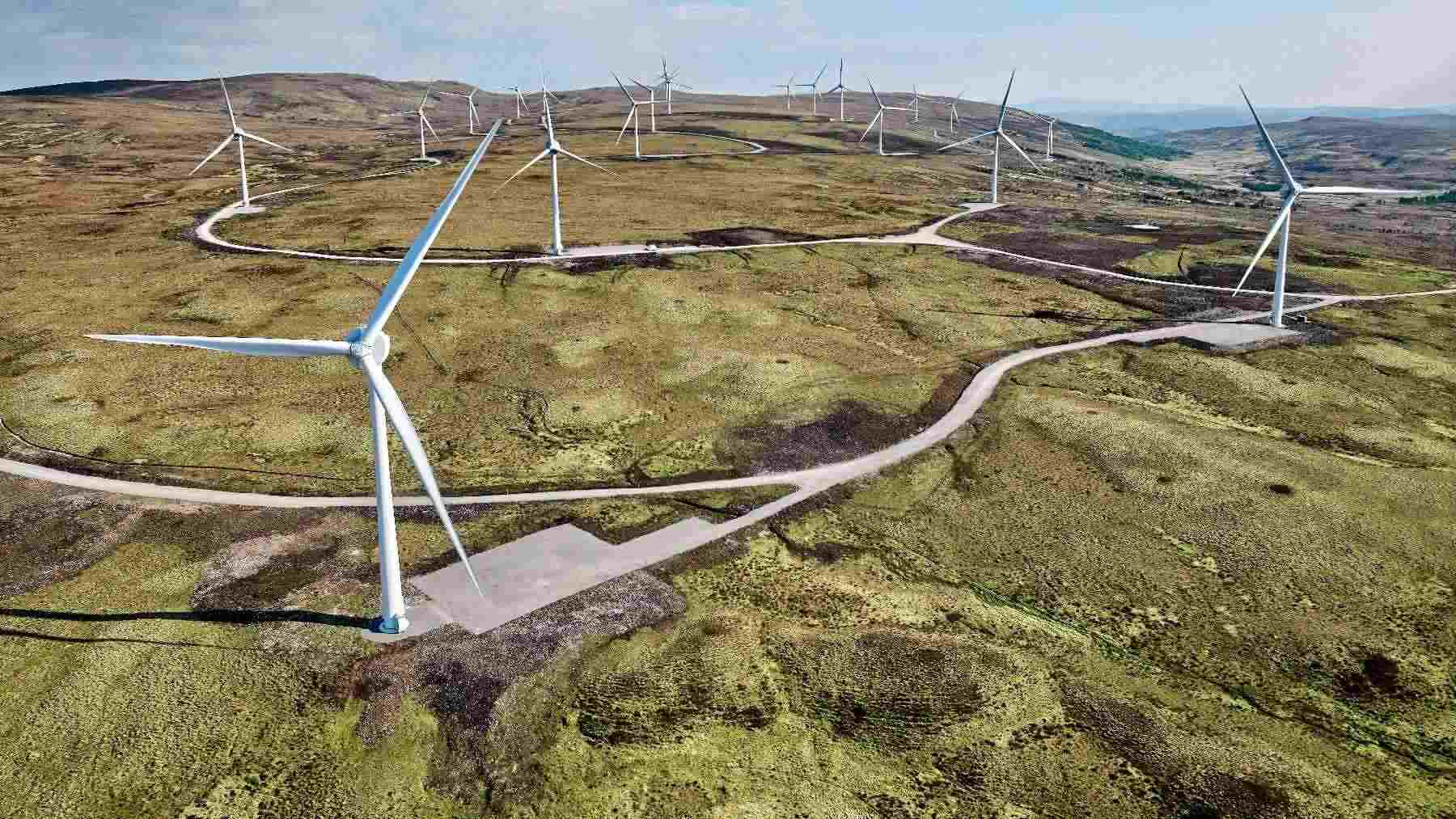
For decades, the ridgelines of Kern County’s Tehachapi mountains were lined with hundreds of small wind turbines — compact machines installed in the mid-1980s that had quietly fed electricity into California’s grid long before clean energy became a national priority.
By the time Eolus acquired a majority stake in the aging Wind Wall farm in 2017, those nearly 400 turbines were running out of time. What came next would dramatically change the look of that mountainside — and what it could produce.
A mountain full of aging machines
When California’s first wind energy boom took off in the mid-1980s, Kern County’s Tehachapi mountain passes became a natural testing ground. Developers packed ridgelines with hundreds of compact turbines, chasing whatever wind they could capture. Wind Wall was a product of that era — nearly 400 machines crowding complex mountain terrain, each one modest in size and output.
But capacity alone doesn’t capture the full picture, because modern turbines extract energy from wind far more efficiently across a wider range of conditions.
Together, those turbines produced a combined capacity of just 36 MW. For a wind farm of that physical scale — hundreds of spinning machines spread across rugged hillsides — that number tells a story of technological limitation. The machines were small because that’s what the industry could build at the time.
Decades of operation take a toll. By the mid-2010s, these turbines were approaching the end of their viable service lives. Maintenance costs rise, efficiency drops. The question facing Wind Wall wasn’t whether change was coming — it was what form that change would take.
The decision to repower — and what that really means
In the wind industry, “repowering” means retiring old turbines and replacing them with fewer, far more capable modern machines. It’s not demolition for its own sake. It’s a strategic upgrade that extracts dramatically more energy from the same parcel of land, using infrastructure that’s already in place.
Eolus, a Swedish wind energy developer, acquired a majority stake in Wind Wall in 2017 and began planning a full repower of the site alongside the project’s co-owner. That meant navigating the engineering complexity of mountainous terrain — no small thing when you’re installing turbines of hundreds of feet tall.
Repowering is increasingly recognized as one of the smarter paths forward for renewable energy. Rather than identifying and permitting entirely new sites, developers can return to proven wind corridors, leverage existing grid connections and land agreements, and deliver substantially more output. The efficiency is baked in from the start.
From 400 turbines to 13 — and four times the power
The numbers behind Wind Wall 1’s transformation are striking. Nearly 400 turbines came down. Thirteen went up in their place — structures that dwarf their predecessors in every dimension.
The new fleet carries a total capacity of 46.5 MW, compared to the original 36 MW. Modest on paper. But capacity alone doesn’t capture the full picture, because modern turbines extract energy from wind far more efficiently across a wider range of conditions. The result: annual electricity production of 47 GWh — roughly four times what the old farm generated.
To put 47 GWh in perspective, that’s enough electricity to power thousands of average American homes for a year. The project reached commercial operation in 2021, marking the end of a years-long planning, engineering, and construction effort.
A milestone for Eolus — and for US wind energy
Wind Wall 1 carries particular significance for Eolus. It was the first wind project in the United States that the company developed, financed, and constructed entirely on its own — a meaningful benchmark for a developer working to establish itself in a competitive American market.
Kern County’s mountain corridors remain strategically important for California wind energy. The Tehachapi region has long been recognized as one of the best wind resources in the western United States, which is exactly why developers have returned to it across multiple generations of technology.
Wind Energy reports that this project also connects to a broader national story. Across the US, thousands of first-generation wind turbines installed during the 1980s and 1990s are approaching — or have already passed — their intended operational lifespan. A repowering wave is quietly building.
What Wind Wall 1 tells us about the future of wind power
Repowering won’t replace new wind development, but it will increasingly sit alongside it as a core strategy for expanding clean energy output. Projects like Wind Wall 1 show that significant generation gains are achievable without breaking new ground.
Real environmental and visual advantages come with the territory. Thirteen large turbines occupy far less visual space than 400 smaller ones, even if each individual machine is taller. Fewer moving parts on the landscape can also reduce impacts on local wildlife.
The financial logic is compelling on its own terms. Existing permits, grid interconnections, and land agreements don’t need to be rebuilt from scratch — cutting both cost and timeline compared to greenfield development. As the first generation of American wind farms continues to age, Wind Wall offers a practical, proven blueprint for turning yesterday’s wind infrastructure into tomorrow’s clean energy capacity.

Kelly is an experienced writer with 15 years of experience exploring the big stories that shape our world, from tech breakthroughs and space exploration to climate, energy, and the fascinating quirks of science. She has a talent for turning complex ideas into sharp, memorable insights that stay with readers long after they’ve finished reading.
