
Arizona crews break ground on a desert solar project planned for more than 760,000 panels and 300 battery containers
There’s no denying it: today’s energy infrastructure is already under pressure from the energy demands of tomorrow.
With rising temperatures and an increasing consumption of electricity, it is vital that we find ways to generate reliable power and rely less heavily on conventional energy sources, like fossil fuels.
But what will happen when one of America’s sunniest states becomes the setting for a novel approach to generating power?
Around 90% of the expected output will be purchased by none other than Tesla thanks to a long-term power purchase agreement between them and ContourGlobal.
Putting the sunny skies to work
Energy company, ContourGlobal, made the anouncement on 7 October 2026 that construction on Project Sterling – a hybrid solar-plus-storage facility in Mohave County, Arizona – had commenced.
The groundbreaking ceremony for this solar project took place in Topock, marking the step from planning to action.
This project is part of the company’s investment in renewable energy and battery storage.
Its goal? To build a facility that meets the customer’s needs for clean electricity around the clock.
Households and business still need power, even after dark. To manage that gap, panels will be paired with batteries to store energy for later use.
The long road ahead
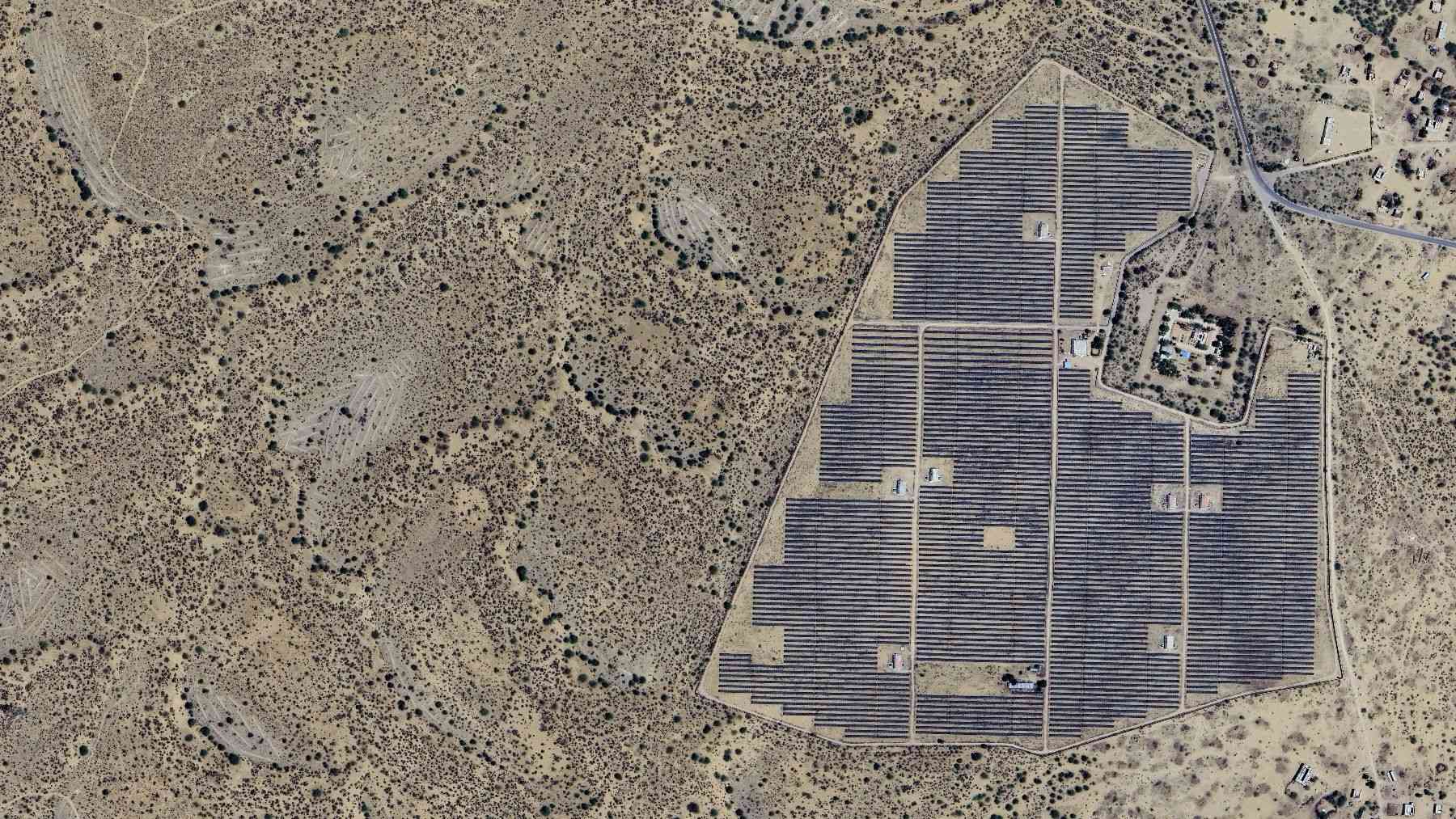
About 20 miles north of Lake Havasu City, and across more than 2,000 acres of the Mojave Desert, is the site for Project Sterling.
And it’s the abundant sunshine there that makes it ideal for solar generation on a large scale.
Not an overnight build, the construction for this project is expected to continue through 2028, with an estimated workforce of around 400 people.
One of the perks of this is that it will create jobs as well as bring economic activity to the area.
It’s also not just the facility itself that is being built, but a 5.2-mile route, called Polaris Road, which will connect the development to Route 66.
While privately financed, the development also has the support of an equity bridge loan from international banks to bring the plans to life.
This is where things get big
The scale of this project is remarkable.
More than 760,000 solar modules and over 300 battery containers will be hosted at the site to create a combined generation and storage facility.
A whole lot of sunshine
So, how much power will Project Sterling be able to generate?
The solar installation will have a capacity of 509 megawatts-peak (MWp), or 450 megawatts alternating current (MWac).
While the panels will convert sunlight into electicity, any surplus power will be able to be stored for later consumption.
Covering the night shift
The storage system will provide 360 MW of power and 1.4 gigawatt-hours (GWh) of capacity.
This will be made possible by the use of lithium iron phosphate batteries that will be in more than 300 containers, which will deliver clean electricity for up to 16 hours a day.
Tesla wants in on the action
Over 1.1 terawatt-hours of clean electricity is expected to be generated by Project Sterling each year.
This could meet the residential demand of a city of 100,000 to 120,000 residents.
Around 90% of the expected output will be purchased by none other than Tesla thanks to a long-term power purchase agreement between them and ContourGlobal.
This is significant because it is the one of the biggest corporate solar-plus-storage agreements for a single hybrid plant in the United States.
With the plan being to connect the facility to the Western States power interconnection, it will strengthen grid resources in the region.
A bright future for desert power
This ambitious project illustrates why the transition to clean energy is about more than simply generating electricity.
It’s also about making power available when people need it.
The battery storage, paired with Arizona’s abundant sunshine, could serve as a useful model for more flexible power systems in the future.
And, while Arizona might be betting big on solar panels and batteries, is it possible that the next big breakthrough in renewable energy is actually hiding deep underground?

