
Along Romania’s Danube at Cernavoda, a reactor idled for 100 days by a river measured just over an inch from forcing a shutdown, and it rejoined the national grid
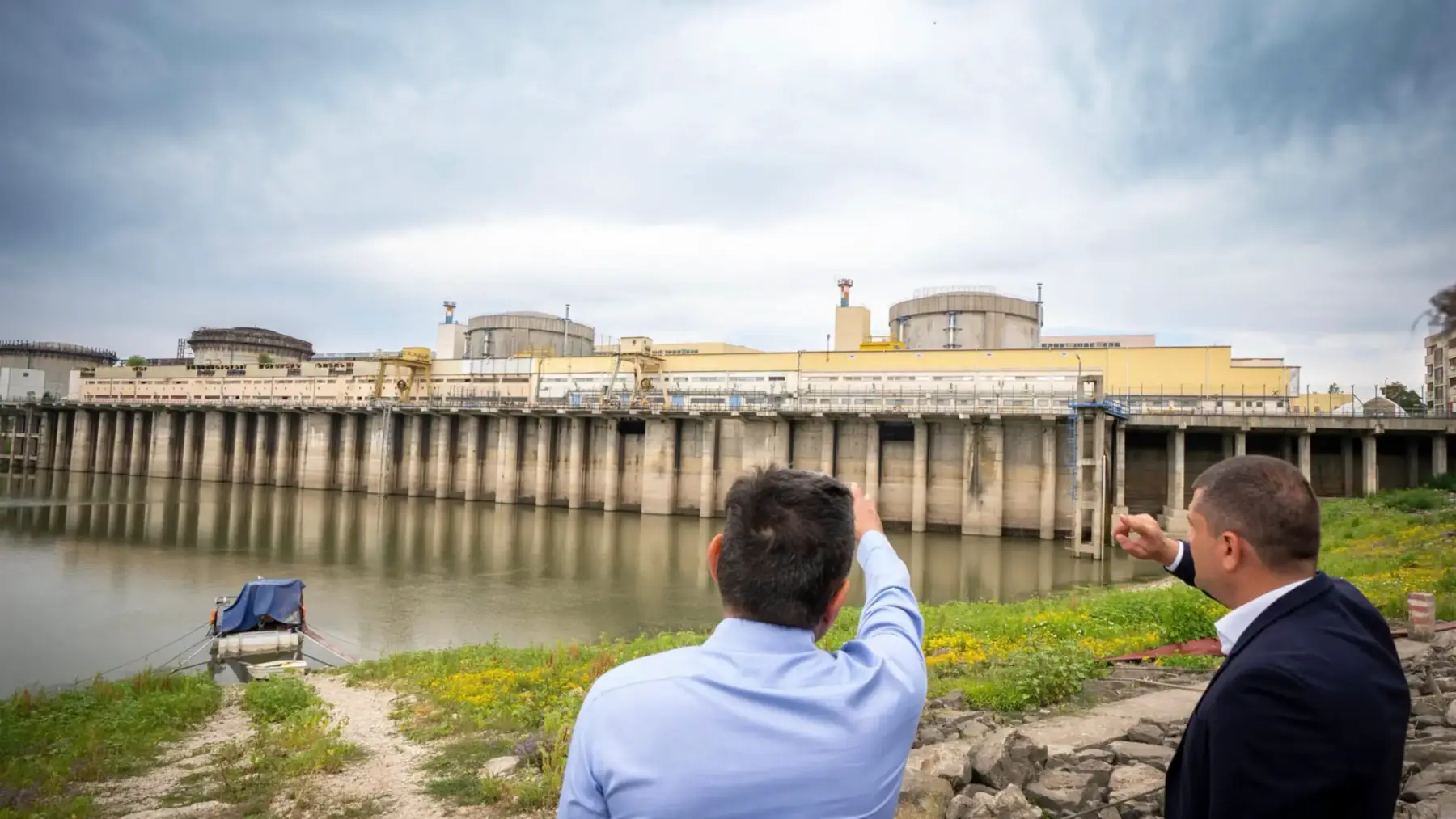
For three months the cooling water gauge at a bend of the Danube sat just above a number nobody wanted to see.
About an inch separated a working nuclear plant from a forced shutdown.
That gap held through a punishing drought.
Hungary faced a parallel scramble at its Paks plant on the same river, where authorities built a riverbed sill to keep cooling water flowing even as the Danube fell.
Then, on November 6, the gauge allowed something it had not allowed since late July.
Engineers began feeding power from Unit 1 at the Cernavoda Nuclear Power Plant back into Romania’s grid.
It took a hundred days and a river’s recovery to get there.
Why did a river’s height decide whether a reactor could run?
Cernavoda’s two CANDU reactors draw every drop of their cooling water directly from the Danube, with no cooling towers recycling a closed loop behind them. The plant needs the river at the intake basin to sit above a fixed safety threshold, because below it the pumps that move cooling water through the reactor systems can no longer draw a safe, steady supply.
That threshold was set at about six feet one inch at the plant’s gauge. So when a historic drought pulled the Danube down through the summer, the margin between a functioning power station and a shutdown reactor became a matter of simple arithmetic.
Unit 1 came offline on July 28. Unit 2 followed on August 13, after the river fell to roughly six feet, just over an inch short of the operating floor.
The plant’s state owned operator, Nuclearelectrica, said at the time that the move was precautionary rather than a response to any fault inside the reactors themselves. The cooling water pumps, not the nuclear core, were the vulnerable link in the chain.
What a riverbank in Romania actually looked like this summer
Picture a broad, slow stretch of the Danube east of Bucharest, the water normally deep enough to carry grain barges down to the Black Sea ports at Constanta and Tulcea. By September the river near the plant had fallen to levels unseen since modern recordkeeping began at that stretch of the channel.
Crews did not simply wait. The Romanian Naval Forces carried out a controlled underwater detonation of a rock formation called Parjoaia, trying to redirect flow down the arm of the river that feeds the plant’s intake.
Authorities also ordered extra water released upstream and began dredging work meant to steer whatever flow remained toward Cernavoda’s pumps. The detonation bought the second unit a short reprieve, but the river kept falling through August, and by month’s end both reactors sat idle.
How close the margin actually got, measured day by day
The hardest number came in mid October, when monitors recorded the river at the plant’s gauge sitting at roughly negative eight and a half feet against the Black Sea reference datum. That left just over an inch of margin above the operational threshold on October 10, with the limit itself set at roughly negative eight feet seven inches.
Romania’s water authority ordered supplementary discharges upstream to keep the number from crossing that line. The company’s chief executive, Mihai Gioara, described the restart once conditions allowed it in plain terms.
“Resuming the operation of Unit 1 is an important step towards ensuring the country’s energy security and the stability of the national power system,” he said. A separate statement issued during the shutdown had already set out the plan, that the reactors would reconnect once the river reached the level required for safe operation.
Unit 1 began its reconnection procedures on November 4 and was synchronized with the grid two days later, with full output expected by the evening of November 7. Unit 2 remains offline, its return tied to a more sustained recovery in river levels rather than a single good reading.
What a fifth of a country’s electricity going dark actually costs
Cernavoda is Romania’s only nuclear plant, and in a normal year its two reactors supply roughly one fifth of the country’s electricity. Losing both at once for months is not a rounding error on a grid.
Romania’s grid operator responded by restricting electricity exports and limiting consumption among large industrial users through the end of November, a measure that reached well beyond the plant’s own fence line. Hungary faced a parallel scramble at its Paks plant on the same river, where authorities built a riverbed sill to keep cooling water flowing even as the Danube fell.
The episode sits alongside other recent reminders that reactors answer to their surroundings as much as to their control rooms, much like the way jellyfish swarms forced reactors offline along France’s coast earlier this year. Nuclear plants built around rivers, coastlines or constrained fuel supply chains, the kind addressed in a recent fuel deal elsewhere in the industry, are learning that resilience planning now has to include the water itself.
What happens if the river falls again
Nuclearelectrica has been careful to frame the shutdown as a precaution rather than evidence of any flaw inside the reactors. The company’s own statements describe multiple cooling systems built to operate across a range of water levels, preserving safety margins even as the Danube dropped.
That caution, rather than any mechanical failure, is what kept both units offline as long as they were. Still, the plant’s revised budget for the year was built entirely around a November 1 restart date that slipped by days, a reminder of how closely the company’s finances now track a river gauge.
Unit 2 waits on the same river to decide its own return, much as other reactors elsewhere depend on steady water and steady fuel supply chains, including the kind of long term planning behind recent earnings across the nuclear fuel sector. Romania’s grid planners are left hoping the Danube’s autumn recovery holds through winter rather than reversing again.

Hugo is an engineer with strong technical expertise. Multilingual from an early age, his writing combines technical clarity with a strong interest in science and energy.
