A French apricot farm installs 2.6 hectares of movable solar panels to protect fruit from extreme heat
For food growers, summer is fast becoming an unforgiving season.
Even after months of careful work, heat can make fruit become bruised, spoiled and unsellable across southern Europe.
This has led to an interesting response from agricultural innovators.
The project, which is the world’s first dynamic agrivoltaic system over organically grown apricots, was inaugurated in March 2024, and covers 6.4 acres.
Because what would happen if farms learn to negotiate with the sun?
A harvest under pressure
In the Vaucluse department in France, Saint-Félix farm grows organic fruit, such as apples, cherries and apricots.
Conditions, however, have become more difficult to manage with the increasingly frequent heat and drought conditions, with a brief seasonal spell that alters appearance and quality can also reduce the price growers receive.
This was learnt the hard way, when a 2018 heatwave sunburned most of their crop, with much of the harvest having to be downgraded.
But this was more than just a bad season for grower, Michel André.
Higher temperatures can lead to early flowering, which leaves trees more vulnerable to to late frosts.
André knew there had to be a way to work with the trees instead of replacing them with a conventional solar field so that the agricultural purpose could be upheld.
A different kind of canopy
Sun’Agri is a French agrivoltaics specialist that joined forces with Saint-Félix for this project.
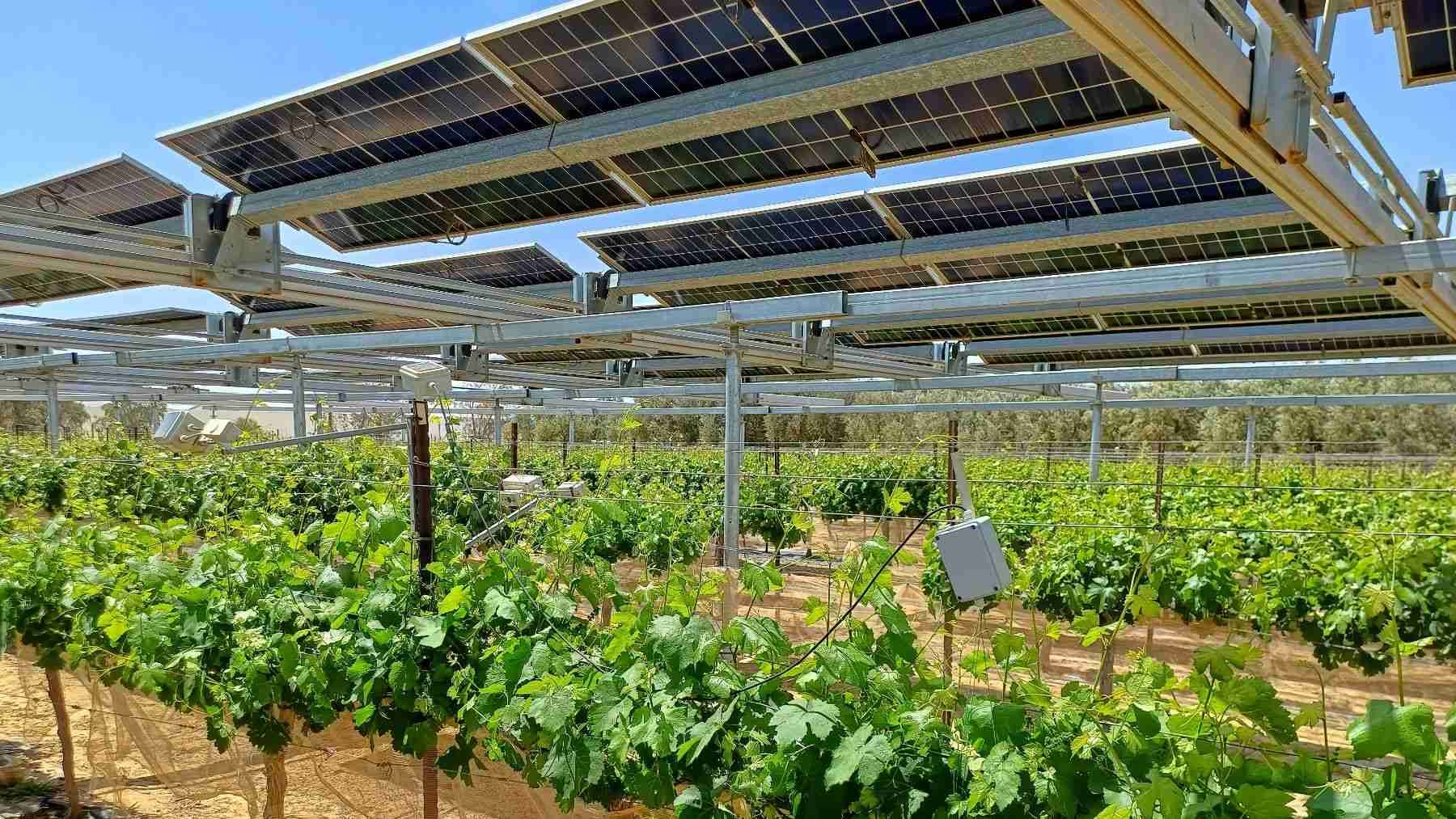
To combine fruit production with energy generation, photovoltaic panels were placed above the orchard to keeping the land in cultivation.
And it’s not just one fixed roof, either.
It is made up of panels, which can be moved to manage the light that is able to reach the trees, with their angles able to be adjusted based on the needs of the crops.
The project, which is the world’s first dynamic agrivoltaic system over organically grown apricots, was inaugurated in March 2024, and covers 6.4 acres.
It’s not about shutting out the sun completely.
Instead, it’s about creating a more forgiving microclimate for plants that are facing increasingly unpredictable weather.
An orchard’s high-tech makeover
The secret is actually in the structure itself.
Instead of traditional stationary solar panels being installed, the farm has instead embraced a system that is able to respond to the needs of the crops and changing weather conditions.
Following the sun – on the farm’s terms
The moving panels have been compared to eyelids.
This is because they can adjust their angle to control how much sunlight can reach the orchard.
When the fruit needs protection, this dynamic agrivoltaic system offers shade, while still allowing sunlight through when the conditions are right.
This idea is all about balancing protection with productivity.
A cooler home for fragile fruit
According to Sun’Agri, the installation might be able to bring down extreme temperatures by up to five degrees in the air and ten degrees at the surface of leaves, fruit and soil.
This would mean a fall in irrigation requirements by 30% to 60%.
Anti-hail nets can be accommodated by the structure – just another way that the apricots can stay protected from severe weather incidents.
Two harvests from one site
This installation has a capacity of 2.27 megawatts-peak.
Underneath the panels, three different types of apricots are grown, namely Primassi, Delice Cot and Lady Cot.
Conditions are monitored by sensors in the covered orchard as well as the uncovered comparison plot, which allows researchers to measure how the growing conditions are being affected by the panels.
Agricultural and ecological impacts are being monitored by the Chamber of Agriculture.
Creating the best conditions
If this novel canopy works, it can bring about big changes for farmers, who will have to adapt along with climate change.
Could the same approach that has been taken in France help vineyards cope with heat, as a Colorado vineyard tests panels above its grapevines?


Helen is based in sunny Cape Town, South Africa, and has been writing for over 12 years, covering a wide range of topics. A lover of animals, she cares deeply about recycling, minimizing her impact on the planet and finding new ways to bring old things to life.