
A reactor on a Zhejiang fishing coast took in 177 fuel bundles in days, and Sanao unit two waits only for the chain reaction to start
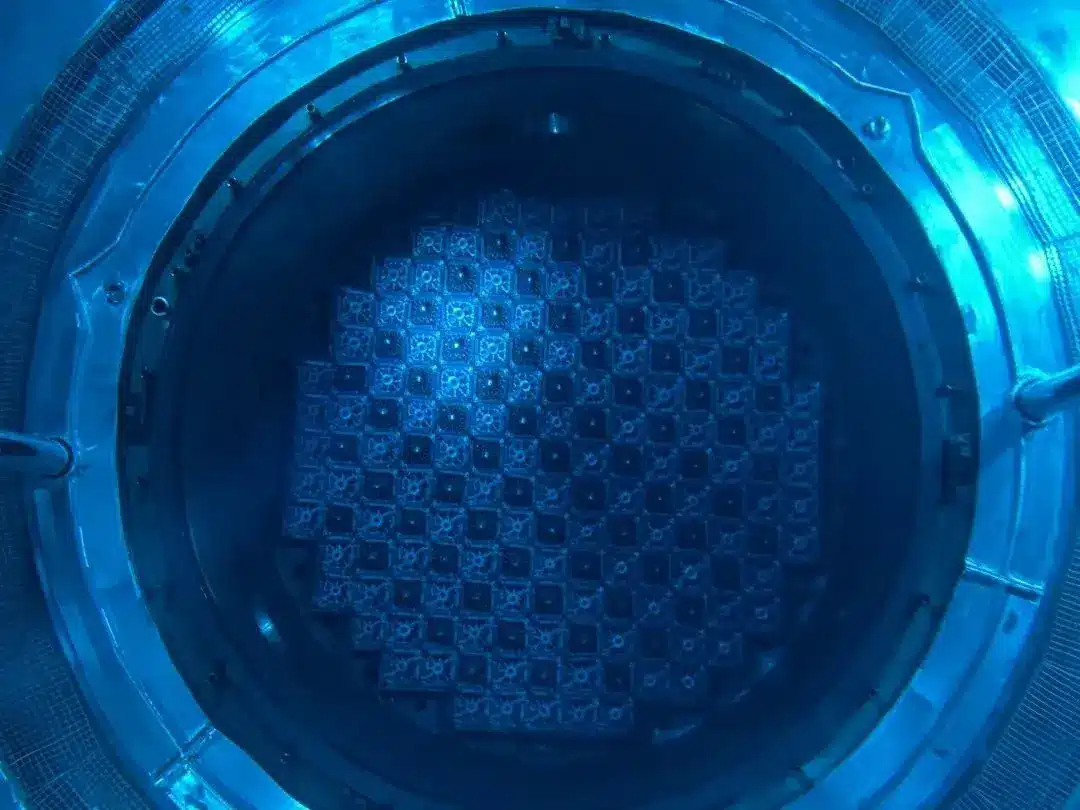
A crane spent early November lowering steel rods into an open reactor vessel.
The site sits on a stretch of coastline south of Shanghai.
Each rod carried enriched uranium sealed inside zirconium tubing.
CGN describes Sanao 2 as a 1,117 megawatt domestic Hualong One, or HPR1000, pressurized water reactor, the same class of machine already running at unit 1 next door.
By the time the crew finished, 177 of them sat locked into the core of Sanao unit two, on the Zhejiang coast near Cangnan county.
The reactor has never produced a single watt, and what happens next decides whether it ever will.
What fuel loading actually changes inside the vessel
Loading fuel does not start a reactor. It arms one. Each of the 177 fuel assemblies lowered into Sanao 2’s core is a bundle of thin zirconium alloy tubes packed with ceramic uranium pellets, built to the exact geometry the Hualong One design calls for.
Alone, none of those bundles can sustain a chain reaction. The real work is arrangement. Operators space the assemblies with control rods threaded between them, rods made of neutron absorbing material that can be pulled out in small increments.
Pull them out far enough, in the right pattern, and the uranium atoms split fast enough to sustain themselves. That moment has a name in the industry: first criticality, and it has not happened yet at Sanao 2.
Which is why fuel loading is treated as its own milestone. Once uranium sits inside the vessel, the site is legally and physically a live nuclear facility, even at zero power.
A reactor building that has been filling with steel for five years
Construction on Sanao 2 began at the end of 2021, a year after its sister unit broke ground on the same stretch of coast near Cangnan. The containment dome, a steel and concrete shell built to hold in radiation during any upset, went up years ago.
Since then the inside has filled slowly, with pumps, piping, and the reactor vessel itself lowered in by heavy crane. That vessel is a Hualong One design, China’s domestically engineered pressurized water reactor, rated at roughly 1,117 megawatts of electrical output once running.
Sanao’s first unit offers the clearest preview of what comes next. It achieved first criticality on 14 February and was connected to the grid on 12 March, entering commercial operation five years and four months after first concrete was poured.
If unit 2 tracks that same rhythm, criticality and grid connection follow within weeks, not years.
The record that confirms it, and the number behind it
The plant’s owner put a precise date on the milestone. China General Nuclear said the milestone, completed on 2 November, marks “the official entry of the unit into a new stage of nuclear-powered operation and commissioning.”
That single sentence is the hardest evidence available, a named operator and a named date confirming a completed physical action rather than a forecast. CGN noted that the fuel loading operation utilised semi-automatic equipment, with staff completing the fuel loading sequence programming before specialised operators controlled the refuelling machine to sequentially transfer the 177 fuel assemblies from the spent fuel pool into the reactor core.
CGN describes Sanao 2 as a 1,117 megawatt domestic Hualong One, or HPR1000, pressurized water reactor, the same class of machine already running at unit 1 next door. That consistency matters, because a repeated reactor design accumulates operating data faster than a one off plant ever could. A detailed account of the loading sequence is available from World Nuclear News.
Sanao is not stopping at two units. The unit is the second of six HPR1000s planned at the site, which turns this single fuel load into one data point in a much longer buildout along the same beach.
Why loading fuel is the riskiest routine task on site
Even though nothing has gone critical yet, fuel handling is treated as the most procedurally rigid stage of the whole project. Assemblies move under water filled canals and inside shielded casks specifically so workers never stand near unshielded uranium.
A dropped assembly, a misaligned lowering sequence, or contamination of the pool water would each trigger a full stop and an inspection, not a quiet correction.
That caution echoes choices made elsewhere. Projects such as the proposed Washington state advanced reactor, where engineering work is still being finalized long before any fuel arrives on site, show how much groundwork precedes a single loading operation. Elsewhere, fuel supply itself has become the bottleneck, as seen in arrangements to lock in reactor fuel years ahead of any core loading.
None of that applies at Sanao this month, because the fuel is already inside.
What a loaded, unlit reactor still has to prove
Fuel loading says nothing about how the reactor will perform once it runs. Criticality tests, pressure tests, and a gradual climb to full output still stand between this week and commercial power.
Unit 1’s own timeline, five years and four months from first concrete to commercial service, shows how long that final stretch can run even when nothing goes wrong. Still, the milestone marks a hard boundary.
Before November 2, Sanao 2 was a construction site with a finished shell. After it, the plant holds nuclear material and answers to a different regulatory regime entirely.
The next entries in its record, first criticality, grid connection, and commercial operation, will each be measured against the same coastline and the same crane that lowered 177 assemblies into place one by one this past week.

Hugo is an engineer with strong technical expertise. Multilingual from an early age, his writing combines technical clarity with a strong interest in science and energy.
