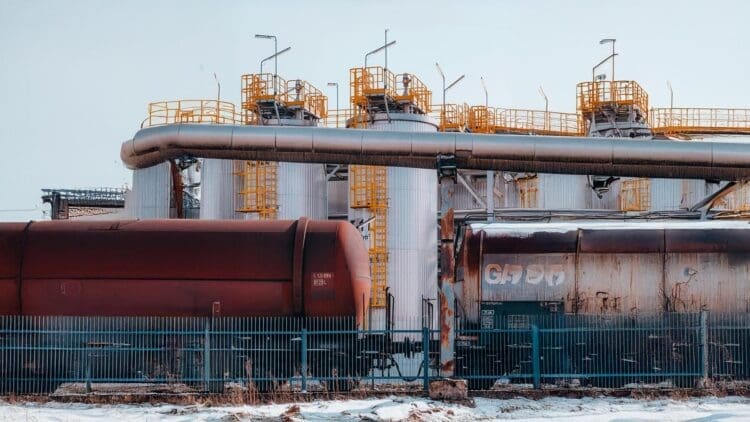
The restart of Trinidad and Tobago’s Pointe-à-Pierre refinery could depend on access to the newly opened Venezuelan oil market. The tiny Caribbean nation has, over the years, developed a working relationship with Venezuela; however, the relationship deteriorated beyond repair in 2009, leading to Trinidad searching for an alternative supplier. Now, with the recent events in Venezuela, Trinidad may be about to restart the refining operations if the nation can get access to the surge in heavy crude from South America.
The Energy Chamber of Trinidad and Tobago is salivating at the new prospects from Venezuela
The Energy Chamber of Trinidad and Tobago has stated that the restart of operations at the Pointe-à-Pierre refinery is heavily dependent on access to Venezuelan crude, and that over the past few years, there has been notable discourse over imports from Venezuela to supply a growing petrochemical and LNG demand.
In 2018, the State-owned Pointe-à-Pierre refinery was shut down when the former government stated that the upgrading costs of the refinery would be too much for the tiny nation to handle. The government is now exploring the possibility of restarting operations at the national refinery as it aims to develop new partnerships with US energy majors who have been designated as the go-to developers to rebuild Venezuela’s crude export sector.



“If the refinery does restart, as everyone in the industry hopes, then the refinery operators will have to find new sources of crude to import. A revitalized Venezuela oil industry could potentially be one source. While the current focus is on gas, there was a time in the past when Trinidad and Tobago imported substantial volumes of crude oil from Venezuela primarily as feedstock for the now mothballed Point-a-Pierre refinery” – Energy Chamber of Trinidad and Tobago
US energy majors are preparing for a new era of Venezuelan crude production
As the US President outlines the specific roles that US energy majors will play in reviving the Venezuelan oil industry, several companies are preparing for a surge in operations in the South American nation. Haliburton has noted that it could quickly ramp up operations in Venezuela, which could serve as a potential supplier of necessary crude to the Pointe-à-Pierre refinery.
In a meeting with the who’s who of US oil execs, Donald Trump outlined his position on the Venezuelan oil industry and that he expects the litany of US energy majors to invest up to $100 billion to revive Venezuela’s oil industry.
Haliburton was one of the companies that agreed with Trump and is preparing for a long-term commitment to rebuilding operations in Venezuela. ExxonMobil has been seen preparing a refinery to handle Venezuelan crude, although no statements have been made by the company’s leadership.
“I think we could scale up fairly quickly. My phone is ringing off the hook in terms of interest in Halliburton being there. I think there are opportunities for us sooner rather than later.” – Haliburton CEO Jeff Miller
The restart of the refining operations at the Pointe-à-Pierre refinery needs a stable supply of crude, and the opportunities coming out of South America paint a picture of growth for the litany of nations all waiting to find out what the next step in Venezuela may be.
Several US-based refiners are preparing for a surge in crude from South America
Trinidad will be keeping a close eye on the situation unfolding in Venezuela, as it could prove to be a determining factor in the restart of the Pointe-à-Pierre refinery. Along with Exxon, several other US energy majors have shifted their corporate strategy to prepare for a surge in crude from the South American continent. The global energy market is a volatile and unpredictable monster; however, nations such as Trinidad are still heavily reliant on global geopolitical outcomes to feed their refining ambitions.