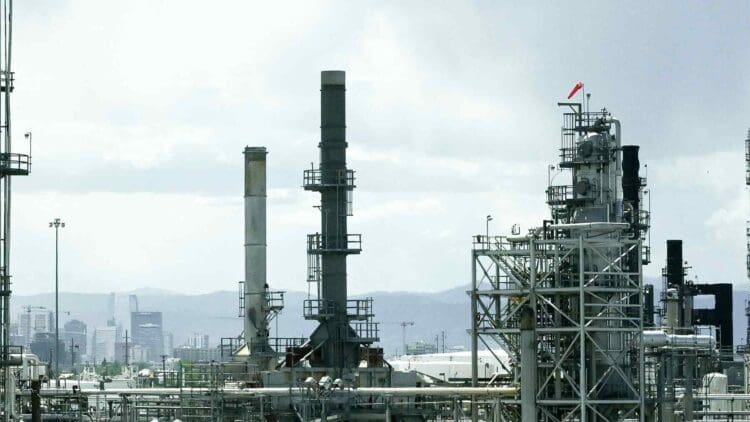

Major industrial transitions rarely depend on a single decision; however, some agreements represent much greater shifts than any individual project milestone. In Abu Dhabi, ADNOC and TAQA have formally agreed to a 27-year utilities services agreement for TA’ZIZ Industrial Chemicals Zone, an important chemical and transition fuel production area located in Ruwais Industrial City. The question is: What could prompt such a long-term commitment?
A new era of partnership in the industrial industry
The 27 year contract will be for the TA’ZIZ Industrial Chemicals Zone (ICZ) located at Ruwais Industrial City and it is one of the primary areas of the UAE’s industrial transformation. Through this agreement ADNOC and TAQA will co-develop a utility platform that will support the development of both chemical and transition fuel related projects in the ICZ, providing all necessary utilities, including connection to the grid for electric power, steam, water, sanitation, and process cooling.
The structure of the agreement is intentional; the service management company to manage the utilities will be established by TA’ZIZ (a joint-venture between ADNOC and ADQ), which will also purchase the utilities from ADNOC and TAQA. The establishment of this company is designed to provide a commercially stable and predictable base for companies moving into the zone.


At the same time, it demonstrates the maturation of the UAE’s industrial strategy: efficiency created at the infrastructure level enables seamless connection for manufacturing operations to a ready-built ecosystem.
Utilities are more than just utilities
At first glance, utilities seem like basic, back-office-type infrastructure. However, they represent a foundational enabler of the large-scale operations of the TA’ZIZ ecosystem, which is expected to produce 4.7 million tonnes per year of chemicals in 2028. The agreement creates a reliable source of uninterrupted supply of steam, cooling, electric power, and water necessary to manufacture chemicals and transition fuels.
Additionally, the agreement increases the UAE’s competitiveness in its efforts to diversify its industrial base. By creating a centralized, long-term utilities system through a partnership between ADNOC and TAQA, both companies eliminate duplicated costs and create a “plug-and-play” model that reduces barriers for international investors to enter the market. In doing so, ADNOC and TAQA reflect the broader trend in industrial planning: build the shared spine first, and then allow manufacturers to scale into it.
The agreement serves to further reinforce TAQA’s increasing regional presence. TAQA is developing major generation projects throughout the region, including Al Dhafra in the UAE and numerous new high-efficiency power plants in Saudi Arabia. These parallel developments demonstrate the increasingly significant role that TAQA is playing in defining the long-term energy and utilities infrastructure of the Gulf.
When does the strategy become clear?
A long-term partnership will provide a sense of predictability for investors around the world who are looking to invest in large-scale infrastructure projects in a sector that is heavily reliant on reliable and sustainable fuel sources. This will be a key factor in attracting investors who have traditionally been hesitant to invest in the Middle East.
Also, the agreement is consistent with the United Arab Emirates’ overall strategy to increase the level of in-country manufacturing as well as to further promote economic diversity through the development of non-oil sectors of the economy. In addition, this partnership has the potential to develop a base of future transition fuels for the region.
The success of TA’ZIZ depends on having a stable, efficient, and scalable infrastructure. This agreement meets those requirements and gives the ecosystem the backbone it needs to become one of the world’s most competitive locations for producing chemicals. The 27-year utility service contract with ADNOC and TAQA accomplishes so much more than providing the infrastructure required for TA’ZIZ to operate. Their partnership is the first step in how the United Arab Emirates (UAE) will compete in the world chemical and transition fuel market.