
Aker BP starts production from three Norwegian Sea fields one year ahead of schedule
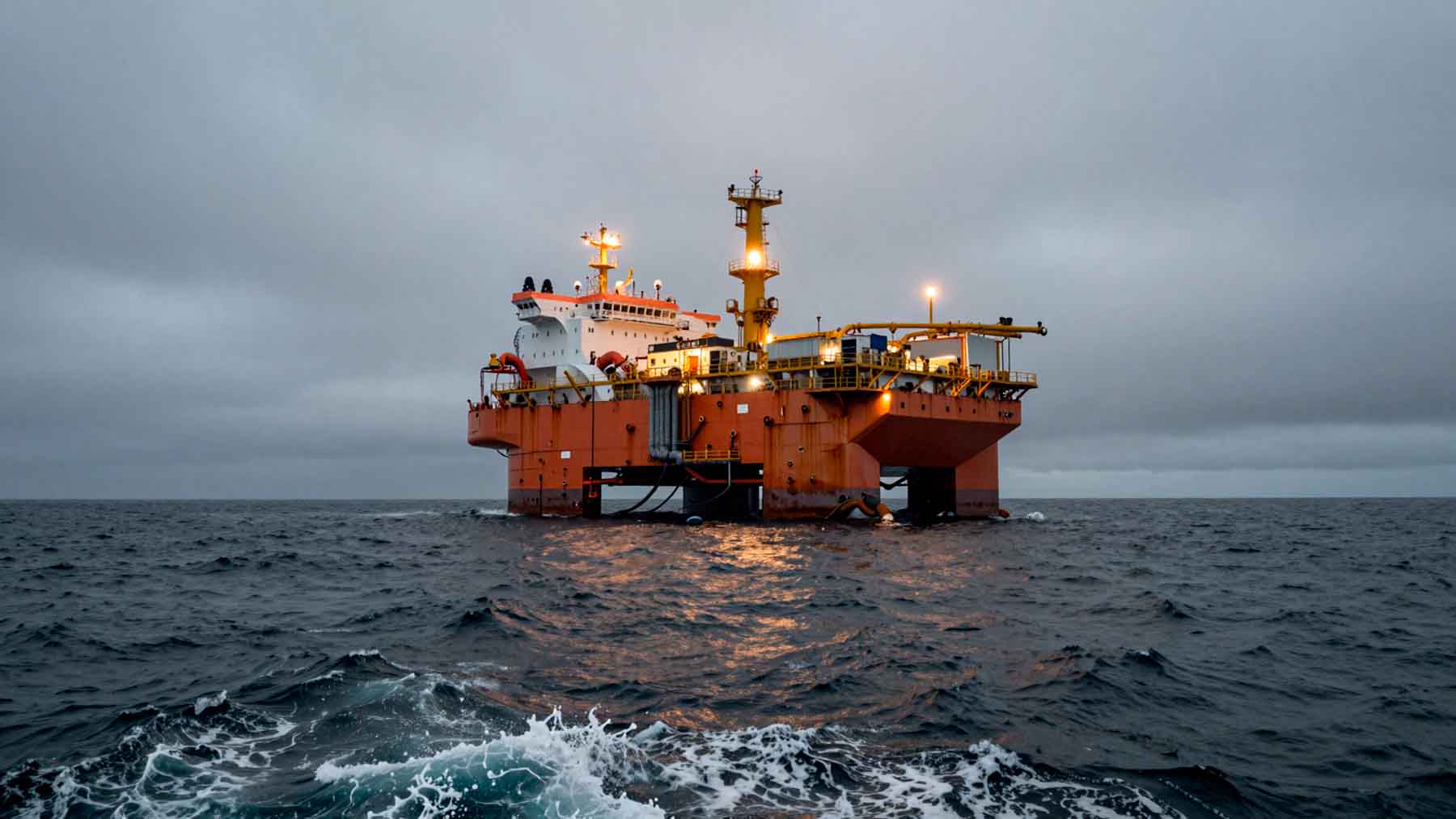 Image generated with artificial intelligence
Aker BP has started production from the Skarv Satellite Project in the Norwegian Sea—bringing the Alve Nord, Idun Nord, and Ørn fields online simultaneously, a full year ahead of the original schedule.
Three fields come online under a single integrated project
The Skarv Satellite Project isn’t just one new field—it’s three, developed at the same time and tied back to the same floating production unit. Alve Nord, Idun Nord, and Ørn were each built as separate subsea developments, each with its own template and two wells, but coordinated under a single project umbrella. All three connect to the existing Skarv FPSO, which already serves as a central hub in the northern Norwegian Sea.
Together, the three fields hold approximately 120 million barrels of oil equivalent in recoverable resources. That’s a meaningful addition to Aker BP’s production base—and it arrived earlier than anyone originally planned.
Aker BP has brought three Norwegian Sea fields—Alve Nord, Idun Nord, and Ørn—online simultaneously through the Skarv Satellite Project, one year ahead of schedule.
The start-up also marks a broader milestone. According to CEO Karl Johnny Hersvik, completing the SSP means Aker BP has now delivered its entire portfolio of subsea tie-back projects sanctioned back in 2022. Every one came in safely, on or ahead of schedule, with strong cost control—and in an industry where overruns are the norm, that’s not a small thing.
“This demonstrates what we can achieve through close collaboration between our employees, alliance partners and suppliers,” Hersvik said in the company’s announcement.
Alliance model and shared infrastructure drove early delivery
Getting three fields across the finish line at once—and a year early—doesn’t happen by accident. Aker BP credits its alliance model as a central factor, running the project in close cooperation with OneSubsea, Subsea7, Aker Solutions, Halliburton, and Saipem during the drilling phase.
That structure let the partners share infrastructure and coordinate execution across all three developments simultaneously. Rather than running separate procurement and logistics chains for each field, the team consolidated where it could, keeping costs down and timelines tight.
There’s also a regional economic angle worth noting. Approximately 60 percent of project deliveries were sourced from Norwegian suppliers—a significant local supply chain contribution that reflects how large Norwegian offshore projects tend to be structured.
Hersvik was direct in crediting the people involved. “I would like to thank everyone who has contributed,” he said, pointing to employees, alliance partners, and suppliers as the reason the project landed safely, on budget, and ahead of schedule.
Low carbon intensity and extended infrastructure life among key outcomes
One of the quieter but important aspects of the Skarv Satellite Project is its carbon footprint. The three developments carry a combined CO2 intensity of approximately 4.5 kilograms of CO2 per barrel of oil equivalent—a relatively low figure that comes down to how the project was designed.
By tying all three fields back to the existing Skarv FPSO rather than constructing new standalone infrastructure, the project sidesteps the emissions associated with building and operating additional facilities. Existing infrastructure does the heavy lifting, and the new fields simply plug into it.
The tie-back approach also adds operational flexibility. It extends the productive life of the Skarv area infrastructure and creates a stronger foundation for future resource development nearby—the more fields that connect to the hub, the more valuable it becomes, a compounding benefit that makes each additional tie-back easier to justify. Production from the Skarv Satellites is expected to account for a significant share of Aker BP’s total Skarv-area output for several years to come.
License ownership and field locations
The three fields sit near the existing Skarv field in the northern Norwegian Sea, but their ownership structures differ considerably from one another.
Alve Nord (PL 127C) is where Aker BP holds its largest stake. The company operates the license with a 58.1 percent interest, alongside Harbour Energy at 20 percent, ORLEN Upstream Norway at 11.9 percent, and JAPEX Norge at 10 percent.
Idun Nord (PL 159D) tells a different story. Aker BP operates but holds only a 23.8 percent share. Equinor is the largest partner at 36.2 percent, followed by Harbour Energy at 28.1 percent and ORLEN Upstream Norway at 11.9 percent.
Ørn (PL 942) sits somewhere in between—Aker BP operates with a 30 percent stake, while ORLEN Upstream Norway holds the largest share at 40 percent and Equinor takes the remaining 30 percent.
Despite the varied ownership, all three fields now feed into the same production hub. The Skarv FPSO receives output from each, reinforcing its role as a central infrastructure asset for Aker BP and its partners across the region.
60 percent of deliveries sourced from Norwegian suppliers
Aker BP has brought three Norwegian Sea fields—Alve Nord, Idun Nord, and Ørn—online simultaneously through the Skarv Satellite Project, one year ahead of schedule. Combined recoverable resources total approximately 120 million barrels of oil equivalent. The project ran through Aker BP’s alliance model, with roughly 60 percent of deliveries sourced from Norwegian suppliers. CO2 intensity across the three fields sits at approximately 4.5 kg per barrel of oil equivalent. With SSP now complete, Aker BP has delivered its full 2022-sanctioned subsea tie-back portfolio—every project on or ahead of schedule.
Kelly is an experienced writer with 15 years of experience exploring the big stories that shape our world, from tech breakthroughs and space exploration to climate, energy, and the fascinating quirks of science. She has a talent for turning complex ideas into sharp, memorable insights that stay with readers long after they’ve finished reading.
