
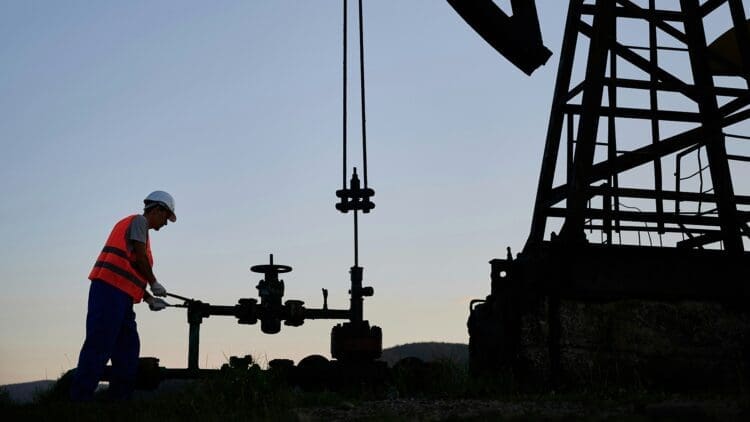
A new development in South America has raised questions over the sovereignty and rights to develop energy assets in the region. The Sea Lion field in the waters just off the coast of Argentina has been stirring up some controversy that has been brewing for decades. Argentina refers to the island as the Malvinas Islands, while the UK, which technically holds the rights to develop energy projects, refers to it as the Falkland Islands. Regardless, Israeli energy major Rockhopper Exploration said it has sanctioned the project after taking a final investment decision.
Geopolitical tensions are brewing in the region near the Sea Lion field
Argentina has been through quite a rough couple of years. The economy has been on a downward spiral over the past few years, leading to drastic inflation and reducing the worth of the Argentine peso. The United States has provided a substantial loan to the Argentine government to boost the nation’s economy, but alas, the problems persist.
Rockhopper Exploration and Navitas Petroleum Development and Production have reached a final investment decision on the Sea Lion field, which was discovered by Rockhopper in 2010. To confuse the situation even more, the Falkland Islands government has approved the planned development and production program for the project, despite heavy pushback from the Argentine government.

The regional government has approved the plan for the Sea Lion field project
The regional government approved the plan for phases 1 and 2 of the northern development area of the Sea Lion project. Rockhopper said in July that it would invest upwards of $140 million for the development of the field, subject to Navitas and itself reaching a final investment decision, as well as the project receiving all the necessary regulatory approvals.
“The sanctioning of Sea Lion is a major milestone for Rockhopper and all its stakeholders and represents the culmination of over 20 years of work. When we first discovered Sea Lion in 2010, it was a hugely exciting play-opening well, and the vast amount of work undertaken since then, first in the ensuing drilling campaigns and then the many years of engineering and commercial refinement, is now moving towards its ultimate fruition as we move into the development phase.” – Chief Executive Sam Moody
The Sea Lion field project has raised some interesting questions that have been brewing for decades
The Falklands War was a terrible conflict that devastated relations between Argentina and the United Kingdom. The Malvinas Islands have been a thorn in the side of the Argentine government since its claim that the island is part of Argentina, but the islands have been under British rule for the past few decades, which has led to some issues that have emerged.
The Argentine foreign ministry has called the project “illegitimate” due to the fact that the project was not approved by the Argentine government. The South American nation claims that the project, which is due to start producing oil in 2028, was a “unilateral” decision undertaken by the British government. A wave of new energy projects in the global market has led companies to search for new developments in overlooked parts of the world.
The United Nations may need to step in to negotiate a solution to the Sea Lion problem
A resolution made by the United Nations in 1976 established that neither Argentina nor the UK can make unilateral decisions on the territory while negotiations are ongoing. Rockhopper has noted that the total post-decision funding requirement for the project is going to come in at around $1.8 billion for the first oil to flow, with an additional $2.1 billion needed for completion. As other South American projects reach critical points, the islands and the Sea Lion field are being subjected to a conflict over the rights to develop the project.

