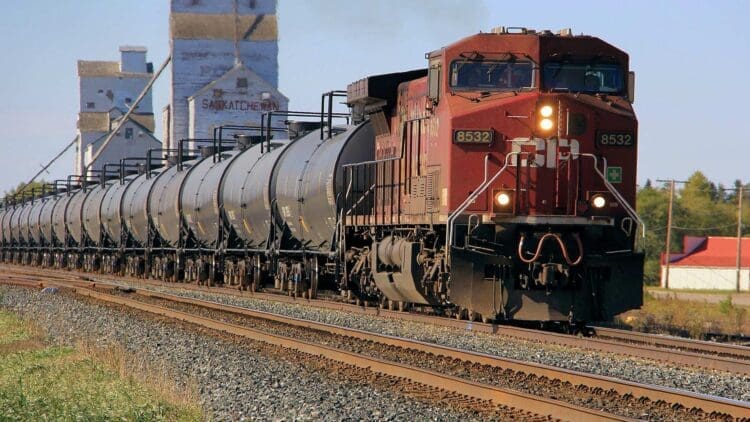

The paradoxical nature of the energy industry was in full effect in the United States recently. In a ruling that could reshape the environmental assessment of energy projects, the United States Supreme Court gave its approval for a new proposed railway in Utah that will transport oil resources to processing facilities further along the supply chain. The ruling has been met with mixed responses. The lawmakers in the state have lauded the ruling, while environmental groups have lamented the decision by the highest court in the land.
The Uinta Basin Railway: A midstream necessity or environmental disaster?
The US Supreme Court has ruled that the proposed Uinta Basin Railway should move ahead, and has sent the ruling back to the DC Circuit Court following a successful appeal.
The proposed Uinta Basin railway project would stretch 88 miles from its namesake basin to Helper, the destination of terminals connecting to the US railroad network. Utah could become the latest state to send its significant oil resources to the Gulf Coast for refinement.



While the court case heard by the Supreme Court related to the Uinta Basin Railway, the ruling may set a new precedent for environmental assessment responsibilities that federal agencies are required by law to conduct.
The US Supreme Court may have changed the game for the US oil industry
The Supreme Court justices heard oral arguments in December of last year, after the federal agency that regulates interstate rail transportation, the Surface Transportation Board, approved the proposed construction plans for the railroad in 2021.
However, several organizations and institutions sued, arguing that the federal agency did not sufficiently analyze and assess the potential effects of the railway on local communities, as the National Environmental Policy Act mandates.
Is there a future for the Uinta Basin Railway, or is it merely a pipedream?
Following the DC Circuit Court siding with the litany of environmental groups, throwing out the federal agency’s approval for construction to begin, the Seven County Infrastructure Coalition appealed the decision to the US Supreme Court.
The justices reversed the lower sitting’s decision, sending it back for further litigation. The Supreme Court’s opinion reads as follows:
“[The Surface Transportation Board] incorrectly interpreted NEPA to require the board to consider the environmental effects of upstream and downstream projects that are separate in time or place from the Uinta Basin Railway.” – US Supreme Court opnion
The ruling has created a notable split among lawmakers and environmentalists
As the US energy industry grows substantially this year, the ruling has split opinions. Environmental groups have lamented the approval for the project to begin.
“This disastrous decision to undermine our nation’s bedrock environmental law means our air and water will be more polluted, the climate and extinction crises will intensify, and people will be less healthy.” – Center for Biological Diversity senior attorney Wendy Park
Utah Gov. Spencer Cox has praised the decision by the highest court in the nation, along with the director of the Seven County Infrastructure Coalition.
“This decision affirms the years of work and collaboration that have gone into making the Uinta Basin Railway a reality. It represents a turning point for rural Utah — bringing safer, sustainable, more efficient transportation options, and opening new doors for investment and economic stability.” – Keith Heaton, director of the Seven County Infrastructure Coalition
Does the future allow for the continued domination by the US energy industry?
As lawyers associated with the President develop new possibilities across the international energy market, the ruling by the Supreme Court has created the inevitable uncertainty over the US continuing on its path to worldwide energy domination. The approval for the Uinta Basin Railway has yet to be given by the relevant authorities; as such, further litigation is expected in the near future.