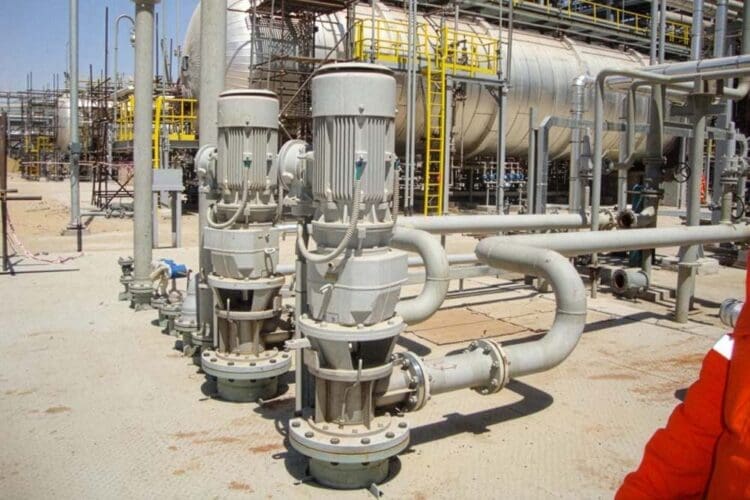

How one oilfield service team addressed a pressure-related failure in its produced water treatment system using progressive cavity pump technology, reducing downtime and improving reliability under extreme conditions.
Produced water management remains one of the most pressing challenges in oil and gas production, especially at drilling sites where environmental regulations are strict and operational reliability is paramount.
As the industry moves toward more sustainable and efficient methods of handling this complex byproduct, pumping technology plays an increasingly critical role. The choice of pump can determine whether a system meets performance expectations or falters under stress.
A recent produced water treatment project encountered such a challenge – one that would ultimately be resolved through a reevaluation of the system’s progressive cavity pump configuration.
The Challenge of Underperforming Pumps in a Critical Application
A critical project was centered around the design and commissioning of a produced water treatment (PWT) package for drilling fluid recovery.
This system, operating across several high-temperature drilling locations, was tasked with efficiently managing the water – a fluid often laced with hydrocarbons, solids, and other contaminants – extracted during oil and gas production.
As is common in such operations, the fluid handling system relied heavily on pump performance to maintain flow and pressure throughout the treatment process.
Shortly after commissioning, the team identified a recurring performance issue. The later-model progressive cavity pump initially supplied was failing to develop the necessary pressure for reliable operation, although it is an effective pump for other applications. This underperformance caused system instability and raised concerns about ongoing maintenance, downtime, and overall system efficiency.
Because produced water treatment must operate with minimal interruption to meet regulatory and production goals, the issue required an urgent technical response.
Troubleshooting and Redesigning for Better Pressure Control
The pump engineering team collaborated closely with the oil and gas service company’s engineers to troubleshoot the problem. The initial diagnosis pointed to the extreme environmental conditions and the fact that the pump was functioning near its maximum pressure capacity.
As the system cycled through varying loads and temperatures, the pump’s performance became inconsistent – an indication that it was not adequately sized for the job.
The team conducted a detailed feasibility analysis to determine a more appropriate solution. By evaluating both the process requirements and the limitations of the current setup, they concluded that upgrading to a more robust model would be necessary.
The solution involved replacing the older equipment with a pump that has higher pressure-handling capability and a wider operational window. This model swap, while relatively minor in terms of footprint, addressed the root cause of the issue: insufficient capacity under sustained high-temperature conditions.
How Progressive Cavity Pump Technology Works in Oil and Gas Applications
Understanding why this change worked requires a closer look at how progressive cavity pumps operate. Unlike centrifugal pumps, which use impellers to generate flow through kinetic energy, progressive cavity pumps use a rotor-stator mechanism to create discrete, sealed cavities that move fluid at a constant rate.
This positive displacement method makes PCPs particularly suited for applications involving viscous or abrasive fluids, fluctuating temperatures, or variable flow rates – conditions often found in produced water treatment systems.
In this case, the pump’s larger geometry and enhanced elastomer materials provided greater durability and pressure generation. The technology is designed to tolerate elevated temperatures and chemical variability, and the sealed cavity mechanism ensures a steady flow even when entrained gas or solids are present.
These features align well with the needs of PWT systems, which often face inconsistent fluid compositions and the need for continuous uptime.
Measurable Gains in System Efficiency and Downtime Reduction
While the installation of the upgraded pump is still in its final stages, early results have been promising. Operators have already noted improvements in system availability, with pump downtime reduced significantly.
From a cost perspective, the new configuration also contributes to lower operational expenditures. Reduced wear on pump components has decreased the frequency and cost of spare parts, while the overall system has become more reliable, reducing the need for emergency maintenance or shutdowns.
An additional benefit of the new pump model is the potential for standardization. By aligning other packages with the new equipment, the oil and gas service company can streamline training, inventory, and maintenance protocols across sites – a strategic advantage for organizations managing multiple assets in varied geographies.
Why Progressive Cavity Pumps are Ideal for Produced Water Treatment
This application-specific solution fits within a broader pattern emerging across the oil and gas industry. As environmental pressures mount and well conditions become more challenging, operators are increasingly turning to progressive cavity pumps for produced water and multiphase fluid handling.
PCPs offer several advantages over alternative technologies, including their ability to handle high solid content, high-viscosity fluids, and unpredictable flow regimes. These benefits have made them a fixture in many onshore and offshore installations worldwide.
Other case studies reinforce this trend. For example, at Sohar Port in Oman, PCPs are used to manage oil-water emulsions with flow rates exceeding 50 GPM under pressures of 170 PSI.
In India, several ONGC and Cairn Energy installations rely on PCPs for crude oil, oily water, and condensate transfer, with documented performance under demanding field conditions.
These examples, while geographically distinct, share a common denominator: The need for resilient, predictable pumping systems in unforgiving environments.
Engineering Collaboration Leads to Long-Term System Gains
This case also underscores the importance of collaboration between equipment suppliers and engineering teams in achieving successful outcomes. Diagnosing system-level failures is rarely a simple matter of replacing a component. It requires a holistic understanding of the process, the equipment, and the external variables influencing performance.
In this case, identifying that the pump was operating at its design limits, and proactively moving to a more suitable model, were key to restoring system functionality.
As produced water treatment technologies evolve, so too will the requirements for pump selection, sizing, and materials. Progressive cavity pumps will likely remain a staple of these systems, especially as innovations in elastomer chemistry, rotor coatings, and pump geometry expand their performance envelope.
For now, the oil and gas service company’s experience offers a useful reference point for engineers tasked with designing or troubleshooting similar systems. It’s a reminder that even a modest design change, when rooted in solid technical analysis, can result in measurable gains in uptime, efficiency, and lifecycle cost.
Ultimately, the success of any produced water treatment system depends not only on flow rates and discharge quality, but also on the reliability of the technologies embedded within it.
In harsh and unpredictable environments, progressive cavity pumps continue to prove their value by quietly keeping systems running when it matters most.
A Scalable Model for Reliability in Produced Water Treatment
The oil and gas service company’s experience provides a compelling case study for how engineering teams can respond effectively to equipment performance issues in high-stakes oilfield environments.
What began as a pressure shortfall in a produced water treatment system quickly evolved into a deeper technical investigation – one that ultimately led to a more robust and reliable solution. By upgrading to a progressive cavity pump better suited for the thermal and flow conditions of the application, the team not only resolved an operational bottleneck, but also laid the foundation for long-term standardization and cost control.
This outcome reinforces a broader principle in oil and gas fluid handling: Technology choices should be driven not only by specifications, but by a deep understanding of the operating environment. Progressive cavity pumps have proven particularly adept in these settings due to their ability to maintain consistent flow under fluctuating conditions, manage abrasive or viscous fluids, and operate with minimal downtime. In the context of produced water – an often-overlooked but environmentally significant byproduct – this level of reliability is essential.
Just as important, this case highlights the value of open collaboration between equipment manufacturers and end users. Rather than settling for a temporary fix, the service company and pump engineering teams worked together to identify root causes, assess performance limits, and implement a targeted redesign. This kind of iterative problem-solving is where innovation meets practicality, allowing for solutions that are both technically sound and economically viable.
As the oil and gas sector continues to evolve under pressure from regulatory, environmental, and production demands, applications like this serve as a blueprint for resilient system design. Whether treating produced water, handling multiphase flow or managing remote infrastructure, the ability to adapt, with the right tools and partners, can mean the difference between reactive maintenance and reliable performance.

Vinay Kumar Dhar, Senior Vice President of Roto Pumps, is a mechanical engineering graduate with a distinguished career spanning 34 years in the construction and pump industry. He has dedicated 32 years to Roto Pumps Ltd, contributing extensively across multiple facets of marketing and sales. Dhar brings deep industry expertise, strategic vision, and leadership experience that have been instrumental in driving business growth and strengthening market presence. He can be reached by email.