

Global energy demand remains strong, and the upstream sector continues to see a steady flow of new projects across established and emerging basins. Despite this momentum, operators remain cautious. Their focus is not on rapid expansion at any cost, but on investments that are durable, deliver long-term value, and are backed by reliable counterparties.
Against this backdrop, energy producers face a dual challenge: increasing output while keeping costs in check. Inflationary pressures and rising supply chain expenses are forcing companies to scrutinize the commerciality of new projects, both at the Final Investment Decision (FID) stage and across the full lifecycle of floating production, storage and offloading (FPSO) assets.
To help with this, there is an opportunity to view the dynamic between minimizing upfront capital expenditure (CAPEX) and its impact on operational expenditure (OPEX) from a different perspective. True value lies in evaluating how equipment performs over years of service, not just at the procurement stage. This shift towards lifecycle thinking has implications for FPSO operations, particularly reeling hoses.
FPSO Reeling Hoses: A Small Component with Big Impact
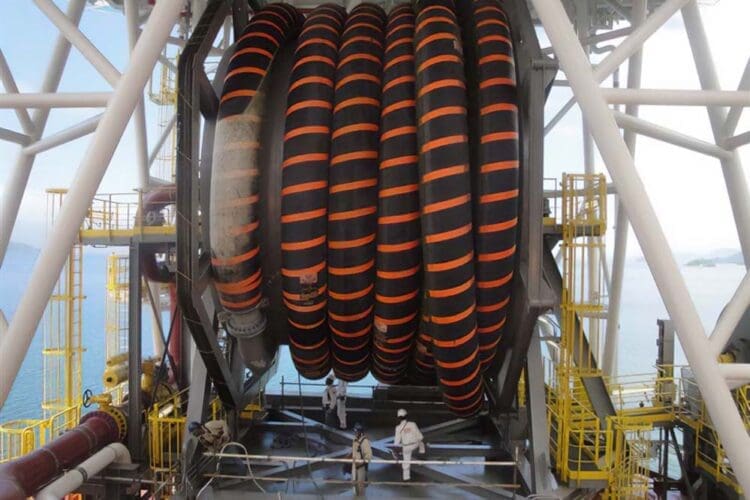
Although reeling hoses may not always be the first item on an operator’s priority list, they are central to the safe and efficient running of an FPSO. They enable the transfer process, influence uptime, and play a direct role in operational safety. Yet, in many cases, their importance has been underestimated. Trelleborg Fluid Handling Solutions worked with industry stakeholders across the FPSO value chain, including national and international oil companies, to understand their views on reeling hose selection and use. The findings revealed several entrenched practices and decision-making habits that may be limiting the sector’s ability to capture the full value of proven hose technologies.
Demand for Solutions with Proven Track Record
The research revealed that for many buyers, a product’s track record is the single most important consideration. The logic is clear: A hose with years of incident-free performance represents a safe choice. Some operators also look for hoses that demonstrate proven reliability, durability, and consistent performance.
That being said, what qualifies as “proven” is not universal. For some, it means compliance with industry guidelines such as OCIMF GMPHOM 2009 or API17K; while for others, it simply means a product that has not failed in service. Both definitions have their strengths, but they risk overlooking wider benefits that other FPSO reeling hoses can bring, including lighter weight, greater flexibility or extended service life. A rigid focus on compliance can cause operators to overlook solutions that meet standards while offering lower operating costs, improved efficiency, and reduced downtime. Contract terms from third-party operators can also complicate the issue. Some operators, working on five-year contracts, inevitably prioritize solutions that enable immediate compliance over longer-term hose performance. This can create a cycle of replacing hoses more frequently than necessary, ultimately driving up costs and waste.
The CAPEX – OPEX Disconnect
The research also confirmed what many in the industry already suspect: The balance between CAPEX and OPEX is still disproportionate within the context of choosing an optimum cost solution. Procurement teams often default to lowering upfront costs, while operations teams bear the consequences of shorter service lives, higher replacement needs and unexpected downtime.
A lifecycle approach can tackle this disconnect; by considering how a hose performs across its service life, rather than just evaluating it based on making upfront cost savings, operators can identify significant savings in OPEX. Fewer replacements mean fewer disruptions, less demand on crew, and reduced exposure to costly vessel downtime. Since chartering and manning support vessels is an ongoing and considerable expense, minimizing unplanned interruptions is crucial for cost management.
Existing Industry Standards
Most operators rely on GMPHOM 2009 as the guiding standard for marine hose selection. While crucial to the specification process, the framework can unintentionally reinforce the view of hoses as commodities, with features such as service life or weight treated as optional extras rather than core differentiators. Some companies use API Spec 17K as an additional benchmark, but GMPHOM 2009 remains the dominant reference point.
Feedback from industry participants suggests that the guidelines could benefit from greater clarity, particularly around mid-life inspections and maintenance requirements. Without this, many operators default to scheduled replacements rather than being guided by actual hose conditions and performance. The result is unnecessary cost, additional work and increased waste.
Moreover, treating hoses as interchangeable commodities can lead to “mix-and-match” approaches, where different hoses from different suppliers are used interchangeably. While this may appear cost-effective and seamless, it introduces additional risks with performance inconsistencies and accelerated asset wear.
The Environmental Impact of Hoses as a Whole
The environmental discussion around hoses has historically centered on oil spill prevention: A hose should be able to prevent leaks and avoid the most apparent environmental risk. While this is still essential, it fails to consider the broader lifecycle impact of emissions caused by frequent hose replacement and waste disposal.
This is beginning to change. Trelleborg’s REELINE hose demonstrates that environmental performance and cost effectiveness do not have to be mutually exclusive. Longer service life means operators can achieve reductions in scope 1 and 2 emissions while also benefiting from lower OPEX costs, longer life and lower maintenance disruptions.
Charting the Path Forward
The upstream energy industry is entering a period of high FPSO activity, with several new projects in the pipeline. This presents a critical opportunity for operators to rethink how they evaluate long term investments and equipment choices.
Feedback from across the industry underscores two priorities: Maintaining the highest safety standards and unlocking greater flexibility in operations. Proven hose technologies already exist to meet both needs. The challenge is to shift industry mindsets from a short-term, CAPEX-driven perspective to one that also recognizes hoses as long-term performance assets. By embedding lifecycle thinking across operations, from procurement to hose change-out, FPSO owners can reduce costs, improve uptime and performance. Reeling hoses are a small but crucial component within FPSO operations. To explore their potential with an open mind could expose operational and commercial advantages that will both enhance returns on investments and advance environmental performance.


Jonathan Petit is Product Group Director for Trelleborg Fluid Handling Solutions. For more information, visit the Trelleborg Fluid Handling Solutions website.


