
Australia’s untapped coastal sea breezes quietly surge to their peak at the exact moment millions of air conditioners switch on across the country’s hottest summer afternoons
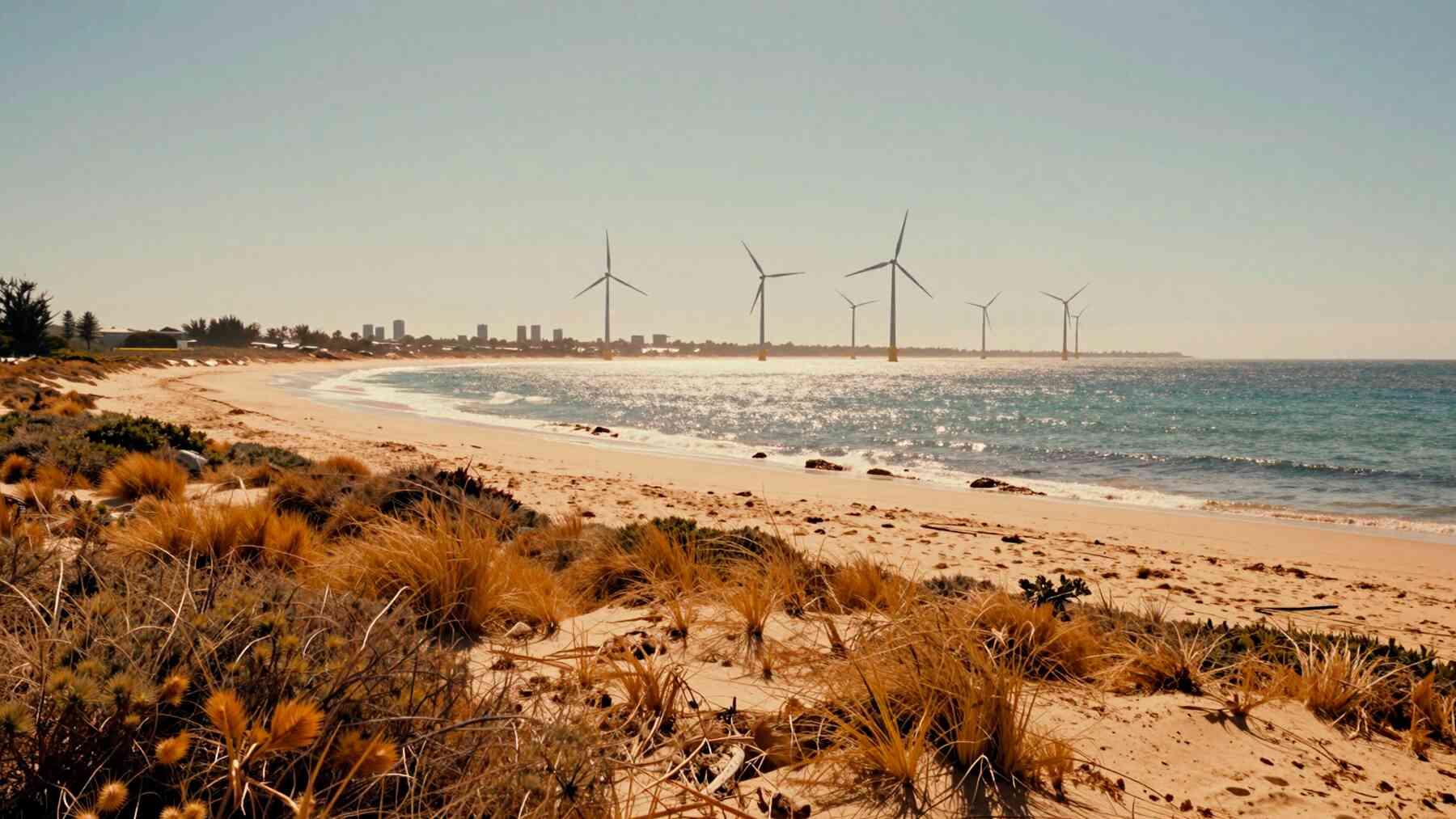 AI-made
Imagine a scorching summer afternoon. The sun is beating down relentlessly. Millions of people blast their air conditioners at the exact same time.
The electric grid is absolutely sweating under the strain.
Right then, a cool ocean breeze rolls onto the beach. Beachgoers know this refreshing daily rhythm well.
She has a talent for turning complex ideas into sharp, memorable insights that stay with readers long after they’ve finished reading.
Now, energy planners realize it could change everything.
Australia has no offshore wind turbines spinning yet. But a groundbreaking new study looked at 46 years of weather data.
They mapped coastal winds across eight different zones. and the findings could completely rewrite the blueprint for clean energy.
The implications are absolutely massive.
A 46-year window into Australia’s coastal winds
Researchers dug into a highly detailed atmospheric model called BARRA-C2.
Australia’s Bureau of Meteorology built this advanced system. It tracks weather at a sharp 2.7-mile resolution.
The data spans all the way from 1979 to 2024. That gave scientists 46 years of raw information. This is the first multi-coastline database of its kind for the region. The level of resolution matters a lot.
Older models look at a wider 7.5-mile scale. Those coarse models miss wind structures along jagged coastlines.
Every single mile matters when mapping wind. At 2.7 miles, subtle wind shifts become crystal clear.
The team used an advanced physics-based tracking method called moisture frontogenesis. This tracks exactly where cool ocean air meets hot land air and makes the data highly reliable. It is much more consistent than old local observations.
The team analyzed eight specific offshore zones. Two zones sit near Bunbury in the southwest, and the other six span the southeastern coast. They cover New South Wales, Victoria, South Australia, and Tasmania.
When sea breezes blow, wind energy rises—but not all morning
The big takeaway is pretty simple. On summer sea breeze days, wind potential skyrockets. Power capacity factors jump 15% to 30% in six zones.
But planners must watch out for a hidden catch.
The data reveals a consistent late-morning lull. This dip happens right between 10:00 a.m. and noon.
This is a vital piece of the puzzle. The incoming ocean breeze temporarily fights prevailing winds. That clash slows down the turbines and drops output.
Then, the massive afternoon surge finally arrives.
Grid operators must plan carefully around that morning dip.
Fortunately, the afternoon surge hits during peak demand. That is when home cooling runs at full blast.
A beautiful natural feedback loop happens here that helps balance out the power grid.
Hotter days make the land heat up much faster. That creates a massive temperature gap with the sea. This gap fuels a much stronger ocean breeze.
The heat driving demand also creates the power to meet it.
How sea breezes and electricity demand are a natural pairing
Scientists checked regional energy records from 2010 to 2019.
The numbers proved demand spikes on sea breeze days. Air conditioning drives this heavy electrical load. In most zones, wind peaks at the perfect time.
The maximum breeze lines up with the highest demand hours.
Planners can bank on this pattern. Peak-demand energy is worth more to grid managers. It beats power generated at 3:00 a.m. when people sleep.
However, Tasmania is a major exception to this rule. Power demand there does not spike with the heat. The island’s mild climate keeps cooling loads low.
Outside of summer, this whole phenomenon vanishes. The difference between sea breeze days and normal days disappears.
Summer is the critical window where everything converges.
Opposing coastlines: A built-in trade-off
The researchers uncovered a counterintuitive twist in the data.
You cannot get lucky everywhere at the same time. Weather systems are complex like that.
Winds favoring an east coast suppress the west coast. Sea breezes need winds blowing offshore to get started.
West winds favor an east-facing beach. But they blow onshore along west-facing beaches, ruining it.
Look at the Illawarra coast south of Sydney. A sea breeze there cuts Southern Ocean breeze odds in half.
Conversely, coastlines facing the same direction behave similarly. Illawarra and Gippsland usually share sea breeze days. The odds are nearly three times higher than chance.
So one coastline cannot substitute for the opposite side. They operate on completely opposing schedules.
Implications for where Australia should build offshore wind
This wind relationship gives planners a clear clue. They cannot put all their turbines in one spot.
They must spread farms across coastlines with different orientations. They need turbines facing east, west, north, and south. This diversity smooths out the clean energy supply.
The study modeled a theoretical 2.2-gigawatt wind farm. This matches the planned capacity for the Gippsland project.
The daily energy profile changes completely based on location. Location is about much more than average wind speed. You have to look at the hourly timing.
Researchers note that more work is still needed. The models did not capture turbine wake effects.
They also need to fully validate hub-height wind speeds.
The current data relies heavily on computer reanalysis. But Australia is targeting a 9-gigawatt offshore goal.
Planners have a massive decision to make. It is a high-stakes choice for the country. The future of their grid depends on it.
They can use 46 years of evidence to position turbines perfectly, or they can miss this incredible natural alignment.
That leaves us with one big question: What’s going on with coastal breezes in Australia and wind power?
Kelly is an experienced writer with 15 years of experience exploring the big stories that shape our world, from tech breakthroughs and space exploration to climate, energy, and the fascinating quirks of science. She has a talent for turning complex ideas into sharp, memorable insights that stay with readers long after they’ve finished reading.
