
Australian thermal energy firm lands 1GW AI data centre deal, putting a remote South Australian solar site at the center of the country’s clean energy ambitions
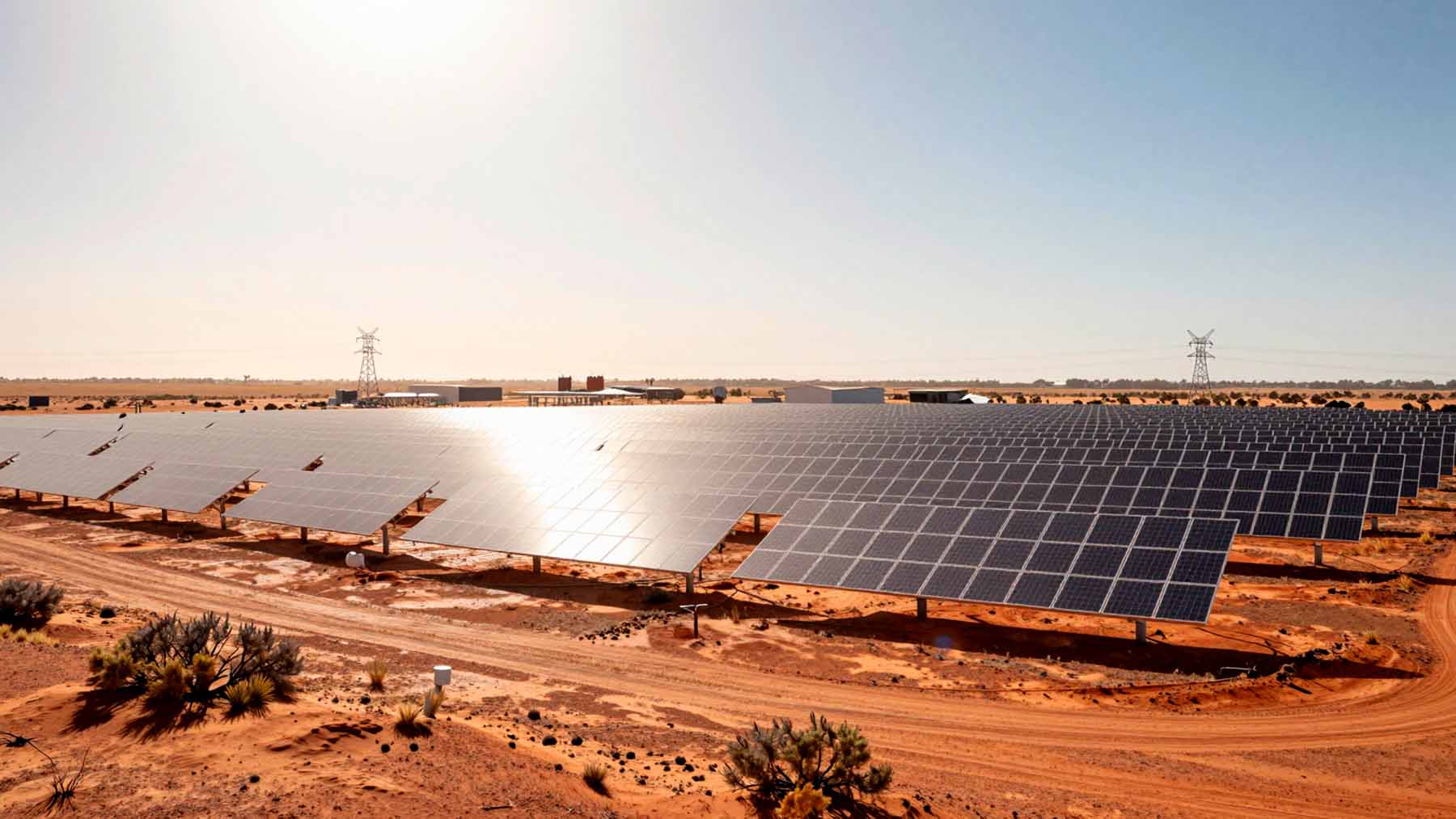 Image generated with artificial intelligence
A little-known Australian thermal energy storage company just signed a deal that could make it a cornerstone of the country’s AI infrastructure buildout. 1414 Degrees has agreed to develop up to 1GW of AI data centre capacity — a scale that rivals the ambitions of the world’s largest technology firms.
The site at the center of it all is Aurora Energy Precinct, a 15.8-square-kilometre landholding near Port Augusta in South Australia. Assembled quietly over several years, it sat largely out of the spotlight — until now.
A gigawatt ambition in the South Australian outback
The heads of agreement gives an unnamed data centre operator exclusivity over an initial 40-hectare parcel within Aurora’s 15.8 km² landholding — just the starting point. The site offers up to 900MW of solar generation potential, an approved 140MW/280MWh battery energy storage system, high-voltage connection infrastructure, and both fibre and water access. Few greenfield sites in Australia can match that combination.
One detail worth noting: the 280MWh BESS anchoring the data centre will use conventional lithium-ion technology, not 1414 Degrees’ proprietary thermal storage.
Development unfolds across three stages: a 17MW starter campus using an existing 33kV connection; a 200MW anchor campus contingent on a 275kV transmission line; and a longer-term pathway to gigawatt scale as Aurora’s renewable generation expands. The phased structure lets 1414 Degrees start generating revenue now while the larger buildout continues in parallel.
Years in the making: how Aurora came to be
Aurora didn’t appear overnight. In 2019, 1414 Degrees acquired SolarReserve Australia II Pty Ltd, the entity holding the Crown Lease over the site near Port Augusta. The original vision was to combine large-scale solar PV with the company’s proprietary thermal energy storage technology — delivering firm power to the grid and industrial heat to nearby industries.
A significant regulatory milestone arrived in January 2026, when the Australian Energy Market Operator accepted the Generator Performance Standards for Aurora’s 140MW/280MWh BESS. That approval gave 1414 Degrees the authority to connect the battery system to the grid, finalize transmission connection agreements, and begin commercial negotiations for power purchase agreements. ElectraNet also confirmed acceptance of the full standards package, clearing the technical path toward commercial operation.
What 1414 Degrees brings to the table — and what it doesn’t
The proposed structure is a clear division of labor. 1414 Degrees provides the land, power infrastructure, and connectivity, while the unnamed data centre partner brings the capital, technical expertise, and operating capability to deploy and run the facilities. It’s a developer model more than an operator model — and that distinction matters.
One detail worth noting: the 280MWh BESS anchoring the data centre will use conventional lithium-ion technology, not 1414 Degrees’ proprietary thermal storage. The company is currently seeking an offtake partner for the BESS output and has indicated it’s open to co-investment structures. Thermal storage isn’t absent from Aurora’s plans, though — the wider project will include a pilot of the company’s SiBox technology, a silicon-based system storing energy as heat at temperatures up to 1,414°C, suitable for industrial applications in cement, alumina, and steel manufacturing.
Policy tailwinds: Australia reshapes the rules for data centres
Australia’s regulatory environment for large-scale data centres is shifting rapidly, and Aurora is positioned to benefit. On July 15, 2026, the federal government moved to legislate a net-generator requirement for large-scale data centres. Under the proposed rules, facilities would need to underwrite new renewable energy supply, pay their full share of connection costs, and reduce demand when the grid is under strain. The Energy and Climate Change Ministerial Council backed nationally consistent standards on July 28, with only Queensland and the Northern Territory opposing the framework.
At the Australian Clean Energy Summit 2026 in Sydney, industry voices argued that data centres should function as anchor tenants for new renewable infrastructure. Major AI companies, including Anthropic, have publicly flagged requirements for 500MW-plus sites in Australia — exactly the kind of demand Aurora has spent years positioning itself to supply.
Why reliable, long-duration storage is the missing piece for AI infrastructure
Data centres require near-zero downtime, stable voltage, and consistent supply regardless of grid conditions. That makes the pairing of battery storage and thermal storage particularly attractive. Lithium-ion batteries are fast and flexible but degrade over time and carry real limits on discharge duration. Thermal storage using molten silicon offers a complementary profile: longer duration, high-temperature heat delivery, and no electrochemical degradation.
The modular design of the data centre technology adds another layer of risk management — equipment can be relocated or replaced as technology evolves, reducing the long-term threat of stranded assets. That’s a real concern in a sector where hardware generations turn over quickly. 1414 Degrees joined the Long Duration Energy Storage Council in Q3 2022 and has been developing molten silicon storage since 2018.
What to watch next
The heads of agreement is a starting point, not a finish line. Definitive agreements still need to be negotiated, covering land access, behind-the-meter renewable energy supply, battery storage, grid connection, and precinct services. 1414 Degrees will also continue working with SA Power Networks, ElectraNet, and other stakeholders to progress connection arrangements.
The identity of the data centre partner remains undisclosed — a variable that will shape how the project develops and how quickly it moves. Watch for progress on the 275kV transmission connection. That’s what unlocks the 200MW anchor campus and sets the stage for everything that follows. Aurora’s gigawatt ambition depends on it.

Carlos is an engineer with strong expertise in technical and industrial topics. He previously worked at international companies such as Siemens and is multilingual.
