Nick Vaccaro
Freelance Writer and Photographer

Nick Vaccaro

Nick Vaccaro is a freelance writer and photographer. In addition to providing technical writing services, he is an HSE consultant in the oil and gas industry with twelve years of experience. Vaccaro also contributes to SHALE Oil and Gas Business Magazine, American Oil and Gas Investor, Oil and Gas Investor, Energies Magazine and Louisiana Sportsman Magazine. He has a BA in photojournalism from Loyola University and resides in the New Orleans area. Vaccaro can be reached at 985-966-0957 or [email protected]. 

Big Oil Calls Biden’s Bluff on Windfall Tax
Oil & Gas

Big Oil Calls Biden’s Bluff on Windfall Tax

President Biden recently came out swinging and targeted oil companies with threats of increased taxes if they refused to reinvest record-high profits into increased production. As…

November 11, 2022 · By Energies Media Staff
BP Eyes Restart Through the Smoke
Oil & Gas

bp Eyes Restart Through the Smoke

While working with agencies on the state and local levels, bp publicized it is still in the process of determining when the Whiting Refinery can restart…

September 21, 2022 · By Energies Media Staff
Owners (left to right) Hank, Mark, Paul and Eric Danos
Features

Danos Celebrates 75 Years of Business

While names of organizations like Chevron and Shell command first recognition as service stations around the country, Danos, LLC, carries the same weight as the premier…

May 6, 2022 · By Nick Vaccaro

Pre-Startup Review Ensures Safety in the Long Run
News

Pre-Startup Review Ensures Safety in the Long Run

Of the many areas needing attention, SEMS, short for Safety and Environmental Management Systems, zeroed in on the significance of pre-startup reviews. With a full coverage…

March 21, 2022 · By Nick Vaccaro
SEMS: Managing Business without Compromise
News

SEMS: Managing Business Without Compromise

The BP Deepwater Horizon disaster changed lives forever, and while the families of those who perished will always feel the loss, some lessons were learned in…

February 21, 2022 · By Nick Vaccaro
SEMS: Ensuring Safety Through Training
News

SEMS: Ensuring Safety Through Training

When considering the world of safety management, the measure of an influential safety culture is often misconstrued. That hefty and bulky safety manual populated with safety…

January 10, 2022 · By Nick Vaccaro
Photo courtesty of Pixabay
Data

Revolutionizing Remote Data Analyzation

In the world of instantaneous response where we reside, industry is forced to adopt the same mindset. Lag time is viewed as expensive and, as the…

January 7, 2022 · By Nick Vaccaro

Seeing the Value in Safety Glasses
News

Seeing the Value in Safety Glasses

The likelihood of encountering a safety professional that possesses at least one pet peeve is relatively high. The prevailing reason is that we promoters of workplace…

November 19, 2021 · By Nick Vaccaro
Fire Extinguishers: More than Just a Prop
News

Fire Extinguishers: More than Just a Prop

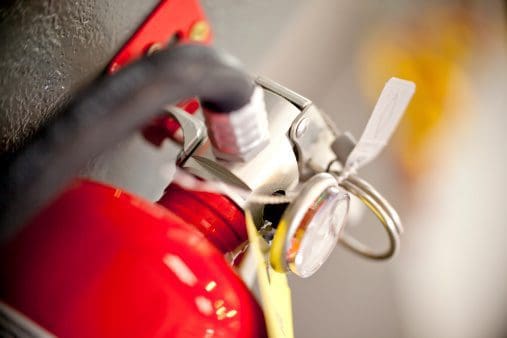
My HSE career has consisted of more inspections and audits than anything else. When I approach a worksite, one of the first things I scan for…

October 18, 2021 · By Nick Vaccaro

While most people do not like change, the offshore oil and gas industry must maintain compliance and openly embrace it. Mandated through the Safety and Environmental Management Systems (SEMS) criteria belonging to the Bureau of Safety and Environmental Enforcement (BSEE), companies operating offshore must adhere to and follow this process of integrating and managing operations conducted offshore. SEMS’ primary goal finds root in strengthening safety and environmental performance in parallel to reducing the rate and intensity of incidents. Like a series of marching orders, SEMS provides provisions to guide companies to gain compliance and stay that way successfully. Those factors include 17 different elements, each dictating a specific regiment that must be followed. Addressing altered work plans and modified personnel designations, the SEMS standard requires companies to develop and implement a process that serves as a blueprint of guidance. Known as a Management of Change program, the system applies to equipment, personnel, procedures, and materials. Program Components Companies must possess a robust Management of Change program. Any change being channeled to implementation must be thoroughly reviewed first. Specific items need to be included in the plan to allow for proper guidance. The technical basis for implementing a change needs to be weighed. Evaluations should be made on the level of impact the potential change can instill on safety, health, and marine environments. To remain on track and ensure proper completion of change implementation, a time should be dictated and followed. Management approval must be set in place to track, review, and manage the change procedure properly. Verbal approvals cannot substantiate safe and proactive work. Communication is an essential component of the Management of Change program. Any employee or contractor whose scope of work can be influenced by the change being put into place must be informed and trained before it is initiated in the field. Replacement in Kind The key to the Management of Change program is determining the type of change needed. While changes can be the same mechanically, they can also be different. A simple means to understanding this concept is to consider a practical scenario found in the field. If a crew is using a 30-horsepower pump in the field and breaks, it is apparent that it will need to be repaired or replaced. If the decision is made to replace it, then a change is being considered, and they are changing that piece of equipment. If the crew removes the 30-horsepower pump and replaces it with another 30-horsepower pump, then the change made is defined as "Replacement in Kind.” If the crew decides to replace that same 30-horsepower pump with a 60-horsepower version, then the change is not "Replacement in Kind." Here is where the waters are muddy. If the change is not "Replacement in Kind," then all of the steps and parameters must be followed to make the change safely. One cannot just loosen some bolts, make the swap, and move forward. A dangerous outcome not considered could occur. The exciting and effective characteristic of the Management of Change program is that each proposed change receives equal attention. Before any action is taken, every suggested change must be examined and determined if its placement is "Replacement in Kind." This process serves as an ideal example of proactive behavior instead of being reactive. The change examination nearly mirrors your basic industry hazard hunt. Common Pitfalls The offshore market is both intense and competitive. Great emphasis and focus are directed towards equipment as the industry brings specific standards to offshore work. It is easy to get wrapped up solely in equipment type and condition. Personnel is just as crucial to the task at hand as the equipment itself. As a result, a change directed at personnel has equal importance. Companies conducting business offshore must adhere to a procedure for the work being undertaken. If that procedure stipulates that the job will consist of a supervisor and two technicians, deviation from crew makeup must go through the Management of Change process. Changing that proposed crew makeup to a foreman and two technicians is not equal or “Replacement in Kind" to the original specification. It is here where companies find themselves once again in murky waters. Suppose the supervisor cannot go on the job. In that case, the company cannot deviate to the makeup of just three technicians without provisions being implemented as part of the Management of Change program. In a certain sense, a loophole does exist. Suppose the specified crew makeup is identified as a foreman and three technicians. In that case, a project manager can replace the foreman, which would reign acceptable under the SEMS Management of Change standard. The project manager commands a greater level of experience and knowledge than the foreman, so their expertise is sufficient to comply with the "Replacement in Kind" provision. Just as procedures and equipment safe practices must be followed, personnel makeup must be addressed similarly. Another standard error lies with equipment changes. A great effort can be made in drafting a legitimate change and possibly how equipment might be safely altered. The error comes into play with the equipment drawings. Any change to the equipment must be notated on the corresponding drawing, and that drawing must accompany the equipment in the workplace. So essentially, if a vacuum dehydrator has been safely modified under the guidelines of an approved Management of Change program and is shipped offshore for use, it cannot be put into service if the drawing is not shipped with it. This is a frequent oversight that can thankfully be overcome by just sending the drawing afterward, such as by way of an email. Loss of time and production still creeps in while waiting for that drawing's arrival. Summarizing The SEMS standard can seem like a sharply detailed program making offshore operations difficult, but considering historical catastrophes and undesired outcomes, it can serve companies as an essential ally. When considering its Management of Change provision, it serves as the best example possible of black and white job functioning. A change is either "Replacement in Kind," or it is not. Remaining faithful to that definition significantly tips the scale in favor of a successful outcome without incident or injury. To truly gain the outcome intended by the Management of Program, companies must take an honest look at the work being conducted and take a similar approach if a change is warranted. They say you cannot lie to yourself, and the same rings true in determining the consequences of change.
News

SEMS: Managing Changes from Start to Finish

While most people do not like change, the offshore oil and gas industry must maintain compliance and openly embrace it. Mandated through the Safety and Environmental…

October 1, 2021 · By Nick Vaccaro

SEMS
News

SEMS: Vital Information Provided Through Analysis

Resulting from the 2010 Deepwater Horizon catastrophe, the offshore world of safety was forever changed. Higher standards and increased awareness span from the Bureau of Safety…

September 10, 2021 · By Nick Vaccaro

Discussing the Buzz of Electrical Safety
News

Discussing the Buzz of Electrical Safety

When considering workplace incidents, electrical shock typically ranks high in the frequency order. Often associated with the same significance as falls, electrical shock commandeers various outlets…

August 18, 2021 · By Nick Vaccaro