
Baker Hughes and Mantle Reach Power sign agreement targeting 500 MW of geothermal capacity in North America
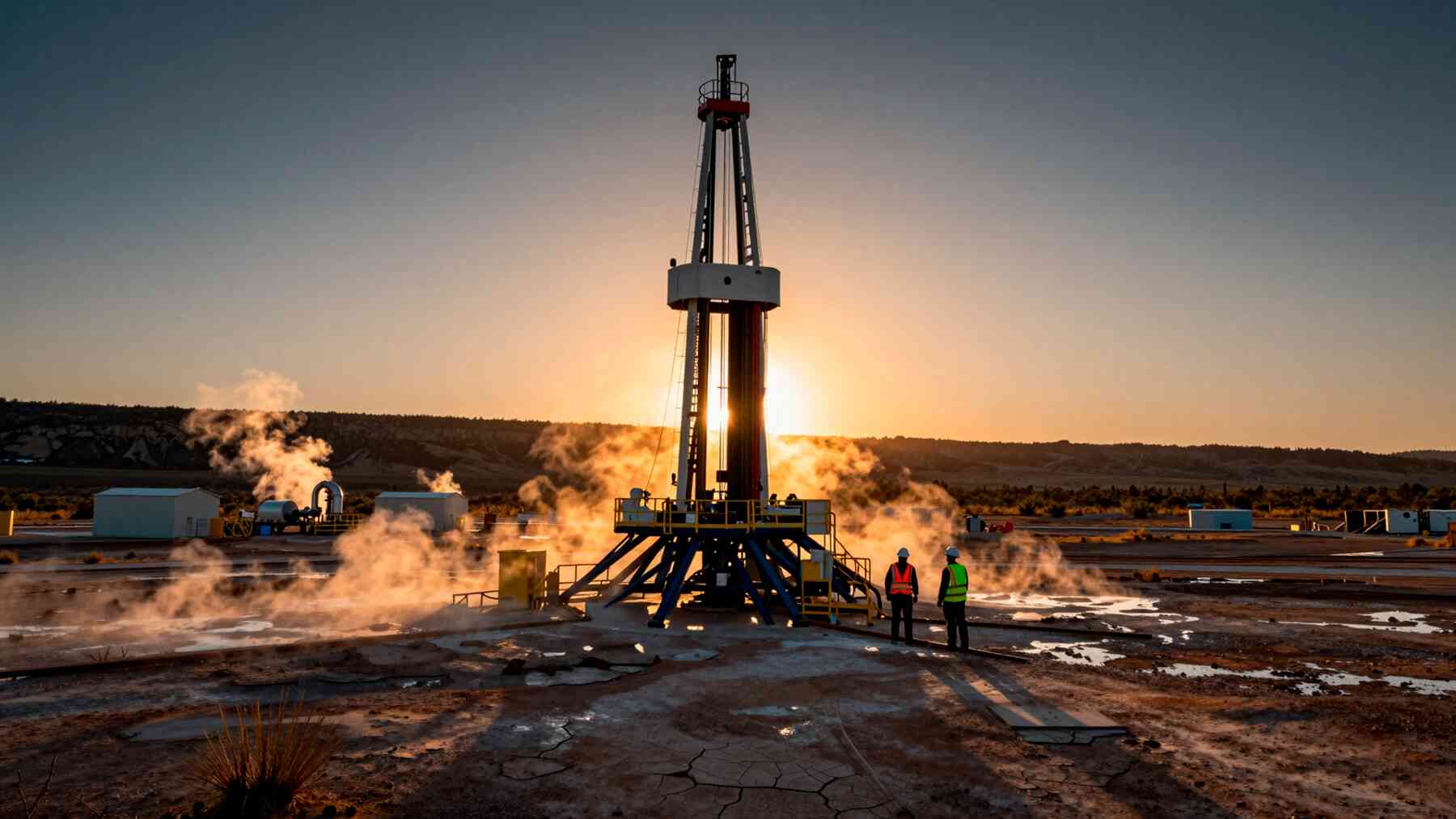 AI-made
Baker Hughes and Mantle Reach Power announced Wednesday a commercial agreement to deploy up to 500 megawatts of geothermal energy capacity across North America over the next five years. The deal pairs Baker Hughes, an energy technology company, with Mantle Reach Power, a geothermal development firm backed by EnCap Energy Transition Fund III, one of North America’s most established energy investment platforms, with roughly $47 billion raised across 25 institutional funds.
Under the arrangement, Baker Hughes will serve as an integrated subsurface solution provider while Mantle Reach Power leads project development, ownership, and financing.
Agreement establishes integrated development model for geothermal at scale
The structure of the deal is deliberate. Baker Hughes contributes the technology—subsurface tools, surface power generation equipment, and digital solutions—while Mantle Reach Power handles project development, ownership, and financing. Those roles are kept distinct, and that separation is intentional.
EnCap Investments, the private equity firm backing Mantle Reach Power through its Energy Transition Fund III, brings significant institutional weight.
The phased agreement covers all four stages of a project’s lifecycle: development, construction, operation, and ongoing optimization. That continuity is designed to reduce gaps in accountability and give lenders a clearer picture of how each project will unfold from start to finish.
EnCap Investments, the private equity firm backing Mantle Reach Power through its Energy Transition Fund III, brings significant institutional weight. With approximately $47 billion raised across 25 funds, EnCap is one of the most established energy investment platforms in North America — and that backing gives Mantle Reach Power credibility with the financial community at a stage when most geothermal projects struggle to attract capital. The partnership targets up to 500 megawatts of installed geothermal capacity within five years, a figure that would represent a meaningful addition to North American geothermal output.
Financing barriers identified as the primary obstacle to geothermal growth
Geothermal energy has rarely lacked for interest. What it has lacked is a reliable path to financing. Pre-construction bankability — the ability to convince lenders that a project will perform as promised — has historically been one of the most significant barriers to scaling the technology.
This agreement is structured specifically to close that gap. By aligning risk between a technology provider and a developer under a single commercial framework, the parties aim to give project finance lenders the construction and operating certainty they require before committing capital. Nick Karambelas, CEO of Mantle Reach Power, described the structure plainly: it is designed to “provide the construction and operating certainty necessary to access conventional project financing.”
That language matters. Conventional project finance — debt secured against a project’s future cash flows — is the same mechanism that scaled wind and solar. Geothermal has largely been excluded from it. EnCap’s background spanning both exploration and production and power investment is cited as a key factor, since that dual expertise helps bridge the gap between subsurface risk and power market risk, each of which demands a different analytical framework.
Baker Hughes to supply subsurface, surface, and digital technologies
Baker Hughes will contribute across the full technology stack: subsurface drilling and completion technologies, surface power generation equipment, and digital solutions designed to monitor and optimize operations. The company describes this portfolio as scalable and lower-carbon.
The integrated approach — covering everything from the wellhead down — is intended to reduce handoff risks that can slow project timelines when multiple vendors are involved. Lorenzo Simonelli, Baker Hughes Chairman and CEO, framed the company’s role around de-risking: the integrated portfolio can “help de-risk and deliver the technology and solutions required to provide reliable, affordable, and clean energy.” Consolidating subsurface-to-surface expertise within a single provider relationship is meant to accelerate execution and reduce overall project costs.
Demand from AI infrastructure and electrification drives interest in firm baseload power
The timing of this agreement is not coincidental. Electricity demand is rising, driven in part by the rapid expansion of artificial intelligence data centers and hyperscale computing facilities—operations that require power around the clock and cannot rely on sources that only generate when the wind blows or the sun shines.
Geothermal energy produces electricity continuously, regardless of weather or time of day. That characteristic makes it a firm baseload source, a category growing more valuable as grid operators manage large volumes of intermittent renewables alongside surging demand.
Domestic geothermal resources, developed at scale, could also reduce dependence on fuel imports and provide stable long-term power prices — both priorities in the current policy environment. Simonelli described the commercial structure as “a repeatable, financeable model that can be deployed at the speed and scale to meet global energy demands.” The emphasis on repeatability signals that this agreement is designed as a template, not a one-off transaction.
Background: Geothermal energy’s role in the North American energy transition
Geothermal energy has been developed in North America for decades, but it has never achieved the scale of wind or solar. Drilling costs, subsurface uncertainty, and financing complexity have historically confined it to regions with obvious surface geology—parts of California, Nevada, and Iceland among them.
EnCap Investments is one of the largest energy-focused private equity platforms on the continent, and its Energy Transition Fund III represents a deliberate expansion beyond conventional hydrocarbons into lower-carbon energy infrastructure. Baker Hughes, a publicly traded energy technology company with operations spanning oilfield services, industrial equipment, and digital solutions, signals through its involvement that companies with deep drilling expertise view geothermal as a credible growth market.
The agreement between Baker Hughes and Mantle Reach Power represents a structured attempt to move geothermal from a promising but niche resource into mainstream power project development by addressing the financing problem that has long held it back.
Kelly is an experienced writer with 15 years of experience exploring the big stories that shape our world, from tech breakthroughs and space exploration to climate, energy, and the fascinating quirks of science. She has a talent for turning complex ideas into sharp, memorable insights that stay with readers long after they’ve finished reading.
