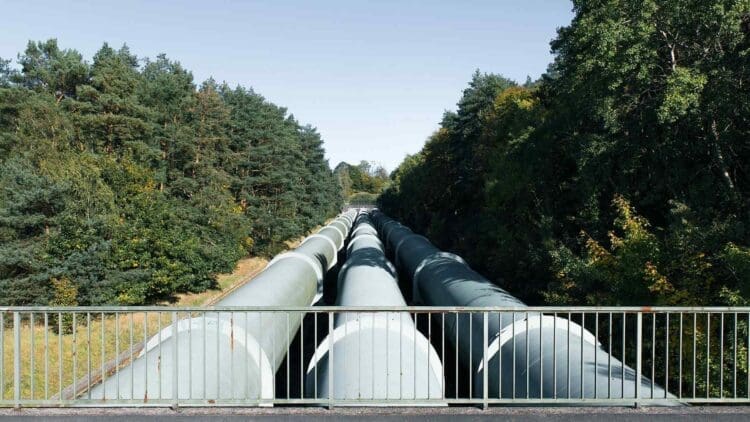

Baker Hughes’ recent agreement with an Argentine company regarding a major expansion of a natural-gas pipeline is indicative of an important shift in the global energy landscape that may have gone unnoticed amidst all of the news recently surrounding oil prices.
Providing insight into the evolving nature of the energy markets
Argentina’s natural-gas industry historically has been centered on meeting local demand. Historically, there were seasonal fluctuations in gas consumption that resulted in limitations placed on the infrastructure. However, within the last couple of years, there has been a significant paradigmatic shift. As a result of the growth of the Vaca Muerta shale play, Argentina is now utilizing its substantial reserves of shale gas not only as a means of providing a buffer against potential disruptions in the delivery of gas; however, they are also beginning to view these resources as a basis for reliable and ongoing exports.
The expanded pipeline — which was facilitated through the recent agreement between Baker Hughes and the Argentine company — will be a key component of this transformation. The goal of the expanded pipeline is to improve connectivity between inland production areas and coastal facilities — including several floating liquefied natural gas (LNG) vessels currently being constructed — where feed gas will be received. The intent is to develop efficient, predictable, and large-scale gas deliveries sufficient to justify long-term export agreements.

Therefore, it is easy to see why equipment selection became such an important factor in this endeavor. Export-oriented infrastructure typically does not allow for interruptions and therefore requires reliable operation at full capacity.
Products and associated technologies supplied by Baker Hughes, and why they represent significance
In accordance with the terms outlined in the agreement, Baker Hughes will provide three gas-compression units for a new compressor station located near Allen, Río Negro Province. The units utilize NovaLT™16 gas turbines paired with centrifugal compressors, as well as commissioning services, spares, and digital-monitoring capabilities.
Although the individual elements are highly complex, the strategic implications are simple. Compressor stations transform passive steel conduits into controlled high-transportation systems capable of moving gas long distances while maintaining stable pressure levels.
Additionally, this order is noteworthy since it represents Baker Hughes’ initial application of its NovaLT gas-turbine technology in South America. Baker Hughes’ NovaLT platform has been marketed as a higher-efficiency and reduced-emissions alternative to traditional gas-turbine solutions; this positioning directly correlates with increasing scrutiny relative to how gas-infrastructure development contributes towards longer-term energy-transition goals.
An overarching indication of Argentina’s gas strategy
Beyond the specifics of each element of the equipment provided, the commitment to supply modern compression equipment indicates that project proponents anticipate continued gas flow through multiple decades, versus short-term volumes susceptible to changes in policies or market conditions.
Gas from the pipeline will ultimately fuel two floating-LNG vessels in the Gulf of San Matías that will anchor Argentina’s first sustained long-term-LNG-export route. Once exports are bound to offshore contracts, the reliability of infrastructure becomes necessary for business purposes rather than simply a conceptual objective.
For Baker Hughes, the sale reinforces Baker Hughes’ position in Latin America’s midstream market at a time when LNG-related investment activity is rapidly expanding worldwide. In addition, for Argentina, the transaction illustrates another step toward building infrastructure that anticipates longevity rather than temporary fixes.
Decisions made today regarding pipeline-expansion-related issues such as compression, efficiency, and digital control will help to determine if natural gas will remain competitive in a world increasingly concerned with reducing emissions and improving reliability. As Argentina progresses toward its first sustained LNG exports, transactions similar to this one demonstrate how industrial capability, energy policy, and global demand interact. Similarly, dynamic processes are occurring throughout other gas-producing regions, where interest exists in determining how midstream investment can support both exporting natural gas and transitioning energy systems.