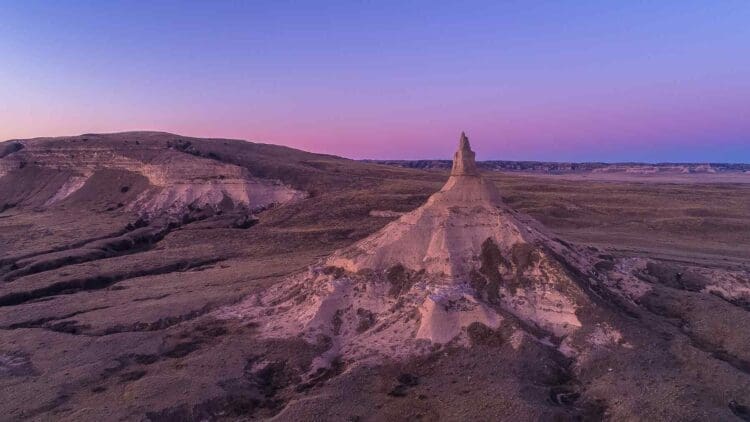

A relic has been hiding large-scale energy underneath the American Midwest all along.
Indiana Jones may have uncovered vast and ancient treasures, but in the real world, researchers must dig a little deeper.
Now, this discovery is worth more than all the gold and diamonds in the world, as it promises endless power.

Have we finally found the answer to global demands, or will this “living battery” remain just out of our reach?
How the world is seeking new, greener treasures
In the biggest high-stakes treasure hunt ever, the world has everything to gain and even more to lose.
Globally, we are experiencing a significant energy debt, with ever-increasing interest rates. This means the power consumed is much higher than the power generated.
With fossil fuels no longer being a feasible source, the hunt for reliable, clean sources is on.
As expected with such an adventure, there are many obstacles in the way.
Some sources are not as green as initially expected, others struggle with intermittency, while some are not infinitely renewable. This meant researchers had to take a step back and reorganize their strategies.
Instead of relying on the sun or the wind, they found that they had to delve a little deeper.
This is because, hidden underneath the hustle and bustle of daily life, a valuable white treasure is buried.
The valuable white treasure that is measured in power
Renewable energy technologies, such as solar panels and wind turbines, are known to generate excess energy.
When production exceeds demand, the energy is wasted. To address this waste, nations are developing large-scale projects in tandem with battery storage systems.
While this solution may help the world store and use excess clean energy, it additionally costs even more.
Manufacturing batteries is extremely energy-intensive and requires minerals that the world is rapidly running short on.
It ultimately defeats the purpose of the global transition to renewable energy.
However, researchers from the University of Nebraska have been analyzing a site that formed nearly 1.1 billion years ago.
Their research uncovered a great white treasure hidden underneath this ancient relic.
It is significantly worth much more than most would think, as its value is measured in power. But could it truly be what the world has been seeking all along?
The relic that has been silently charging a “living battery”
The U.S. is highly invested in expanding its commercial clean hydrogen repertoire. However, none of it comes even close to the Earth’s pure white (natural) hydrogen.
Fortunately, the American Midwest is very close to benefiting from this valuable treasure.
When North America nearly split into two long ago, a 1,200-mile-long “anode,” or iron-rich rift, was left behind. When the “electrolyte,” or groundwater, enters this rift, the water is split to produce pure, white hydrogen.
This makes the area a “self-charging battery,” and Nebraska has been identified as where “X marks the spot.”
The world can plug in by tapping the terminal at the perfect depth
The researchers believe that between 3,000 and 5,000 feet underground is the “sweet spot.”
This is where white hydrogen can be easily and cost-effectively accessed without risking leaks.
At the moment, the team must find a way to eliminate microorganisms that are feeding on this precious treasure.
Should the researchers beat the microbial communities, the world can finally be powered by this billion-year-old “living battery.”
The Midcontinent Rift could thus serve as a finite, clean power source with a self-replenishing engine.
However, these microorganisms may not be the only thing standing in the way of this white treasure.
Before the world can celebrate and benefit from this discovery, pipeline networks will have to start looking different soon, too.