
BLM sells 940 acres of federal land in Southern Nevada to Las Vegas for $94 million to enable 6,000-home development
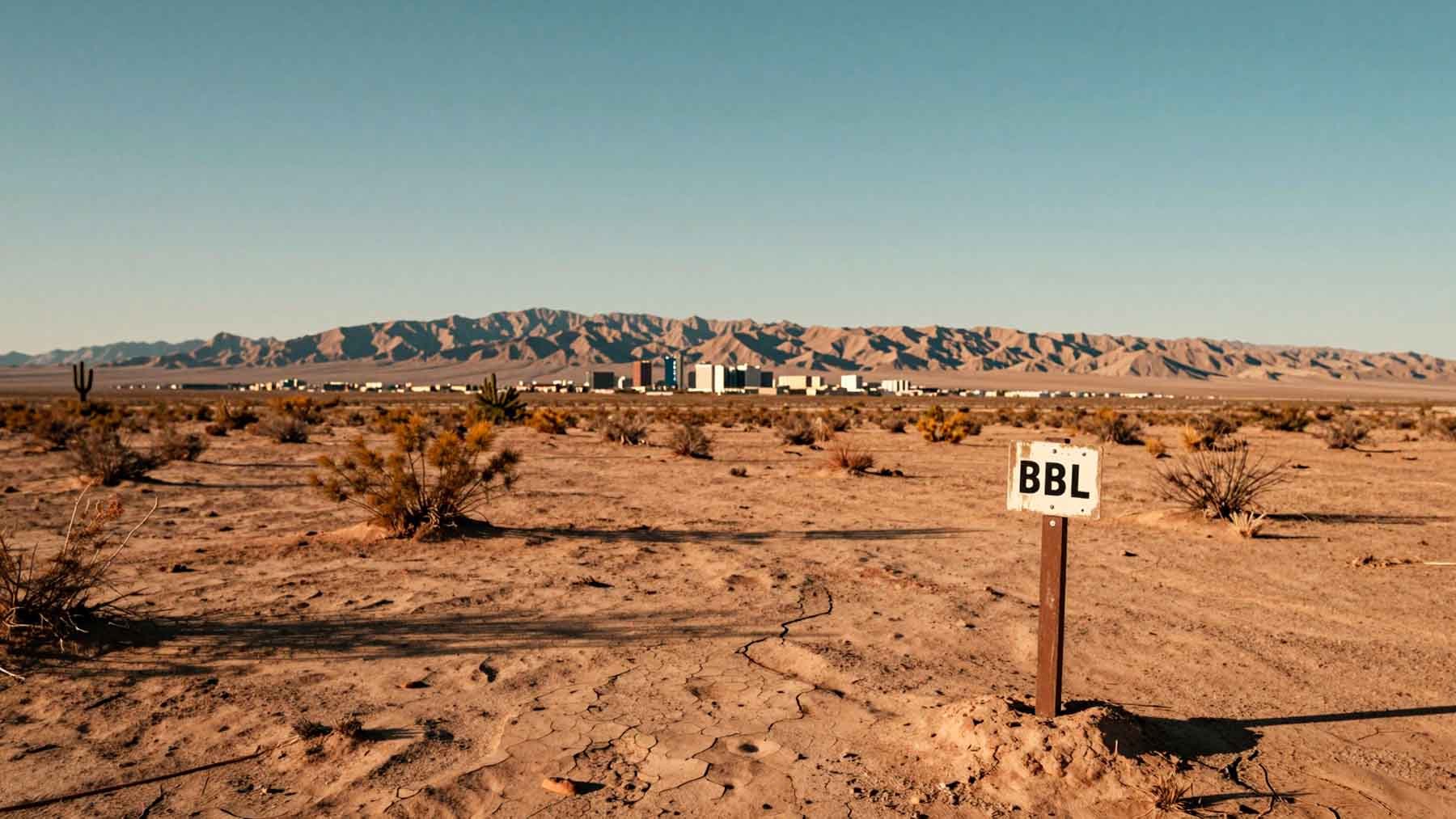 Image generated with artificial intelligence
The Bureau of Land Management has finalized the sale of nearly 940 acres of federally managed public land in Southern Nevada to the City of Las Vegas for $94 million — clearing the way for a master-planned community of up to 6,000 homes. The transaction, conducted at appraised fair market value, comes as Clark County officials have identified a shortfall of tens of thousands of housing units needed to meet current demand and projected population growth over the next decade.
BLM completes $94 million land sale to City of Las Vegas
The BLM confirmed the finalized transfer of the nearly 940-acre parcel to the City of Las Vegas at appraised fair market value. That $94 million price tag was set under the Southern Nevada Public Land Management Act — the federal law governing how BLM-managed land within the Las Vegas Valley’s congressionally designated disposal boundary can be sold.
The parcel sits between two significant landmarks: the Las Vegas Paiute Tribe’s Snow Mountain Reservation and Tule Springs Fossil Beds National Monument. That location made it a logical candidate for development, and officials determined it was best suited to support community growth and economic expansion.
Clark County officials have put a number to it: a shortfall of tens of thousands of housing units between what’s available and what residents actually need.
With the deal done, Las Vegas can move forward with planning a master-planned community of up to 6,000 homes — one of the more significant residential projects the region has seen in recent memory.
Housing shortage and population growth drove the decision
Southern Nevada is dealing with one of the country’s most pressing housing crunches. Clark County officials have put a number to it: a shortfall of tens of thousands of housing units between what’s available and what residents actually need.
The pressure isn’t easing up. The region is projected to add hundreds of thousands of new residents over the next decade, piling onto an already strained market. Without meaningful new supply, that growth could push affordability further out of reach for working families.
State and local officials have been direct about what this sale means. Governor Joe Lombardo called it “exactly the kind of bold action Nevada needs to increase our housing supply,” and said it would “make housing more attainable for hardworking Nevada families.”
Not every piece of federal land within the disposal boundary clears the bar for development — this parcel was chosen because it’s specifically suited for community growth and economic expansion. It’s a targeted response to a well-documented supply problem.
Sale proceeds to fund conservation, water, and education across Nevada
The $94 million doesn’t just disappear into a general fund. The Southern Nevada Public Land Management Act spells out exactly how proceeds get distributed, and conservation takes the biggest cut, according to the Bureau of Land Management.
Eighty-five percent goes toward projects across Nevada: parks, trails, and natural areas; capital improvements on federal lands; acquisition of environmentally sensitive land; wildfire resiliency improvements; and landscape restoration. That’s roughly $79.9 million directed at protecting and improving Nevada’s public lands. Another 10% — about $9.4 million — flows to the Southern Nevada Water Authority, a meaningful allocation given the region’s ongoing water sustainability challenges in an arid climate.
The remaining 5% goes to the State of Nevada for education funding. Modest in dollar terms, but it reflects the Act’s intent to spread benefits across multiple public priorities.
Governor Lombardo also pointed to broader economic ripple effects, citing expected billions of dollars in economic activity and specific benefits for military families in the region. Those projections weren’t detailed in the BLM announcement, but Lombardo’s office has framed the development as long-term infrastructure-building for Southern Nevada.
Legal framework and BLM’s broader land management role
This wasn’t an ad hoc decision. The sale was authorized under the Southern Nevada Public Land Management Act, which gives the BLM explicit authority to sell federally managed public lands within a congressionally designated disposal boundary in the Las Vegas Valley — a legal structure that’s been in place for years and defines a clear process for transactions like this one.
The BLM manages roughly 245 million acres of public land, primarily across 12 western states and Alaska, and administers 700 million acres of sub-surface mineral estate nationwide. Land sales are just one tool within a much larger mandate covering conservation, recreation, energy development, and resource stewardship.
BLM Director Tracy Stone-Manning framed the Las Vegas deal as a model worth paying attention to. “This sale enables new homes to be built, fuels economic opportunity, and generates funding for wildfire resilience, outdoor recreation, water sustainability and education,” he said. “It’s a strong example of responsible public land management designed to improve quality of life for Southern Nevadans.”
Opens the door to a master-planned community
The BLM’s sale of nearly 940 acres to the City of Las Vegas for $94 million is finalized. Conducted at appraised fair market value under existing federal law, the deal opens the door to a master-planned community of up to 6,000 homes.
The development directly targets Clark County’s documented housing shortfall and is designed to absorb projected population growth over the next decade. Proceeds are distributed by law: 85% to Nevada conservation and land improvement projects, 10% to the Southern Nevada Water Authority, and 5% to state education funding.
The sale operates within BLM’s congressionally authorized disposal boundary for the Las Vegas Valley. That matters — it means similar transactions could follow as Nevada continues pushing for more federal land to be made available for housing.
Kelly is an experienced writer with 15 years of experience exploring the big stories that shape our world, from tech breakthroughs and space exploration to climate, energy, and the fascinating quirks of science. She has a talent for turning complex ideas into sharp, memorable insights that stay with readers long after they’ve finished reading.
