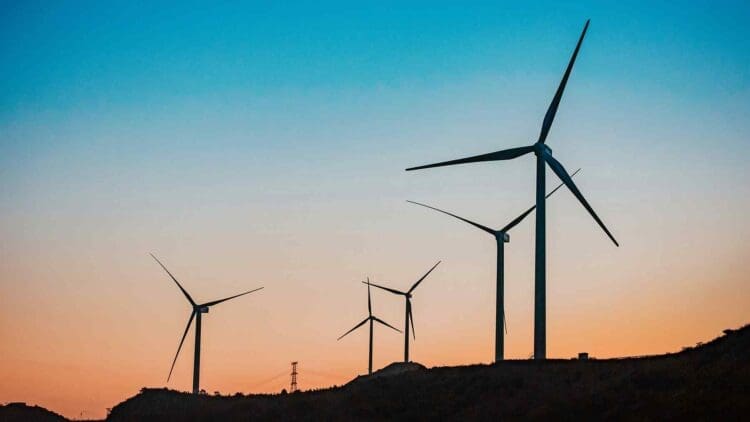

When the American government was suspending projects because of national security reasons, a question that many people had was how the rest of the world was able to execute wind energy developments without jeopardizing their national security. As projects from different nations continue to unfold, those questions are only going to increase. In Europe, Blue Elephant Energy took over the headlines after expanding its renewable footprint with the acquisition of a 381 MW wind portfolio.
Unpacking Blue Elephant’s decision to expand its renewable footprint
Like most companies in every industry, the objective is always to grow and generate more income compared to the day when the company was first established. For Blue Elephant, the appropriate step to do so under the current circumstances was to acquire a large onshore wind portfolio in Mecklenburg-Western Pomerania. This was monumental for the company itself, but it did something even bigger, which is reiterating its position in Europe’s energy transition.
The company was founded in 2016 in Hamburg, Germany, and since then, it has gone on to generate over 1.6 GW of renewable energy developments in nine countries, with its primary focus on Western/Central Europe. According to reports, it has contributed massively to the clean energy landscape since its inception by saving over 3 million tons of carbon dioxide emissions.
Unveiling the specific details of Blue Elephant Energy’s acquisition of a major portfolio
An increasing number of people are eager to learn about the business side of the energy industry because they believe it affects them either directly or indirectly. Blue Elephant Energy’s acquisition from WIND-projekt Ingenieur- und Projektentwicklungsgesellschaft mbH (WIND-projekt) is one which increases the company’s operational capacity particularly in northern Germany.
The specific terms of the agreement state that, BEE will receive: 37 operational wind farms that have an overall capacity of 260 MW which is already supplying clean energy into the grid, four wind sites of an overall 46 MW capacity that are currently under construction and likely to come online in 2026, and three extra projects (75 MW) that will be transferred whenever construction begins, expected to be complete in 2027.
After it is officially completed, the portfolio will provide enough clean electricity, to power approximately 33,000 households annually. In turn, this will reduce the reliance on fossil fuels and the annual German carbon emissions.
Analyzing the impacts of the acquisition for Blue Elephant Energy
The contemporary energy landscape is heavily driven by the reputation of companies because it means that they will receive more opportunities to develop even more groundbreaking projects. Tim Kallas, Chief Investment Officer at BEE, stated:
“In addition to our already successful entry into battery storage, this is a further step toward diversifying our overall portfolio in terms of technology.”
These words signify that the executive body of the corporation understands just how much innovation and technology have penetrated the energy industry, hence they are wise to embrace it rather than resist.
Looking ahead: Analyzing the impacts of the purchase of the 381 MW wind portfolio
Every company is eager to set a blueprint that others may latch on to in their own developments, because when that happens, credit returns all the way to the originator. With the latest acquisition, BEE’s wind power presence in Germany is set to expand from an estimated 173 MW to 533 MW, which is more than triple the increase.
Although there is already great anticipation about BEE’s future, it is imperative to highlight that there is still a long way to go until some of the projects materialize. The acquisition, will still have to pass the regulatory approvals, including those from the German Federal Cartel Office. This process alone is expected to finish in the first quarter of 2026. Nonetheless, this adds yet another large-scale development to look out for in the new year.