

Energy markets tend to follow non-linear paths; however, many companies are able to successfully navigate this volatility and maintain relative stability in their respective operating environments. BP’s recently issued Q4 and Full Year 2025 results illustrate a company attempting to strike a delicate balance between financial discipline, operational reliability, and a rapidly evolving energy environment—raising the question of what factors allowed BP to maintain momentum in a weakening price environment.
Consistency drives the 2025 year
BP’s vertically integrated value chain (upstream production, refining system, and customer-facing businesses) provided the basis of BP’s 2025 financial performance. Even though softer global oil prices were present during 2025, BP produced an underlying replacement cost profit of $7.5 billion for the entire year, with $1.5 billion being generated in the fourth quarter alone. The company’s operating cash flow continued to produce solid results ($24.5 billion), despite an increase in working capital.
BP’s upstream operation maintained the company’s overall production base, keeping underlying production levels relatively flat compared to 2024 and achieving a record level of plant reliability (96.1%). Over the course of the year, seven major upstream projects were brought into production, and BP’s reserve replacement ratio reached 90 percent—indicating a more robust long-term resource pipeline.
Downstream results were similarly impressive.
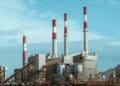


BP achieved its highest refinery availability on record (96.3%) and produced the strongest underlying earnings in its customer businesses since 2019—clearly illustrating a cohesive vertically integrated model capable of producing high-quality results.
Portfolio changes through strategic initiatives
While operations provided the steady-state component, BP’s strategic initiatives created the momentum. BP announced that the aggregate proceeds from its divested and pending divestitures exceed $11 billion. Included within these divestitures is the sale of a 65% interest in Castrol, which is expected to result in approximately $6 billion in net proceeds. In addition, BP has finalized sales of its U.S. onshore wind assets, its Netherlands retail network, and several midstream interests.
In tandem with its divestiture efforts, BP increased its structural cost-reduction goal to $5.5-$6.5 billion by the end of 2027.
However, the most significant decision made by the Board was the suspension of BP’s share repurchase program. As a substitute, the Board elected to direct all available cash toward the enhancement of the company’s balance sheet—a decision that alters near-term investor expectations while promoting long-term resiliency. This decision to prioritize debt repayment represents a strategic shift based on discipline, as opposed to momentum.
Overall, these decisions illustrate a company that is preparing itself for a new competitive cycle that focuses on a streamlined organizational structure and selected investments in oil and gas opportunities with better margins.
The path forward is more defined
Although impairments negatively affected BP’s quarterly IFRS results, the core message remains that BP believes there are multiple strengths in its diversified value chain. Contributions to cash flows were realized from BP’s upstream investments, its refining performance, and its customer businesses.
Additionally, BP is transitioning leadership roles with Meg O’Neill slated to become the CEO in April—at the same time as BP transitions back to a focus on returns, balance sheet fortification, and a heightened emphasis on operational excellence. Although 2026 capital expenditures will likely be reduced to the lower end of guidance, BP indicates it will continue to invest “with discipline” in what it refers to as a “deep hopper” of oil and gas projects.
The long-term implications are clearly stated: BP’s strategy is no longer centered around breadth, but rather the identification of the highest-margin opportunities throughout its integrated value chain. BP’s Q4 and full-year 2025 results demonstrate a company relying upon its integrated model to provide consistency in a highly volatile marketplace. By improving the quality of its balance sheet and concentrating its portfolio, BP appears to be establishing a framework for slower-paced and more deliberate growth.