
Major scale energy ventures are rarely developed overnight. Instead, they follow a progression of various engineering milestones. While these individual milestones have no single or dramatic effect on international markets, their collective impact is being felt throughout many global supply networks.
An evolutionary path toward full capacity
Cheniere Energy’s latest project report on the Corpus Christi Liquefied Natural Gas (LNG) development facility exemplifies how the continued progression from one milestone to another will ultimately bring increased amounts of U.S. produced LNG to the world marketplace; and will create a variety of concerns relative to future supplies.
In recent weeks, Cheniere Energy reported that Train 3 at its Corpus Christi Stage 3 liquefaction development in Texas had reached “substantial completion.” A milestone which indicates that commissioning work is complete and that Train 3 can begin generating revenue as it operates commercially; although, final optimizations will continue.


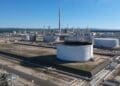
Corpus Christi Stage 3 represents Cheniere’s largest expansion project at Corpus Christi. Seven smaller scale liquefaction trains were designed for this project rather than two or three larger scale trains. As a result, the design was meant to create more flexibility and speed to add over 10 million metric tons per year of LNG capacity upon its completion. The Train 3 is central to that growth strategy with Trains 1 & 2 having been previously completed, and several other trains to follow through 2026.
Train 3’s significance goes far beyond the individual
While reaching “substantial completion” alone would seem to be a normal occurrence for a single train, the collective significance of this milestone is much greater. It demonstrates tangible growth toward an expanded export capability for Cheniere. Corpus Christi Stage 3 is projected to increase the permitted total LNG export capacity of the terminal to above 25 million metric tons per annum, thereby cementing its status as one of the largest export terminals globally.
Additionally, the timing of the announcement provides context. While global demand for LNG remains highly dependent on the availability of supply, shipping logistics and political turmoil, increasing the number of operational trains improves Cheniere’s ability to consistently meet contracted obligations and respond to changing market conditions. For operators, moving projects from construction risks to operating assets represent a material shift in both financial clarity and operational confidence.
Transition from construction milestone to commercial performance
Now that Train 3 has achieved substantial completion, LNG produced by this train should be reflected in Cheniere’s financial reporting as the operation becomes stabilized. Therefore, this transition from the building phase to a financially productive asset represents an important turning point for investors and customers alike as it eliminates ambiguity surrounding the timeline and cash flow associated with the project.
Disciplined execution as a key to success
Cheniere has demonstrated discipline in executing Stage 3. All four trains that have completed their commissioning have done so ahead of schedule and under budget. This consistent record of successful execution explains why Cheniere has been able to move forward on additional mid-size expansions adjacent to Stage 3 without making changes to the fundamental contractual structure that governs those arrangements.
Significance of Stage 3 as we look toward the years ahead
As each successive train reaches substantial completion at Corpus Christi Stage 3, the terminal transitions from being a partially operational facility toward achieving full operational status. Not only does this provide for incremental increases in LNG exports but it establishes a robust foundation for the long-term support of supply agreements.
As nations consider alternatives to their current sources of energy supply and diversity, projects such as Corpus Christi Stage 3 illustrate how the process of developing LNG export infrastructure occurs incrementally. Similarly, the cumulative effect of the incremental milestones associated with various U.S.-based liquefaction projects will likely influence global gas supply dynamics during the latter half of the decade.