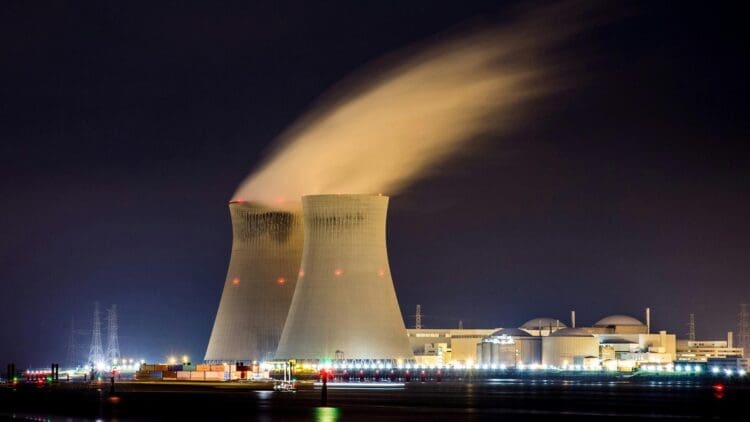

China continues to live up to its reputation of being a country that continuously pushes the boundaries when it comes to developing new energy sources to support its citizens. As of late, the Asian nation captured the world’s attention once again after it began building a hybrid nuclear power facility at the infamous Xuwei energy base. On the surface, this might seem like just another Chinese energy project, but it is way more than that. In reality, China has taken a significant step in eliminating carbon emissions after commencing a facility that is the first of its kind.
China’s commitment to increasing the generation of nuclear energy
China is among the countries that have shown an overwhelming desire to enhance the production of nuclear energy. According to reports, the Asian country is the second largest producer of nuclear energy, falling only behind the United States. However, China is significantly increasing its nuclear portfolio, which gives it an opportunity to someday become the outright leading country in nuclear energy.
After expressing a desire to enhance nuclear energy, many people are wondering what makes this particular project unique compared to the rest of China’s previous ones. For the first time ever, China is aiming to build a facility that will allow it to amalgamate the generation of electricity and industrial heat generation through one nuclear installation. Not only is this upcoming project groundbreaking, but it also manages to kill two birds with one stone.
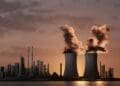
Redefining the limits: China’s hybrid nuclear power facility at the Xuwei base
When news first broke of the direction that China was headed towards, many people questioned the legitimacy or the feasibility of China becoming successful in the project. However, the Lianyungang city ceremony removed all doubt after officials poured the first concrete for Unit 1’s nuclear island, signifying that construction of the Xuwei Nuclear Heating and Power Plant was now officially underway.
An in-depth analysis of what makes China’s hybrid nuclear power facility unique
The Xuwei facility is different from most modern-day nuclear power plants, making it liable to continuous investigation. The facility’s primary secret is that it has found a way to integrate two different reactor technologies, es which are the third-generation Hualong One pressurized water reactors (PWRs) and a fourth-generation high-temperature gas-cooled reactor (HTGR). The reactors complement each other. For instance, the Hualong One units are the core or main support of the plant as they provide a huge volume of saturated steam, whereas the HTGR functions as a high-temperature booster that heats up the steam to make it hot enough for industrial processes such as distillation.
China might have cracked the code right in front of everybody’s eyes. The two technologies effectively create an energy system that provides electricity and high-temperature industrial steam from a single site.
How is China’s nuclear power facility expected to initiate decarbonization?
One of the most talked-about features of China’s upcoming facility is the prospect of it achieving decarbonization, eliminating an issue that has bothered the country for multiple years. The Xuwei plant is situated around a notorious petrochemical hub in the Yangtze River Delta, giving it the opportunity to start decarbonizing. Petrochemicals are considered part of the heavy industry because they are carbon-intensive. Once the new nuclear power facility is in full flow, this will yield positive results in the Yangtze River as coal-based steam generation will be replaced with clean energy in the form of nuclear power. All in all, China is expected to reduce about 19.6 million tons of carbon dioxide emissions per year.
China is a country that has mastered the art of never ceasing to amaze, particularly when it comes to the energy industry. To put the numbers of its upcoming project into perspective, once the facility is fully functioning, it is expected to provide approximately 32.5 million tons of industrial steam per year and over 11.5 billion kilowatt-hours of clean electricity.