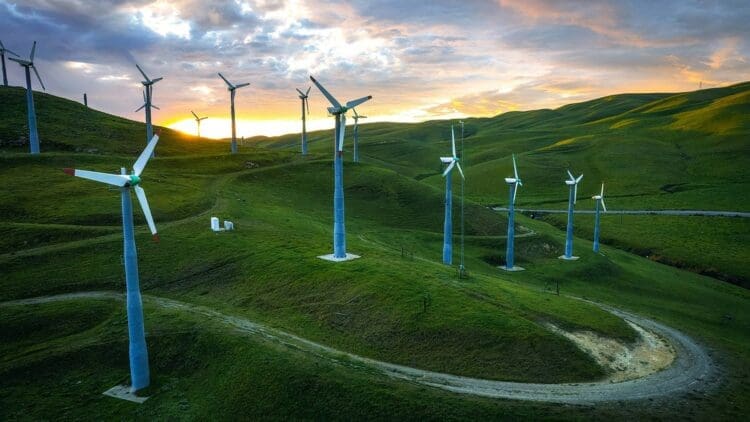

With the global energy transition towards the renewable energy market in full swing, China has emerged from the sea of nations all aiming to increase clean energy production as a market leader in the successful adoption of the renewable energy sector. The Chinese energy market covers a vast array of renewable energy projects with huge energy-generating potential, and now, the nation has broken ground on a new 30 MW power plant in Inner Mongolia that is set to completely revolutionize the renewable energy market.
China has become a go-to destination for the renewable energy ambitions of the world
China has been dominating the renewable energy market for some time now. In the solar energy department, China leads the world in solar panel production, accounting for approximately 90% of the world’s solar panels. Wind power has also been a sector where the Chinese have displayed their dominance. Since January of this year, China has added 198 GW of solar and 46 GW of wind power.
Now the Chinese have turned their attention to the hydrogen power sector, and have stated that the nation has broken ground on a new 30MW 100%-hydrogen turbine in Ordos, Inner Mongolia. The game-changing project will connect wind, solar, electrolysis, hydrogen storage, and green ammonia in a single closed-loop energy system.


The new development forms part of the Ejingke wind-solar-hydrogen integrated green ammonia project
The astonishing project will aim to combine the energy-generating properties of the entire renewable energy supply chain and has the potential to reshape the global hydrogen production market once completed. The aim, according to the Chinese government, is for the project to prove large-scale hydrogen-fired energy generation as a long-term renewable storage solution.
The all-new “closed loop” project will be located in the Otoke High-Tech Industrial Development Zone
The entire world has become aware of the astonishing levels of progress that the Chinese energy industry is capable of. The project is being jointly developed by Mingyang Hydrogen, a subsidiary of Mingyang Smart Energy, and Shenzhen Energy, proving the efficiency of the Chinese supply chain. The new project comes as other Asian nations have attempted similar developments that ultimately failed to materialize.
Japan’s Kawasaki Heavy Industries constructed a 100%-hydrogen turbine in 2020, as well as Siemens’ smaller hydrogen-capable model in 2023, but both never made a lasting impact on the regional renewable energy sector.
The Chinese government has laid out the plans for hydrogen usage in Inner Mongolia
According to the Chinese government, the goal of the 30 MW power plant in Inner Mongolia is to create an efficient hydrogen ecosystem that can produce energy in a closed loop that does not rely on conventional energy resources in any way.
While other Asian nations are turning to the solar plus storage energy capacity that has swept across the renewable energy sector, such as the new project being planned in Uzbekistan, China, and more specifically, Inner Mongolia, is aiming to become a regional hub for the hydrogen sector through its astonishing and pioneering hydrogen project.
Global sentiment for the renewable energy sector has reached a tipping point
Amid the calls to diversify the international energy market over the coming years, China is leading the way into a new era dominated by hydrogen-based energy production. This development in China marks a change in the global sentiment for clean energy as a litany of new hydrogen projects is being planned or even commissioned around the world. For instance, the ELYgator electrolyzer project in the Netherlands has moved past the planning phase into actual on-the-ground construction. Hydrogen is undoubtedly the best method to deliver clean energy while also reducing harmful greenhouse gas emissions from the international energy market.