
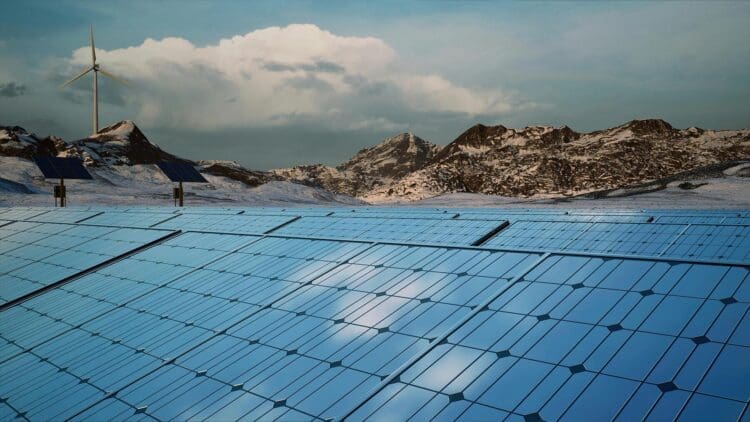
One country that has certainly always been a global leader in the renewable energy industry is China. The Chinese have installed significant solar capacity over the last few years, and in some of the most unique ways. An example is China carpeting a mountain with solar panels, but despite the advantage of supplying significant clean power, this particular plant has received widespread criticism, including claims that it blocks sunlight. However, an expert on all things China has pointed out the facts.
A mountain of criticism for China’s solar panel mountain
2025 will forever be a special year for the Chinese, as they achieved what was previously thought impossible. Global Energy Monitor confirmed that the nation became the first in the world to surpass 1 TW of installed solar capacity. This marvelous accomplishment was achieved in May 2025, enabling the country to achieve its 2030 clean energy targets significantly ahead of schedule.
The country significantly relied on policy incentives, state-led funding, and production overcapacity to achieve this, not to mention hard work and innovation. The Chinese used highly creative approaches to increase their solar capacity, such as Guizhou province’s solar panel mountain.
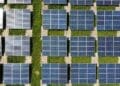
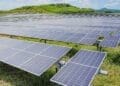
ShuBai, an expert on all things China, recently shared his insights on Guizhou province’s mountain carpeted with solar panels on his TikTok account @marshalspring. According to the TikTok user, the mountain:
“Looks like a giant armor.”
We certainly hope this “giant armor” is sturdy enough to take the hits of criticism, as visitors and locals alike are not the biggest supporters of this solar plant. However, the TikTok user made it his mission to separate fact from fiction, as things may not always be as we perceive them.
Is this “giant armor” of panels truly worth the criticism?
The entire world is being carpeted by solar panels, with several installations producing 2,200 GW globally. However, ShuBai pointed out that China’s “giant armor” of panels in Guizhou province is being criticized specifically for its environmental impact. The common belief in the area is that this mega-installation is “destroying the environment” due to the following reasons:
- A countless number of trees had to be cut down for installation (deforestation)
- It is visually unpleasant
- The panels are blocking sunlight, preventing plants from growing
While these reasons are worth concern, they are not actually factual. ShuBai has pointed out why believing this widespread criticism is credulous, and that these substantial installations in Guizhou province are actually shattering a devastating phenomenon in the region.
Guizhou province’s solar panel mountain: The facts
As ShuBai asked unapologetically straightforward:
“Do Chinese people not care about the environment?”
The correct answer is, of course, they do! The Guizhou province mountains are truly arid due to the phenomenon known as “rocky desertification.” This means that the mountains were not visually pleasant in the first place, as the thin soil was unable to retain water, meaning that no plant or tree could grow or survive there.
However, since millions of solar panels have been installed across the mountains, incredible things started to happen. According to ShuBai, the water used to keep the panels clean lands on the soil, and because the panels block intense sunlight, plants can actually grow and thrive underneath. Furthermore, local farms are now using the land for sheep grazing, which boosts the local economy.
The moral of the story? Always get all the facts straight before assuming mega-projects such as this one were merely completed to achieve national goals on time. The experts behind these projects must conduct proper environmental impact studies before moving forward, so these projects will typically only proceed in the best interest of the region. France has also covered a mountain with 112,000 solar panels, showing that everyone is trying to breathe new life into previously unusable landscapes.
Disclaimer: Our coverage of events affecting companies is purely informative and descriptive. Under no circumstances does it seek to promote an opinion or create a trend, nor can it be taken as investment advice or a recommendation of any kind.

