
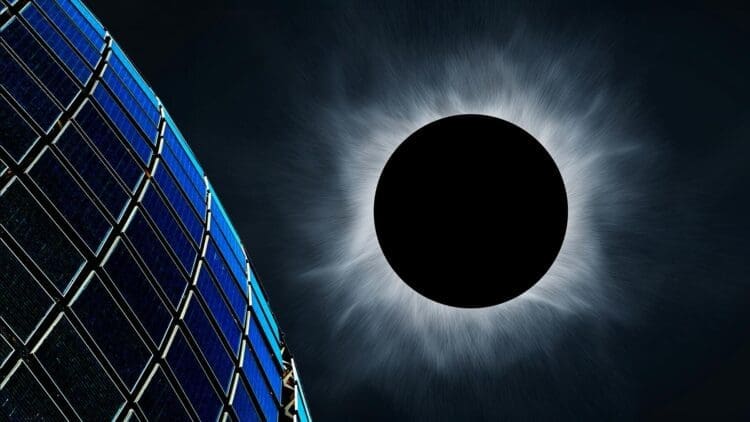
Thinking outside the box is not always an easy feat, especially when the familiarity of one’s comfort zone tries to prevail at the end of the day. Yet, those who manage to break free end up rewriting history. Scientists from California and China teamed up for this very reason and created the first dark solar panel in history. These pioneers realized that breaking all the rules of solar power is risky, but their solar cell that works at night was all worth it. Discover more about this historic creation below.
To rewrite history, one must break all the rules
The world can be a strange place, as some people work their entire lives to rewrite history, while others accidentally make it happen overnight. Then, there are those figures who realized that they had to break all the rules to change history. Historical figures such as Napoleon and Mahatma Gandhi broke the rules of society, albeit using different approaches, and ended up changing society overall.
In the world of solar energy, many people have become accustomed to the norm that one can only produce solar power during the day while the sun is shining. Fortunately for us, there are pioneers in this world who refused to accept solar power intermittency as a rule. A team of scientists from California and China has created the first dark solar panel in history, and it’s breaking all the rules.
California and China team up to create a historic first: The dark solar panel
Stanford University, California, which also has the Stanford Center in China’s Peking University, has become renowned for teaching and inspiring innovation. This is evident in the case of the team of scientists led by electrical engineering professor Shanhui Fan, who created a dark solar panel. So, what makes this creation so special? The fact that it can produce power during the night.
This is not the first time Stanford has dabbled with this concept. A team from UCLA and Stanford once used a 200-year-old secret to change the limitations of solar energy. However, in this case, the Stanford scientists relied on a phenomenon known as “radiative cooling.”
How it works
When heat disperses away from an object during a clear night, infrared energy is radiated away from Earth towards space. This is known as radiative cooling, and when this occurs, a temperature difference occurs, which can be used to produce power. By attaching thermoelectric generators (TEGs) to customized solar panels, the team was able to capture heat dispersing away from the panels and produce electricity.
A solar cell that works hard 24/7
The Stanford team’s dark solar panels achieved an output of 50 mW per square meter. While this may not sound like much, it is important to note that these panels are still in the research and development stage. For now, it will at least help keep your LEDs and sensors on during the night. Professor Fan believes their technology has great potential to improve and will offer significant benefits.
Benefits of dark solar panels
- Great complement to typical solar energy systems
- Addresses solar power intermittency issues
- Cost-effective
- Lowers reliance on battery storage
- Crucial power source in extreme remote regions
- Sustainable solution for a range of applications
Stanford’s team of scientists proves that thinking outside the box and breaking the rules of the norm can truly lead to historic creations. As they continue to enhance their dark solar panels, the world can start looking forward to the possibility of endless clean power production, 24/7. Furthermore, our ecological footprint will be significantly lower thanks to the decreased reliance on batteries. Another pioneering invention to keep an eye on is the folding “Martian” robot that chases sunlight with AI.

