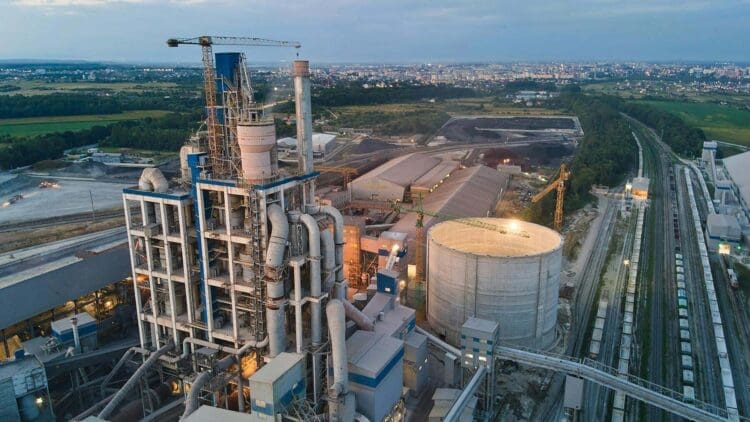
The remarkable expansion of the global petrochemical refining sector has seen China outline expansion plans for its Ningbo Daxie refinery. Increasing petrochemical refining has become a necessity for China as the nation aims to meet clean energy and emission reduction targets, all while keeping a close eye on the energy transition that has encompassed the international energy market in recent years and months.
China is aiming to lead the transition to petrochemical production across the global market
The China National Offshore Oil Company is set to boost the nation’s petrochemical bottom line with the rapid expansion plan for the refinery on Daxie Island in Ningbo. The plan outlines a substantial investment in the refinery, totaling an eye-watering $2.7 billion.
As noted by industry insiders, this aligns with China’s petrochemical ambitions as the nation aims to increase the output capacity for petrochemicals at the upgraded refinery.

China National Offshore Oil Company’s expansion plans for the Daxie refinery will bolster the output capacity of the refinery to reach astonishing levels once operations are up and running. China has seen demand for petrochemicals increasing, specifically for synthetic fibers, plastics, and other industrial chemical products.
“The speed and scale of the expansion of China’s petrochemical sector dwarfs any historical precedent, roughly doubling the pace of earlier capacity additions in the Middle East and United States.” – International Energy Agency
With the global energy market ensnared by the calls to end the generational reliance on oil and gas production, a new era of petrochemical production has swept across the global energy market as nations aim to meet clean energy targets by the end of the decade.
The Daxie refinery upgrade will effectively double petrochemical output
The extensive upgrade plans outlined by the China National Offshore Oil Company will dramatically increase the refinery’s output capacity of petrochemical products. The facility’s output will be doubled to reach an estimated 240,000 barrels per day once the upgrades have been made.
Key additions to the Daxie Refinery as part of the upgrades are:
- A new 120,000 bpd crude unit that can process heavier crude grades better.
- A new catalytic cracker with an output capacity of 3.2 million metric tons per year of high-value gasoline and petrochemical feedstocks.
- A 2 million tpy hydrocracker specifically designed to improve fuel quality and maximize the output of diesel from the upgraded refinery.
- A 2.4 million tpy continuous reformer, which is essential for the refinery to increase the production of high-octane gasoline and aromatics.
- Two 450,000 tpy polypropylene units to dramatically increase the production of polymer-based products for the Chinese refinery.
The expansion of the Daxie refinery will have standing implications for the Chinese petrochemical industry as a wave of new demand is set to hit the market over the coming years. A similar approach to increasing petrochemical production has emerged in India, with the HPCL Rajasthan Refinery upgrading the Pachpadra mega-refinery.
“China’s growing domestic production could be a final blow to many of the high-cost European producers already struggling in a highly oversupplied market.” – Philip Geurts, BloombergNEF analyst
The rapid transformation of the global downstream sector is gaining momentum
It can come as no surprise to anyone within earshot of the global energy market that the energy transition away from fossil fuels towards the more environmentally friendly petrochemical sector is gaining momentum, thanks in no small part to refinery upgrades like the Daxie project in China. As Europe opens the door to increased investments in petrochemical production in Europe through its new PRC Europe forum, China has outlined its plans to expand the petrochemical production at the Daie refinery. The inevitable shift to clean energy production has become a move that nobody in their right mind can stop.