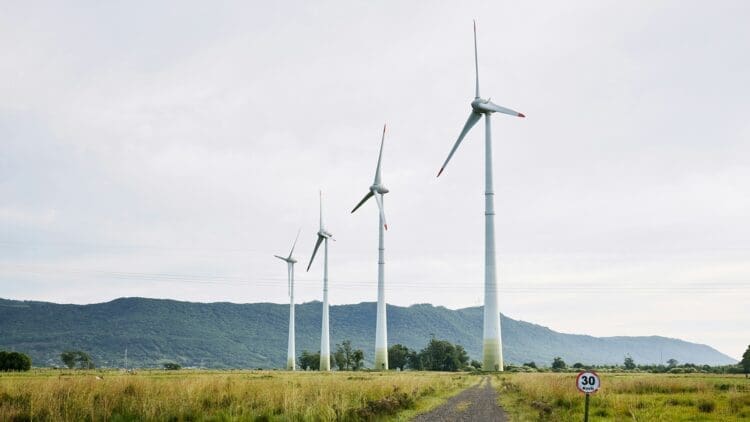

South Africa has been plunged into a world of darkness in recent years. The electricity crisis in the nation has led to the government implementing “loadshedding” periods that see entire parts of the nation having the power cut to ease the pressure on the national grid, which is still mostly powered by coal. However, in 2017, the De Aar wind project was commissioned and, since then, has transformed the regional energy supply in the Northern Cape, a region with exceedingly high winds. The project was developed by a cooperative venture between South Africa and China.
South Africa’s energy crisis has become a major hindrance to the nation’s economic future
The aforementioned “loadshedding” periods have resulted in a wave of criticism pointed directly at the African National Congress, which has been in power since the end of Apartheid. While the ANC has delivered on significant social justice reforms and has even developed a government-led housing initiative that has provided the less fortunate with homes of their own after decades of oppression, the electricity sector has suffered immensely.
In 2022, South Africa recorded an astonishing record 207 days of blackouts, with some areas losing power for more than 10 hours a day. To address this growing problem, South African President Cyril Ramaphosa declared a national state of disaster over electricity supply in the nation, and has since appointed new ministers to specifically address the country’s energy problems.
The De Aar wind farm project has provided welcome relief for the South African energy industry
The project was developed in cooperation with the Chinese government and was commissioned by CHN Energy Longyuan Power South Africa Branch, making it the largest operational wind power project in South Africa. The RMB 2.5 billion investment boasts an installed capacity of 244.5 megawatts and exemplifies the cooperative nature of the Chinese-South African energy relationship.
The Northern Cape has some of the strongest winds anywhere in the country
South Africans have become accustomed to seeing the Northern Cape wind blowing entire cars and buses over at its peak; they even have a name for it, the Cape Doctor. The wind farm contributes approximately 770 million kWh of clean electricity to the South African grid every year. The farm consists of 163 turbines, each with a capacity of 1.5 MW.
CHN Energy Longyuan Power South Africa Branch has contributed to the training of thousands of South Africans over the past decade and has been a major driver for the nation’s clean energy ambitions, which are languishing when compared to the rest of the world. Wind power generation has swept across the world, resulting in several new developments across the international market, with Europe playing a vital role in advancing the sector.
The De Aar wind farm was a landmark achievement for the South African government, as it fosters a welcoming environment for the Chinese energy market to invest more money in the coming years to bolster the South African energy market. Thankfully, the De Aar project has delivered essential clean energy to the national grid and exemplifies the potential of the renewable energy sector in Africa.
Decarbonizing the international energy market has become a top priority
The international energy market has been dominated by the conventional oil and gas sector for generations, and the time has come for the global market to bolster investments in clean energy generation that will decarbonize the sector. Now, that does not mean that the traditional oil and gas-based energy generation sector will disappear; in fact, the two sectors need to work together to ensure a consistent energy supply. Africa’s oil and gas market will continue to grow, as evidenced by Dangote’s ambitions in Nigeria.