
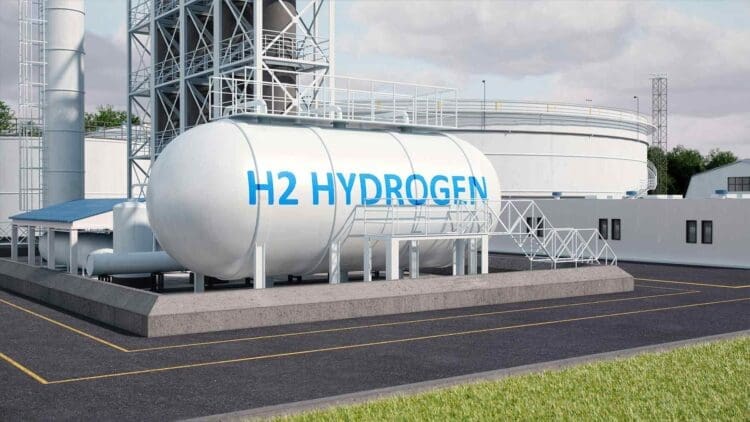

There seems to be a harmonious relationship between the United States DOE and the developers in the nation that usually decide where to invest their money, dependent on the Department’s direction. While most of the credit goes to companies following the completion of energy projects, it is essential to highlight that none of the initiatives would materialize without the Energy Department’s approval. After much activity in the hydrogen sector, the DOE sustained its nationwide hydrogen project pipeline spanning production and infrastructure development.
The U.S. Department of Energy continues to influence clean energy initiatives
When companies recognize that their objectives align with the Energy Department, they become more inclined to invest in large-scale facilities. Additionally, this opens the door for foreign companies to expand to the United States and build facilities.
One would have assumed that the DOE might slow down, considering the impactful start it has made to 2026. Still, the U.S. Department of Energy (DOE) is continuing to advance a nationwide hydrogen project pipeline.



This is tremendous, particularly for hydrogen companies, because it is an emphasis on the Department’s commitment to scaling both production capacity and infrastructure across the United States. Although the nation has undergone multiple policy shifts and funding alterations in the past few years, the federal government is still maintaining momentum in hydrogen deployment.
One of the reasons why the U.S. is consistently among the top clean energy-producing nations is that it understands the importance of capitalizing on a moment, and for now, hydrogen demand is heightening. As the country pushes toward decarbonization, hydrogen is at the core of its transition.
The strong expansion of hydrogen production capacity in the United States
At the heart of the DOE’s hydrogen strategy is large-scale production through a combination of technologies, including electrolysis powered by renewable energy and low-carbon hydrogen obtained from fossil fuels with carbon capture. This is evident from the recent projects that demonstrate the ongoing investment in multiple hydrogen production facilities across the country.
For example, federal support has opened the door for initiatives such as multi-site hydrogen plants designed to supply the industrial and transportation sectors. These have greatly enhanced domestic supply chains. The DOE funding programs are quickening research and development to improve efficiency and reduce costs.
A country with the resources of the United States always seeks to be at the forefront of groundbreaking developments, and this is evident through the DOE.
The U.S. DOE plans to establish a national hydrogen infrastructure network
To convey the United States’ commitment to elevating hydrogen production, a recent funding notice dedicated tens of millions of dollars toward advancing hydrogen and fuel cell technologies. The nation would not have invested this massive amount of money if it were not confident that hydrogen is on an upward trajectory.
Importantly, the initiative is consistent with the broader U.S. National Clean Hydrogen strategy, which demands collective commitment across federal agencies, industry, and research institutions to achieve large-scale deployment and market growth. At the moment, the United States operates roughly 1,600 miles of hydrogen pipelines that are along the Gulf Coast, where industrial demand is at its peak.
Unpacking the value of hydrogen to the United States energy sector
The hydrogen pipelines represent a cost-effective method of transporting large volumes of hydrogen. The single obstacle affecting expansion is the high upfront construction costs and technical challenges. DOE-centered research is seeking advanced materials like fiber-reinforced polymers, which could reduce installation costs and improve pipeline reliability.
The strategy does not revolve around pipelines as the nation has expressed plans to establish hydrogen liquefaction facilities, refueling stations, and integrated transport networks. Regional hydrogen hubs such as the prospective Pacific Northwest hub reflect this approach as it mixes production, storage, and end-use applications within a unified ecosystem.
It is not surprising to witness the United States at the heart of yet another groundbreaking initiative. The DOE must be commended for its unwavering commitment.



